Whose Mother Is She?


With it being Mother’s Day, I started thinking about the mothers portrayed in Jane Austen’s novels: Mrs. Bennet, Mrs. Morland, Mrs. Dashwood, and Mrs. Price.  Not exactly an exemplary group, but at least they lived to see their children to adulthood.  Two others did not.  We know almost nothing about Emma Woodhouse’s mother, who is only said to have died too long ago for her to have more than an indistinct remembrance of her caresses.   There’s more information given about Anne Elliot’s deceased mother, Lady Elliot, and her surrogate, Lady Russell

You’ve read Jane Austen.  How well do you know her characters?  Can you recognize the six ladies named above from their descriptions and their words?  Take the quiz below.  (To make it a bit more challenging, I’ve added a lady of my own creation: Mrs. Walker, mother of the heroine of For Myself Alone.)

1) … an excellent woman, sensible and amiable; whose judgement and conduct, if thy might be pardoned the youthful infatuation that made her (Mrs. So-and-so), had never required indulgence afterwards. She had humoured, or softened, or concealed his failings, and promoted his real respectability…

2) … a woman of useful plain sense, with a good temper, and what is more remarkable with a good constitution … (She) did not insist on her daughters being accomplished … (She) was a very good woman, and wished to see her children every thing they ought to be.  “Well, we must live and learn; and the next new friends you make I hope will be better worth keeping.”

3) She was a woman of mean understanding, little information, and uncertain temper.  When she was discontented she fancied herself nervous.  The solace (of her life) was visiting and news. “My dear, you flatter me.  I certainly have had my share of beauty, but I do not pretend to be anything extraordinary now.”

4) an eagerness of mind …which must generally have led to imprudence; she had yet to learn how to govern her feelings; strikingly like her daughter, she was everything good except prudent.  “It is yet too early in life to despair of such an happiness. Why should you be less fortunate than your mother? in one circumstance only… may your destiny be different from hers!”

5) She was a woman rather of sound than of quick abilities … with a delicate sense of honour … a benevolent, charitable, good woman, and capable of strong attachments; most correct in her conduct, strict in her notions of decorum, and with manners that were held a standard of good-breeding.  “Upon my word…I should not have supposed that my opinion of any one could have admitted to such difference of conjecture…”

6) … being out in company was one of the chief pleasures of her life … an excellent mother … neither troubled by disappointed past expectations nor misgivings for the future.  “Men are generally hopeless when it comes to such things in any case.  I depend entirely on you for a full account.”

7) (she) could no longer afford to cherish pride or resentment … eager to regain the friends she had so carelessly sacrificed… Her heart and her time were already quite full; she had neither leisure nor affection to bestow …Her disposition was naturally easy and indolent … “I do not think I am so difficult a mistress to please – and I am sure the place is easy enough, for there is always a girl under her, and I often do half the work myself.”

Have do have it figured out?  Check under “comments” for the answers and reward yourself with chocolate if you got them all correct … or even if you didn’t.

Posted in fun & games, Jane Austen, Jane Austen Quotes, Shannon Winslow's writing | Tagged , , , , , , | 5 Comments

Kindle-ing

So I got my Kindle in the mail the other day and immediately set about learning how to use it.  I figured out how change the font size and orientation, how to access the pre-loaded dictionaries, and how to make it talk to me in a male or female voice.  I even managed to set up an account at Amazon and get my first book (a collection of the complete works of Jane Austen, naturally) sent directly to the Kindle over wireless internet service.  It wasn’t that hard, but I was still slightly impressed with myself.  And it reminded me of an old blog post I’d written a couple of years back:

We’ve all heard the saying, “You can’t teach an old dog new tricks.” Baloney! Although I may not be exactly old, I’m undeniably middle-aged. And I think I’ve learned more in the last few years than during almost any other period of my life. For example, I’ve learned a tremendous amount about the art of writing – something I had no formal training in before. I’ve discovered what’s involved in trying to get a book published (agents, editors, query letters, literary conferences, etc.). I decided to study Italian after a recent trip to Venice. Perhaps most challenging of all, however, I’ve tackled some of the mysteries of the electronic age: mastering e-mail and my laptop, starting a blog, and constructing a soon-to-be-launched website. Those of us who didn’t grow up with these technologies are at a distinct disadvantage, I admit. But with enough time, determination, and a little patience from the younger generation, we can march into the 21st century with our heads held high (which is much more dignified than being dragged, kicking and screaming, after all). “Is it worth the extra trouble and effort?” you may ask. Yes, it’s exciting to learn new things and, even if nothing else comes of it, we’re keeping brain cells alive! That’s pretty important for old dogs.

Since then, of course, the learning curve has only gotten steeper.  I will soon be finding out how to format a novel (The Darcys of Pemberley) for Kindle and for print-on-demand, not to mention producing cover art for the same!  When I’m feeling a little lazy, I wish I could just let somebody else do all that technical stuff for me.  But what would Jane Austen say to you about me then?  Hmm.  Probably something like this:

“…pity Shannon’s deficiency.  And remember that, if you are ever so forward and clever yourselves, you should always be modest; for, much as you know already, there is a great deal more for you to learn.”  “Yes, I know there is … But I must tell you another thing about Shannon, so odd and so stupid.  Do you know, she says she does not want to learn either Kindle formatting or cover art production!”  “To be sure, my dear, that is very stupid indeed, and shows a great want of genius …” (paraphrased from Mansfield Park, chapter 2)

There we have it.  You are to pity my deficiency.  Meanwhile, I will forge ahead, striving to prove myself not totally wanting in genius.

Posted in Jane Austen, Jane Austen Quotes, learning, Shannon Winslow's writing, technology, Uncategorized | Tagged , , , , , , , , | Leave a comment

Is it a Sign?

Montage Of Numerous Traffic Control Signs

Question: Should I a) publish independently now? -or- b) continue holding out hope for a traditional publishing contract? That’s the decision I’ve been wrestling with, unsure which way I should go. 

I’ve been writing seriously for about six years now.  During that time, I’ve completed three novels and a handful of short stories – none of which are yet published (although at least two of the short stories soon will be).  Despite that fact, there’s no way I’m giving up.  I believe in what I’m doing, and I’ve had enough small successes along the way to keep me not just going forward, but excited.

With the economic downturn and the rise of new technologies, however, the publishing industry has changed forever in that same six years.  The bad news: it’s harder than ever before for an unproven author to get published via the traditional model.  The good news: traditional publishing is no longer the only game in town.  With the various forms of e-publishing and print-on-demand, barriers have come tumbling down.  Many authors are choosing to bypass the whole agent/publisher/bookstore gauntlet and go independent. But is that the right pathway for me?  What do you think? I depend on your opinion.

And you say,Not for the world…would I advise you either way.  You must be the best judge of your own happiness.”  If that’s the way you’re going to be… “as you will not give me your opinion, I must do as well as I can by myself; and I have now quite determined, and really almost made up my mind to…”  (Emma, chapter 7)

I had nearly decided for myself which way to go, but I needed one more little push.  And I got it: another agent rejection.  A sign, perhaps, that the traditional publishing thing is not happening for me, at least not right now. 

So it’s full speed ahead on the road to independent publishing!  I finished my final edit of The Darcys of Pemberley, which now goes to a couple skilled and trusted friends for proof reading.  While they’re doing that, I’m going to try to figure out how to put together some eye-catching cover art, and how to format the book for Kindle (with a print-on-demand hard copy to follow). 

It’s trilling to think that, after so much time and effort, I could be sending one of my “babies”, my first-born, out to meet the world in only a few weeks!  If it’s a great success, I’ll have to write that agent a thank-you note for sending me the right sign.

Posted in Jane Austen, Shannon Winslow's writing, technology, Uncategorized, writing | Tagged , , , , , , , | 2 Comments

Segue to the Twentieth Century

I’m half-heartedly watching the Mariners game (not a good night for them), and wondering how to make a graceful segue from Jane Austen, my usual subject matter, to baseball. No problem. 
 
And it was not very wonderful that Catherine, who had by nature nothing heroic about her, should prefer cricket, base ball, riding on horseback and running about the country at the age of fourteen, to books – or at least books of information – for, provided that nothing like useful knowledge could be gained from them, provided they were all story and no reflection, she had never any objection to books at all. (Northanger Abbey, chapter 1)
 
So now that you know Jane Austen was down with baseball, you won’t think it such a strange departure that I wrote a novel whose protagonist is a minor league baseball player. (To learn more, go to the page for First of Second Chances.) I thought a story set in my own century and in my own country would be easier to write than one in Regency England. It’s a world I already know, so less research. Right?  Not really. 
 
The majority of the story takes place from 1991 – 1993. Recent history, but much has changed even since then, especially in the realm of technology.  “Give that girl a cell phone!” suggested one of my critique partners at one point. But, wait. Did people carry cell phones in 1991? No. And no laptops, CDs, DVDs or Internet either.
 
Next issue: I’d never written a male protagonist before. Fortunately, I’d lived with three men – one husband and two sons – so I had some working knowledge of how they operate and, when in doubt, I could ask them questions.
 
Finally, the baseball issue.  Even though the story wasn’t “about” baseball per se, I still wanted to get that part right, or at least avoid making any glaring errors that would detract from the story for people who understood that world better than I did.  I soon discovered that there were plenty of sources for major league stars and stats, but much less available about the minor leagues, especially behind the scenes stuff. 
 
What I learned through researching this book is that people are the best resources a writer can have. If I didn’t have an answer, it often only took a phone call to someone who did.  When I explained what I needed, most people were interested, generous, and glad to help. My best source turned out to be a minor league ball player whom I found through a blog search.  The blog itself contained a wealth of the kind of information I was looking for. Then, since he invited e-mail questions, I asked for more help and got it! The bonus was that his girlfriend worked in sports medicine, and she volunteered her expertise as well. (Thanks Chris and Juliet!)
 
Jane Austen wrote about her own time, place, and society, so she probably didn’t face the challenge of research. And then there’s the standard advice to “write what you know.” But if I’d done that, I would have missed out on a lot of interesting information and nice people.    


Posted in Jane Austen, Jane Austen Quotes, Shannon Winslow's writing, Uncategorized, writing | Tagged , , , , , , , | 4 Comments

Small Successes & Short Stories

“The longest journey begins with a single step.” No, that’s not a Jane Austen quote.  But it came to mind when I thought about announcing a small triumph on my road to writing success.  *trumpet fanfare* Both the stories I submitted to the “Bad Austen” short story contest (for parodies related to Jane Austen’s work) have been accepted for publication!  *more trumpet fanfare*  It’s not the most prestigious honor in the writing world, but it’s a baby step in the right direction – maybe two baby steps, since there are two stories.

So by November, if not before, Shannon Winslow will have her name in print at last!  The world will read how Miss Dashwood Gets Down and Dirty to tackle her rival in the arena of romance, and discover the secret origins of a super hero in Woman of Wonder.

I’m sure Jane Austen was a quicker study, but it’s supposed to take most authors something like 500,000 words (the length of 5 average novels) before they really get a handle on how to write.  If that counts all the stuff you edit out and throw away, I past that point long ago.  Even if it means finished work, I’m well on my way – 3 completed novels plus a growing collection of short stories.

The quote below (from chapter 28 of Pride and Prejudice) speaks of a carriage trip to Hunsford Elizabeth Bennet undertook to visit her friend Charlotte Collins, and another she planned to make later with her Aunt and Uncle Gardiner. 

Every object in the next day’s journey was new and interesting to Elizabeth; and her spirits were in a state for enjoyment; for she had seen her sister looking so well as to banish all fear for her health, and the prospect of her northern tour was a constant source of delight. 

I chose this quote for today because it reminds me that half the pleasure is in the journey.  I don’t have to wait until I get where I’m going (or even to 500,000 words) to enjoy the adventure of writing.  That started with word one.

Posted in Jane Austen, Jane Austen Quotes, Uncategorized, writing | Tagged , , , , , , , , | 4 Comments

To Prologue or not to Prologue?

I’ve probably got no business starting another novel.  There’s some editing to be done on the three I’ve already written; the task of getting them published in some form or another; not to mention all the unfinished projects I have around the house.  But, as I said in my previous post, I’ve been “infected” by the germ of a new novel.  It’s a sickness; I can’t help it.

The plan was to do the necessary research for the new book while editing book # 3 (a contemporary, non-Jane-Austen story: more about that later).  But I wanted to at least set down my thoughts for how I would begin book #4 first.  So I wrote what amounts to a prologue.  Great!  Then I wrote a little more…and a little more.  Fun stuff!  But when I reread what I had so far, I realized I didn’t have a prologue and chapter 1, I actually had three prologues!

Prologue: an introductory passage before the main action of a novel, play, or long poem.

I’ve heard that prologues are out of vogue at the moment (so having not one, but three of them, is probably not a good thing), but I thought, “surely Jane Austen must have utilized this fine literary tool.”  Nope; I checked – nothing that’s officially called a prologue in any of her novels.  She was big on epilogues, however.  Here again, they aren’t labeled as such, but a final chapter clearly serving that function.

Epilogue: a short chapter or section at the end of a literary work, sometimes detailing the fate of its characters.

My favorite JA quote of all time (and my personal writing philosophy) begins what amounts to the epilogue of Mansfield Park:

Let other pens dwell on guilt and misery.  I quit such odious subjects as soon as I can, impatient to restore everybody, not greatly in fault themselves, to tolerable comfort, and to have done with all the rest.

I like the way Austen ties up all the loose ends for us; she doesn’t leave her readers dangling, wondering “but what ever happened to so-and-so?”  I try to do the same, but one prologue and one epilogue per book is probably the limit.  Gotta work on that.

Posted in Jane Austen, Jane Austen Quotes, Shannon Winslow's writing, writing | Tagged , , , , , , , , | 10 Comments

The Germ of a Novel

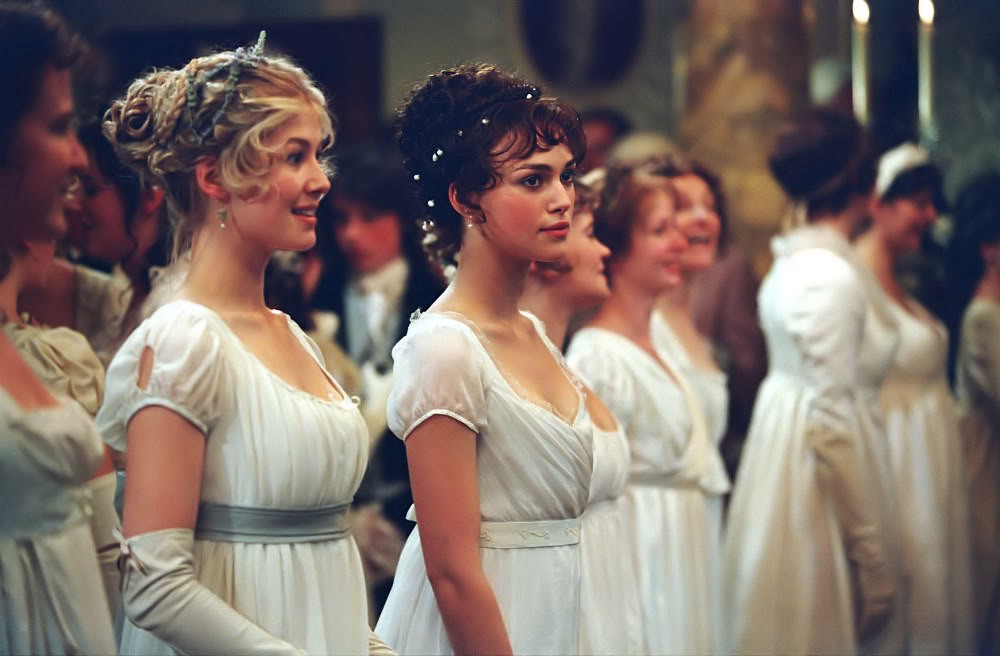
If you have seen the ’95 version of Persuasion with Amanda Root and Ciaran Hinds, this spot will look familiar.  In the movie we see Captain Wentworth sitting on that very bench outside the pump-room in Bath before he rises to speak to Anne, who meets him in the doorway. I recognized the place when I visited Bath two years ago, and so took this picture.

Preparing to write this blog entry, I went looking for a quote from this scene to use here.  Only one problem: there apparently was no such scene in the book!  In fact, unlike in the movie, there doesn’t seem to be a single scene that takes place in the famous pump-room.

I think I know Jane Austen very well, but some of what is so familiar to me I have derived from the movies made from her books, not from the books themselves.  Although I have read them all multiple times, I have seen the movies more.

I rewatched Persuasion last night and called it research, because I have an idea for another novel that will relate to the events of Jane Austen’s life when she was writing it.  It was her last completed work, written near the end of her short life.  At forty, she was definitely “on the shelf”, no doubt having long since given up the idea of marriage for herself, but making sure that her heroine, Anne Elliot, had a second chance at finding connubial bliss with the galant Captain Wentworth.

…how should a Captain Wentworth and  an Anne Elliot, with the advantage of maturity of mind, consciousness of right, and one independent fortune between them, fail of bearing down every opposition?  They might in fact have borne down a great deal more than they met with, for there was little to distress them beyond the want of graciousness and warmth.  (Persuasion, chapter 24)

So, as I said, the idea for another book has germinated in my brain, and now I enter a research phase.  I won’t rely on the movie; I’ve begun reading Persuasion yet again.  I need to study more about Jane Austen’s life during that period as well.  The writing itself won’t start in earnest for a couple of months, although I couldn’t resist dashing off this short prologue just for fun (I’m a great fan of prologues, by the way).

Jane Austen put down her pen with the gesture of solemn finality the occasion seemed to require.  She sat a moment, gathering the necessary strength to lift her feeble frame to a standing position so that she might wind a string around the manuscript.  Persuasion, she had entitled it.  She was thankful to have been granted enough time to see it through, to finish the story that was perhaps closer to her heart than any of the others.  But, now that the last “I” had been dotted and the last “T” crossed, what more remained for her to do?

She had been careful to tie up all her loose ends as neatly as ever, seeing to it that, unlike in real life, everybody not greatly at fault had been returned to tolerable comfort in the end.  It set her mind at ease to know the good-natured Miss Musgroves would be suitably married.  And she had even taken the trouble of putting Anne’s invalid friend, Mrs. Smith, in the way of a secure future.  More importantly, Anne and Captain Wentworth were at last reconciled.  This time, their happiness would not be threatened by either objections at home or by want of money… or by debilitating illness.  As author of their lives, if not of her own, she had been able to do that much for them.

My husband hoped I was done writing for a while.  Sorry honey – just getting started.

Pageflex Persona [document: PRS0000037_00034]UPDATE: This small germ grew and DID become a finished novel, published in 2014 as The Persuasion of Miss Jane Austen!
Posted in Bath, Jane Austen, Jane Austen Quotes, Shannon Winslow's writing, Uncategorized | Tagged , , , , , , , | 8 Comments

Shall We Dance?

I admit it; I watch Dancing With the Stars every week.  It’s not just for the sake of seeing people dance, for I usually ignore the numbers done by all professionals.  I think what intrigues me most is the magic of the non-dancing “stars” (a term interpreted very broadly in this case) getting a chance to try something beautiful, brave, and improbable – to waltz, cha-cha, and jive with the best of them. 

For me, dancing is a bit of a dream, something I’ve always wanted to do.  And unlike becoming a world-class ice skater or climbing Mt. Rainier, learning to dance is still within the realm of possibility.  After all, I am younger and probably in better condition than Kirstie Alley, who’s holding her own very nicely on the show this season. 

Dancing is all about romance – a stylized act of courtship set to music – which is probably why it appeals to women more than men.    In Jane Austen’s day, however, single men were no doubt more eager, since dancing afforded them one of their best opportunities to talk to, and about their only opportunity to actually touch, single women.  So the ball became a social highlight and an indispensable part of the courtship process.

  The prospect of the Netherfield ball was extremely agreeable to every female of the family … Jane pictured to herself a happy evening in the society of her two friends, and the attentions of their brother; and Elizabeth thought with pleasure of dancing a great deal with Mr. Wickham…  The happiness anticipated by Catherine and Lydia depended less on any single event, or any particular person, for though they each, like Elizabeth, meant to dance half the evening with Mr. Wickham, he was by no means the only partner who could satisfy them, and a ball was at any rate, a ball.  (Pride and Prejudice, chapter 17)

The Bennet ladies anticipated a night of pure felicity. Things didn’t turn out quite as they planned, though, especially for Elizabeth.  The handsome Mr. Wickham was absent; she was obliged to dance with the odious Mr. Collins and the proud, disagreeable Mr. Darcy; and she was mortified by the unseemly conduct of her family.   

Dancing plays a prominent role in Jane Austen’s writings.  I didn’t appreciate how often it’s mentioned in mine until I did a word search to locate this clip from For Myself Alone.   I was surprised to discover how many of the pivotal scenes I’d managed to set on the dance floor.  

Arthur declares, “It is not fair to urge her in this manner.  Let her choose for herself as well as the rest of us.  If Jo is opposed to dancing tonight, surely we are capable of finding some other source of diversion …”

“No, Arthur,” I interrupt.  “Thank you, but it is all right.  I have no serious objection, and it would be selfish of me to spoil everyone’s pleasure.”

“Well, if you are quite certain …” 

He offers his hand again.  This time I take it.

I have accepted that same steady hand dozens of times before, but always in friendship.  Everything is irrevocably altered now.  For me, Arthur has changed over the course of the last three months from friend to foe, and as of tonight, unwelcome admirer.  No wonder, then, that I sense an unfamiliar charge when our fingers meet this time.  It gives me an odd, unsettled feeling in the hollow of my being as I rise to take my place opposite him. 

The truth is, I will never be invited to appear on Dancing with the Stars, and I will likely never convince my husband to sign us up for ballroom dancing lessons either.  But I can live out all my fantasies through my characters – one of the great perks of being a writer.


Posted in Jane Austen, Jane Austen Quotes, Mt. Rainier, my books, Uncategorized, writing | Tagged , , , , , , , , , , | Leave a comment

Mightier than the Sword?

A couple of days ago there was another report in the news about the terrible consequences of cyber-bullying, kids using social media to dis their classmates on a massive scale.  Not that gossip and slander are new.  They’ve always been around; only the tools have changed.  Consider the case of Mr. Wickham:

I have no right to give my opinion,” said Wickham, “as to his being agreeable or otherwise.  I am not qualified to form one.  I have known him too long and too well to be a fair judge.  It is impossible for me to be impartial… (but then he goes ahead and dishes his dirt on Darcy anyway)...We are not on friendly terms, and it always gives me pain to meet him, but I have no reason for avoiding him but what I might proclaim to all the world; a sense of very great ill usage, and most painful regrets at his being what he is… His behavior to myself has been scandalous.  (Pride and Prejudice, chapter 16)

When Wickham is done, Mr. Darcy’s reputation is in tatters.

Gossip and slander play pivotal roles in my novel For Myself Alone.  In fact, the prologue is nothing but.  Do you remember that party game we used to play as kids where you send a “secret” through a string of people, whispered ear to ear until it comes out unrecognizable at the other end?  I think we called it “gossip,” actually.  Anyway, that’s what I had in mind when I wrote that section.  Although there’s no malicious intent in this instance, the results were still damaging.  Later in the book, a life-long friendship is nearly destroyed by a more deliberate case of character assassination. 

In both novels, the gossip/slander comprise and important part of the conflict necessary for a good story.  As writers, we have to torture our characters on the page.  As human beings, I hope we are kinder with the words we say, write, text, and tweet.

Posted in Jane Austen Quotes, learning, life, my books, Shannon Winslow's writing, writing | Tagged , , , , , , , , , , | Leave a comment

Father of the Year

I’m doing yet another read-through/edit of my first novel with the thought of e-publishing if no other options break soon.  I labeled the file “Final!!!!!” months ago (so as to distinguish it from an earlier incarnation now named “not-so-final-after-all”), and yet I continue to fuss over and finesse it, never quite satisfied. 

Anyway, today I read through a chapter where Mr. Darcy reveals some of his views on his impending fatherhood.  It made me stop and think about the odd assortment of fathers who inhabit Jane Austen’s novels:  Mr. Bennet (endearing, but indolent and negligent), Mr. Woodhouse (hypochondriac, self-absorbed), Sir Walter Elliot (irresponsible, vain), Mr. Dashwood (dead), General Tilney (greedy, vindictive).  Only Mr. Morland seems kind and reasonable, but then we don’t get to spend much time with him.  The prize for Austen’s all-time, lousy father-figure probably goes to Mr. Price, however.  To ease the financial strain on the family, Fanny was sent away as a young child to be raised by her rich aunt and uncle at Mansfield Park.  Years later, as punishment for displeasing her uncle/surrogate-dad, she’s uncerimoniously returned to her home of origin, only to find things even worse than she’d remembered: 

It was the abode of noise, disorder, and impropriety.  Nobody was in their right place, nothing was done as it ought to be.  She could not respect her parents, as she had hoped.  On her father, her confidence had not been sanguine, but he was more negligent of his family, his habits were worse, and his manners coarser, than she had been prepared for… He swore and he drank, he was dirty and gross.  She had never been able to recall anything approaching to tenderness in his former treatment of herself.  There had remained only a general impression of roughness and loudness; and now he scarcely ever notice her, but to make  her the object of a coarse joke.  (Mansfield Park, chapter 39)

At the opposite end of the spectrum, we find our hero Mr. Darcy.  I foresee that he will be a model father – better than even he at first supposes.  (See the new excerpt from The Darcys of Pemberley I’ve just posted.)

Posted in Jane Austen, Jane Austen Quotes, Shannon Winslow's writing, writing | Tagged , , , , , , , , , | 1 Comment