When a Rose is More Than Just a Rose

IMGP2568

A friend of mine recently suggested that I should do a post on the language of flowers. It’s something I knew virtually nothing about, but, since I happen to love flowers of all kinds, the idea intrigued me. Plus, I figured it would give me a great chance to use some of the hundreds (or perhaps thousands) of floral pictures I’ve taken over the years!

The first step, though, was to establish a connection to Jane Austen. A Google search led me to a several listings connecting the two terms (Jane Austen & the language of flowers). Unfortunately, they all seemed to trace back to the same incomplete source, that being Wikipedia, which says (in part):

IMGP1386The language of flowers, sometimes called floriography, is a means of cryptological communication through the use or arrangement of flowers. Meaning has been attributed to flowers for thousands of years, and some form of floriography has been practiced in traditional cultures throughout Europe, Asia, and the Middle East…  Interest in floriography soared in Victorian England and in the United States during the 19th century. Gifts of blooms, plants, and specific floral arrangements were used to send a coded message to the recipient, allowing the sender to express feelings which could not be spoken aloud in Victorian society. Armed with floral dictionaries, Victorians often exchanged small “talking bouquets”, called nosegays or tussie-mussies, which could be worn or carried as a fashion accessory… (and, as to its use in literature)… William Shakespeare, Jane Austen, Charlotte and Emily Bronte, and children’s novelist Frances Hodgson Burnett, among others, used the language of flowers in their writings.NA book cover

That’s it – no elaboration on where or how Jane Austen supposedly used this cryptic language to convey hidden meaning. My own investigations (searching the entire data base of her writings for the word “flower”) led me to this promising passage in Northanger Abbey. It’s a conversation between Catherine Morland and Henry Tilney. She begins:

“I have just learnt to love a hyacinth.”

“And how might you learn? By accident or argument?”

“Your sister taught me; I cannot tell how. Mrs. Allen used to take pains, year after year, to make me like them; but I never could, till I saw them the other day in Milsom Street; I am naturally indifferent about flowers.”

IMGP1273“But now you love a hyacinth. So much the better. You have gained a new source of enjoyment, and it is well to have as many holds upon happiness as possible. Besides, a taste for flowers is always desirable in your sex, as a means of getting you out of doors, and tempting you to more frequent exercise than you would otherwise take. And though the love of a hyacinth may be rather domestic, who can tell, the sentiment once raised, but you may in time come to love a rose?”

“But I do not want any such pursuit to get me out of doors. The pleasure of walking and breathing fresh air is enough for me, and in fine weather I am out more than half my time. Mamma says I am never within.”

“At any rate, however, I am pleased that you have learnt to love a hyacinth. The mere habit of learning to love is the thing…”

Aha! To decipher this passage, I just needed to know what “hyacinth” and “rose” mean! Not so easy, as it turns out, because there are a wide variety of meanings ascribed to these two flowers, according to whose list you use and what color the flower (which we aren’t told in the quote above).

hyacinthFor hyacinth, I found these diverse meanings; jealousy (yellow), loveliness/prayerfulness (white), playfulness (red or pink), constancy (blue), and “I am sorry”/”please forgive me” (purple). So which did Jane Austen have in mind? My money’s on the last one, not only because purple is a very common color for hyacinths but because of what happens later in the story. Perhaps this mention foreshadows how Catherine will soon be sorry indeed for suspecting Henry’s father (General Tilney) of doing away with his wife. Her ultimate repentance of the bad habit of letting her wild imagination rule her represents an important step in Catherine’s character development – a step away from adolescence and toward mature womanhood.
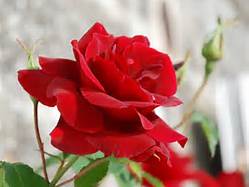
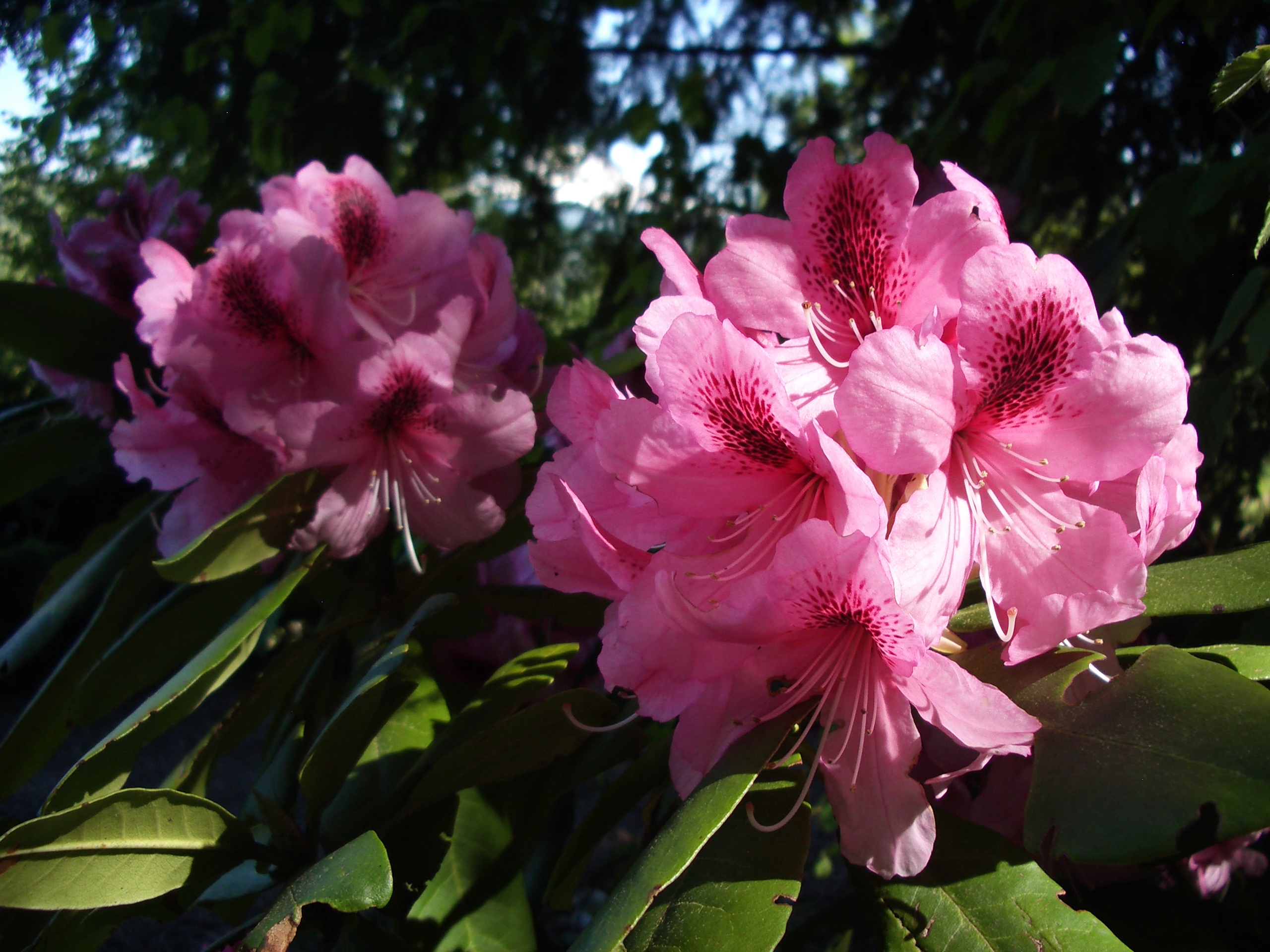
red roseI found more meanings listed for rose than any other flower. Apparently, it is more capable of conveying specific messages than the rest, the subtleties depending on not only the color in this case, but also the number of blooms, their type, and condition. For instance, a bouquet of mature blooms conveys gratitude. A white rose or a bud of any color seems to represent innocence, purity, or maidenhood. Along the same lines, a dried white rose says that death is preferable to loss of virtue! Dark crimson is appropriate for mourning. Yellow means jealousy again. A thornless rose speaks of love at first sight. And if you give someone the leaf only, it means, “You may hope.”

Catherine and Henry 2This is certainly not an exhaustive list of what can be conveyed by the most communicative of flowers. But the generally favored meaning seems to be one of romantic, even passionate, love (especially if the rose is red). This shouldn’t surprise anyone. And it’s no doubt what Henry Tilney has in mind when he tells Catherine that he is hopeful that she will move beyond caring about hyacinths to preferring a rose. He’s ready for love, but he knows Catherine isn’t quite there yet. She still has some things to learn first.

I find it interesting that Mrs. Allen could never get Catherine to care about flowers at all. And yet now, after meeting Mr. Tilney and his sister, she’s suddenly interested in learning to love them. She has experienced an awakening; she’s now open to new possibilities. And then Henry sums up the important point for us, saying “The mere habit of learning to love is the thing…”
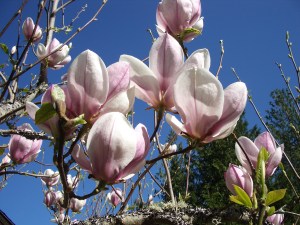
IMGP2554Now, with all this in mind, look at the passage from Northanger Abbey again. Is there any validity to my analysis? It’s entirely possible I’ve read more into it than Jane Austen ever intended. What do you think? Are there hidden meanings here, or is a rose just a rose?

~~~~~~~~~~~~~~~~~~~~~~~~~~~~~~~~~~~~~~~~~~~~~~~~~~~~~~~~~~~~~

Elizabeth was in no condition to ride. Instead she took the opportunity to stroll through the gardens close to the house, choosing the formal knot garden as her destination. She began her tour with the roses round the perimeter, casting about for the best blooms and drinking in their sweet scent. The flowering of the Gallica and Damask roses had long gone by, but the Chinas carried on despite the heat of late summer. (The Darcys of Pemberley)

~~~~~~~~~~~~~~~~~~~~~~~~~~~~~~~~~~~~~~~~~~~~~~~~~~~~~~~~~~~~~

PS – A Twitter friend just shared this related link with me. It’s a fanfiction piece depicting the Darcy/Elizabeth proposal scene from P&P, “spoken” exclusively in the language of flowers! Hilarious. I can just feel the tension in the room as the two of them thrust flowers back and forth at each other to express what they are feeling. Take a look.

Posted in Austen Authors, English Regency culture, gardening, Shannon Winslow | Tagged , , , , , , , | 2 Comments

WIP: “My Darling Exile”

work in progressI apologize for being so late with this post. In saying this, I presuppose that you’ve grown accustomed to receiving from me something fascinating to read approximately once a week, and that you’ve been feeling rather faint for the lack of it these past several days.  But I want you to know that I have perfectly good reasons why I haven’t had time to work on my blog lately:

1) Life got in the way. This category includes various family obligations and a collection of routine medical/dental/optometric appointments. 2) Special events. Among other things, I had a 3-day art show/book signing earlier this month; my class reunion this past Saturday (never mind which one!); and some preparations for traveling to the JASNA Annual General Meeting in a few weeks (so excited for that!). But most importantly, I’ve been putting in some serious time on 3) Writing the new book!

The idea for this, my current WIP (work-in-progress), occurred to me over two years ago, quickly followed by the title. I had used “Darling Exiles” to head a blog post I wrote on an unrelated topic – the concept that, if you’re a writer, you must be prepared to “kill your darlings.” In this case, I had decided to merely cast mine into exile instead. Anyway, I really liked the sound of it (Darling Exiles) and I realized it actually fit what the new book would be about.

I couldn’t really begin working on it at the time, though. I had other projects to finish first. the writing processAnd then I ended up writing another entire novel, Return to Longbourn, ahead of it. But I decided to dash off a prologue to help me capture the idea (see Germ of a Novel). Then I wrote another prologue… and another. (I have a little problem in that area. See post To Prologue or Not to Prologue). After that, I set the book aside for more than a year, only turning it over in my mind from time to time. Finally, with the basic plot settled into place and some necessary research done, I’ve now begun to write in earnest.

Persuasion - book coverI’m not going to reveal how the term “exile” works into the story (or who the exile is!), but I will say this much about the book. It’s a Persuasion tie-in with Jane Austen herself as narrator and heroine. The full working title is My Darling Exile: A Novel, wherein Jane Austen relates her own story of Persuasion.  It will unveil the truth about a previously secret romance she had with a sea-captain of her own, paralleling her novel. Persuasion is my second favorite Jane Austen (after P&P, of course), and I’m having a delightful time weaving the two stories together.

She had given him up to oblige others. It had been the effect of over-persuasion. It had been weakness and timidity. He had been most warmly attached to her, and had never seen a woman since whom he thought her equal; but, except from some natural sensation of curiosity, he had no desire of meeting her again. (Persuasion, chapter 7)

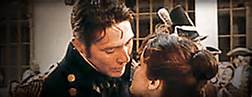
persuasion - kissI have only finished five chapters (about 12,000 words) so far. Long ways to go. When will it be finished? That’s difficult to say. Hopefully no more than six months from now, but it all depends on how much of “reasons for delay” number (1 and (2 arise. If I’m late with blog posts to come, I hope it’s because of reason (3 instead.

Wish me luck and lots of uninterrupted writing time!

~~~~~~~~~~~~~~~~~~~~~~~~~~~~~~~~~~~~~~~~~~~~

Pageflex Persona [document: PRS0000037_00034]Update, August 2014: Well, it took nearly another year, but the book is finally finished and published as The Persuasion of Miss Jane Austen. Although I was sad to give up the original title, the new one will give readers a much quicker impression of what this novel is about. I did manage to retain “my darling exile” as a repeated line in the book, however!

Posted in Jane Austen, Jane Austen Quotes, Shannon Winslow, Shannon Winslow's writing, Uncategorized, writing | Tagged , , , , | 8 Comments

Tea and Bonnets

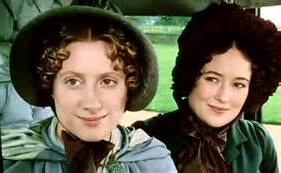
bonnets - jane and elizabethSince I had just recently made my first attempt at producing a Regency style hat, I thought it would be fun to do a post about hats and bonnet making. But fellow Austen Author C. Allyn Pierson sort of beat me to it. No, actually, she’s done a far more thorough job of it than I had ever intended. She’s even provided us with step-by-step instructions for how you can make your own. So I urge you to visit her post here on the Austen Authors’ site.

That being said, I still intend to share my own millinery efforts with you.

“Look here, I have bought this bonnet. I do not think it is very pretty; but I thought I might as well buy it as not. I shall pull it to pieces as soon as I get home, and see if I can make it up any better.” (Lydia Bennet, Pride and Prejudice)

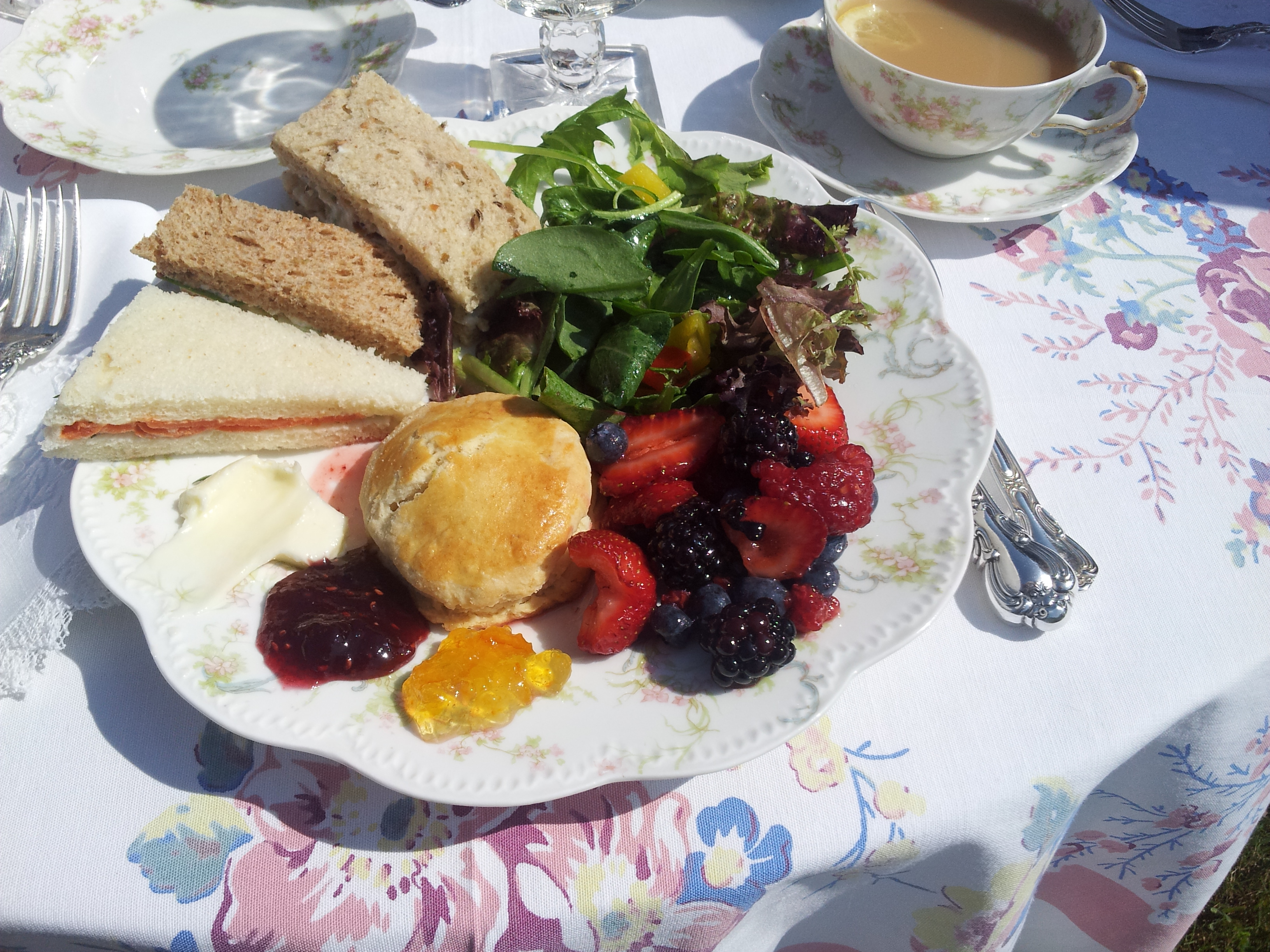
The Excellent Food

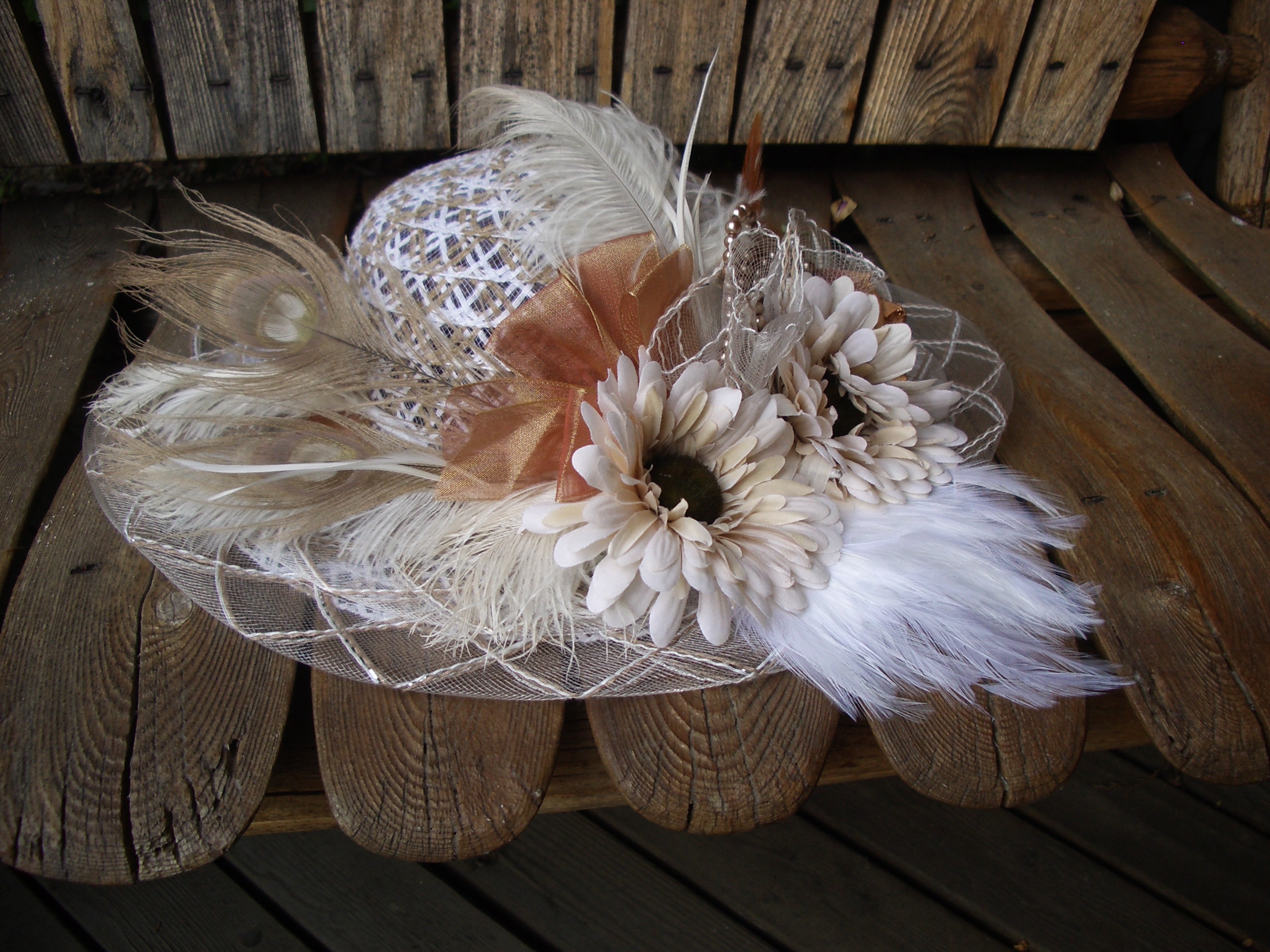
I had been invited to a Jane Austen garden tea party given by Laurel Ann Nattress (proprietoress of the Austenprose blog), and clearly some kind of hat or bonnet was required. I had none. So, like Lydia, I bought a less-than-stunning hat with the idea of making something better of it. A trip to the craft store came next (always fun to have an excuse to prowl around Joanne’s for an hour or so), where I collected a basket full of silk flowers, ribbons, beads and feathers – more than I could possibly use.

The Excellent Company

The Excellent Company

At home, I set about my creative work, testing out different combinations and arrangements for the trimmings, and then securing things into place with thread and glue. I was quite pleased with the results and not a little disappointed that I didn’t win the prize for best bonnet at the tea! However, that was the only minor blight on an otherwise perfect afternoon.

As I went in search of an appropriate Jane Austen quote to use for this post, the one above came immediately to mind. But there were so many others – more in her letters to Cassandra than in her books – that I couldn’t limit myself to just one this time. Here’s a sampling with a few of my favorite hat-related phrases highlighted:

“I am glad I bought my bonnet, if it is only for the fun of having another bandbox! (Lydia, P&P)

Mrs. Elton, in all her apparatus of happiness, her large bonnet and her basket, was very ready to lead the way…  (Emma)

“Do you know, I saw the prettiest hat you can imagine, in a shop window in Milsom Street just now – very like yours, only with coquelicot ribbons instead of green; I quite longed for it.” (Isabella Thorpe, Northanger Abbey)

“Ah, Mother! How do you do?…Where did you get that quiz of a hat? It makes you look like an old witch.” (John Thorpe, Northanger Abbey)

My Masterpiece

My Masterpiece

I bought some Japan ink likewise, and next week shall begin my operations on my hat, on which you know my principal hopes of happiness depend. (letter, 1798)

Flowers are very much worn, and fruit is still more the thing. Elizabeth has a bunch of strawberries, and I have seen grapes, cherries, plums, and apricots. There are likewise almonds, and raisins, French plums, and tamarinds at the grocers’, but I have never seen any of them in hats. (letter, 1799)

Elizabeth has given me a hat, and it is not only a pretty hat, but a pretty style of hat too. It is something like Eliza’s, only, instead of being all straw, half of it is narrow purple ribbon. I flatter myself, however, that you can understand very little of it from this description. Heaven for bid that I should ever offer such encouragement to explanations as to give a clear one on any occasion myself! (letter, 1799)

My mother has ordered a new bonnet, and so have I; both white strip, trimmed with white ribbon. I find my straw bonnet looking very much like other people’s, and quite as smart. Bonnets of cambric muslin on the plan of Lady Bridges’ are a good deal worn, and some of them are very pretty; but I shall defer one of that sort till your arrival. (letter, 1801)

We met not a creature at Mrs. Lillingstone’s and yet were not so very stupid, as I expected, which I attribute to my wearing my new bonnet and being in good looks. (letter, 1801)

[Mary’s] approbation of her child’s hat makes me very happy. Mrs. J. A. bought one at Gayleard’s for Caroline, of the same shape, but brown and with a feather. (letter, 1808)

Miss Burton has made me a very pretty little bonnet, and now nothing can satisfy me but I must have a straw hat, of the riding-hat shape, like Mrs. Tilson’s; and a young woman in this neighbourhood is actually making me one. I am really very shocking, but it will not be dear at a Guinea. (letter, 1811)

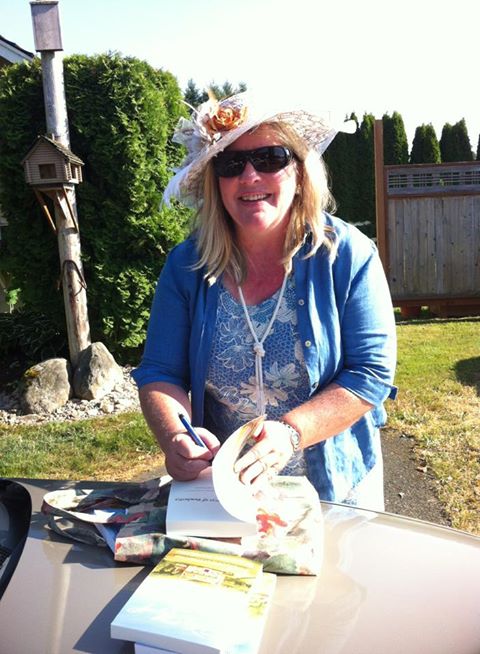
Author Shannon Winslow, "slave to fashion", signing books at JA tea.

Author Shannon Winslow, “slave to fashion”, signing books at JA tea.

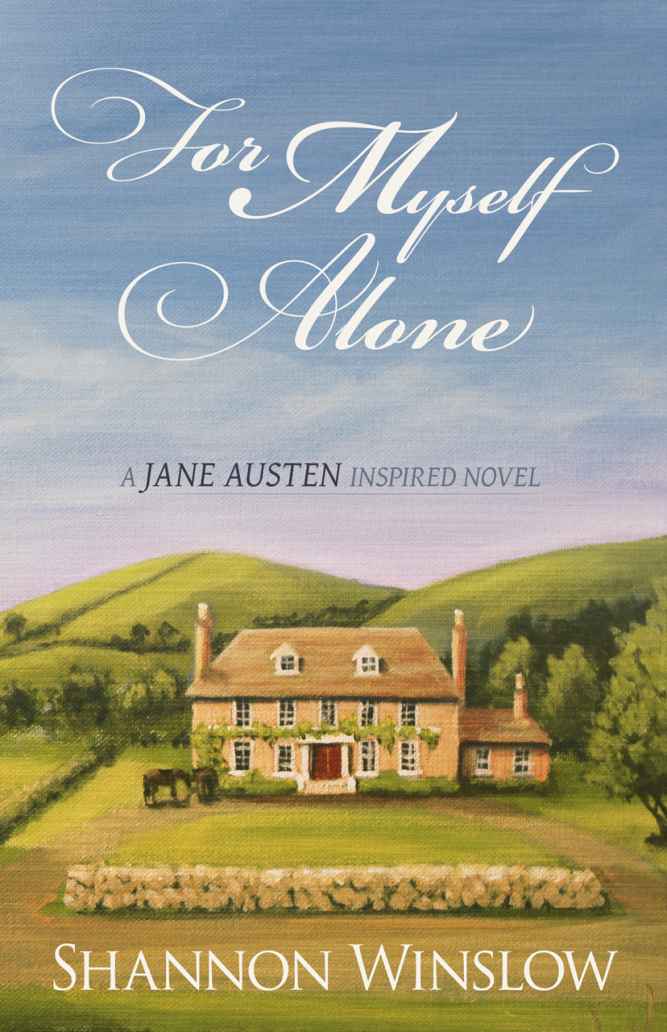
As you see, Jane Austen was not so cerebral that she was immune to the allure of fashion. Hmmm. Immune to the allure of fashion. Those words sounded so familiar when I typed them just now. Oh, that’s right. This was not a new thought… or even my thought. It belongs to Josephine Walker, heroine of my second novel For Myself Alone. I’ll leave you with a quote from her. Does she speak for you as well?

“Although I daresay I am far less consumed with style and finery than most young ladies, I am not completely immune to their allure. Just as any other female, be she eighteen or eighty, I would rather be smartly dressed than not.”

Posted in Austen Authors, food, gardening, Jane Austen, Jane Austen Quotes, learning, life, Shannon Winslow, Shannon Winslow's writing | Tagged , , , , , , | 8 Comments

My Studio: One Messy Little Secret

Darcys-of-Pemberley-book-jacket-03

When I started writing ten years ago, I didn’t understand that by doing so I would be giving up some of my personal privacy. It’s not that I’ve become so famous that I can’t leave my house without being stalked by paparazzi – hardly the case. It’s that, as an author, I can’t help but put more of myself into my characters and stories than I’m consciously aware of or intend. This truth came home to me when, after reading my first novel (The Darcys of Pembereley) my mother-in-law (who had known me for over 30 years) remarked, “I learned a lot about you by reading your book.” Hmm.

I must admit that what she said made me a little uneasy. What had I written that was so revealing? Was she, rightly or wrongly, assuming some of Darcy and Elizabeth’s relationship closely reflected my own marriage to her son? Awkward.

Since that time, though, I’ve reconciled myself to the fact that my life is an open book (bad pun intended). And because there’s no point in trying to keep secrets any longer, I might as well confess to you what my mother-in-law has known from the beginning. I am a terrible housekeeper. It’s true. In my heart, I desire and appreciate orderliness, but in real life, I rarely achieve it. Oh, sure, I manage to get the dishes washed, keep up with the laundry, and avoid any major health code violations. It’s the ubiquitous clutter; that’s my major downfall.

IMGP2635My sewing/craft/art/writing studio is the prime example (see certifiably unstaged, unretouched photos).

This used to be my oldest son’s bedroom, which I staked claim to the minute he moved out. Although it’s supposed to be available as a guest room (technically there is a futon somewhere underneath the debris), in actuality, this one little room is ALL MINE. Not too much to ask, is it? – especially considering that my husband has a gigantic shop for all his manly hobbies and big boy toys!

IMGP2631So this is my work/play room, which has to accommodate (and house supplies for) all my various artsy-crafty activities. I’ve been sewing since I was a kid (thus a sewing machine, serger, fabric stash, thread array, trims, and accessories). As an adult, I started making and selling beaded jewelry (stash of beads, tools, display case, etc). Later, I followed in my mother’s footsteps and began painting seriously (paper, canvases, collage materials, various kinds of paint, brushes, framing supplies, and finished artwork). Then there were my more minor forays into the world of crochet, stamping, and stained glass work (more assorted supplies). And, of course, each of these interests has its accompanying collection of books and reference materials. Plus I keep gift boxes and wrapping paper in this room.

That’s quite a list. No wonder my all-purpose studio is bursting at the seams! I probably should get rid of some of this stuff, since it all has to take a back seat to my writing these days. But then again, you never know when you’re going to need a glue gun, a scrap of gold ribbon, or a peacock feather. I used all three a couple of days ago, as a matter of fact, trimming a new bonnet!

“I have bought this bonnet. I do not think it is very pretty; but I thought I might as well buy it as not. I shall pull it to pieces as soon as I get home, and see if I can make it up any better… There were two or three much uglier in the shop; and when I have bought some prettier-coloured satin to trim it with fresh, I think it will be very tolerable.” (Lydia, Pride and Prejudice, chapter 39)

IMGP2633This space (at right) – my carefully laid out writing desk – is the heart of the operation. You’ll see that my old dependable (and sometimes excruciatingly slow) laptop computer is front and center, propped up on a 2×2″ board to improve the angle. It is flanked by my indispensable Encarta Webster’s Dictionary, Second Edition, on the left and my trusty thesaurus on the right (conveniently tucked into the drawer along with a tray of sewing thread). I also keep some JA and Regency reference books as well as important creature comforts (phone, glass of water, Kleenex, selection of chewing gum so that I won’t snack, dental floss in case I fail at previous resolution) within easy reach.

2009-01-19 007The goal is that when I sit down at my desk, I’ll have everything I need to be most productive. It must be working, since I’ve managed to write four novels here so far. When my head is into the story, I forget all about the clutter. And if I need inspiration, I can always look out my window, where the view is much more tranquil.

jane austen's writing deskAs for the clutter itself, I am fond of saying, “creative spaces are messy places.” That explanation might pass with the non-artistic sort, those who have no better authority to go by. I worry, however, that some of my fellow creative types will say it isn’t so. I know many who are in my camp, but there are probably others who have spotless homes and clutter-free work spaces. And what about Jane Austen? Well, she had no room at all for clutter on her tiny writing table!
 So where does that leave me? Now that you know my dirty little secret, what’s your verdict? Can you relate to my affliction, or are you a perpetual neatnick? Any suggestions for how to rescue me from the shameful curse of clutter? Should I even try? What do you think?

Posted in art, Austen Authors, life, Mt. Rainier, Shannon Winslow, writing | Tagged , , , , , , | 4 Comments

The Author’s Autograph

JA's signatureDuring her lifetime, Jane Austen attempted to hide her identity as the author of Sense and Sensibility, Pride and Prejudice, etc., writing anonymously as “A Lady.” Her reasons? She reportedly shuddered at the idea of notoriety, plus writing novels for pay wasn’t considered entirely suitable. For the most part, then, she got her wish, keeping her anonymity. But I think it’s a shame in at least one respect, and that is that she never had the thrill of signing her published works for fans.

“You need not send them word at Longbourn of my going, if you do not like it, for it will make the surprise the greater when I write to them and sign my name ‘Lydia Wickham.’ What a good joke it will be! I can hardly write for laughing.” (Pride and Prejudice, chapter 47)book signing

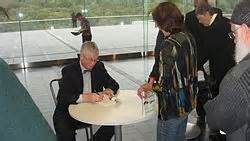
When I knew I would soon have my first book (The Darcys of Pemberley) published, that’s one of the things I really looked forward to – author book signings! I pictured myself sitting behind a table at a bookstore or library with (hopefully) a long line of people wanting to have me autograph their copies of the new book.

Although I knew very well that authors were just regular people (after all, I was now one of them!), there is a certain mystique to it. And “an author’s signature increases the value of books for collectors,” says Wikipedia. Whether that applies to my books, remains to be seen. One enterprising soul is putting the theory to the test, I noticed, listing a used but author-signed copy of TDOP on Amazon as a “collector’s edition” for more than twice the price of a new one!

IMGP2627Anyway, I worked on my autograph prior to the release date, filling entire sheets of paper front and back as I practiced to develop an ease and consistency, and to add a little artistic flare to it. So I was ready for the fun to begin when the book came out!

I have done library presentations, book fairs, and personal appearances of other kinds, signing dozens of books and enjoying every minute of it! (I’m sure it’s been more of a thrill for me to meet fans than it has been for them to meet me.) Of course, I won’t have the chance to see most of the people who buy my books. And, ironically, the majority of copies are now purchased in e-book format – very difficult to sign.

IMGP2622To make up for it, I have produced hand-signed peel-and-stick bookplates, which I’m now offering free of charge as a thankyou for purchasing. Just contact me (see contact info) and tell me how many you’d like. Put them in your paperbacks or wherever you like. Who knows? Someday they may be worth a pretty penny! 😀

Posted in Jane Austen, Jane Austen Quotes, my books, Shannon Winslow, writing | Tagged , , , , , , | Leave a comment

Owning the Estate

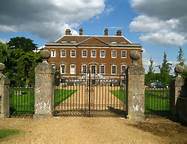
NetherfieldI’ve got a chance for you to show off your Jane Austen knowledge – a quiz about the estates that figure prominently in her novels! But first a few bits of news.

Audiobook Update: Production is now finished on Return to Longbourn, and it should go live before the end of the month!  The Darcys of Pemberley and Mr. Collins’s Last Supper are now “Whispersynced” to their Kindle editions. This means you can switch back and forth between audio and Kindle without losing your place. Or try “immersion” reading – listen to the audio while following along on your Kindle. Even if you’re not interested in getting the audio versions, I hope you’ll go and listen to the free samples, just for fun. I’m so proud of my narrators, Marian Hussey and Chandler Craig, who do a mean Mrs. Bennet and Mr. Collins respectively!

New Excerpt:  It was my turn this past week to put up and “Exquisite Excerpt” at Austen Authors. I decided to use a never-before-seen passage from Return to Longbourn, one featuring the volatile relationship between Mary Bennet and her stormy-tempered employer, Mr. Farnsworth. Watch out for flying sparks! Read it here.

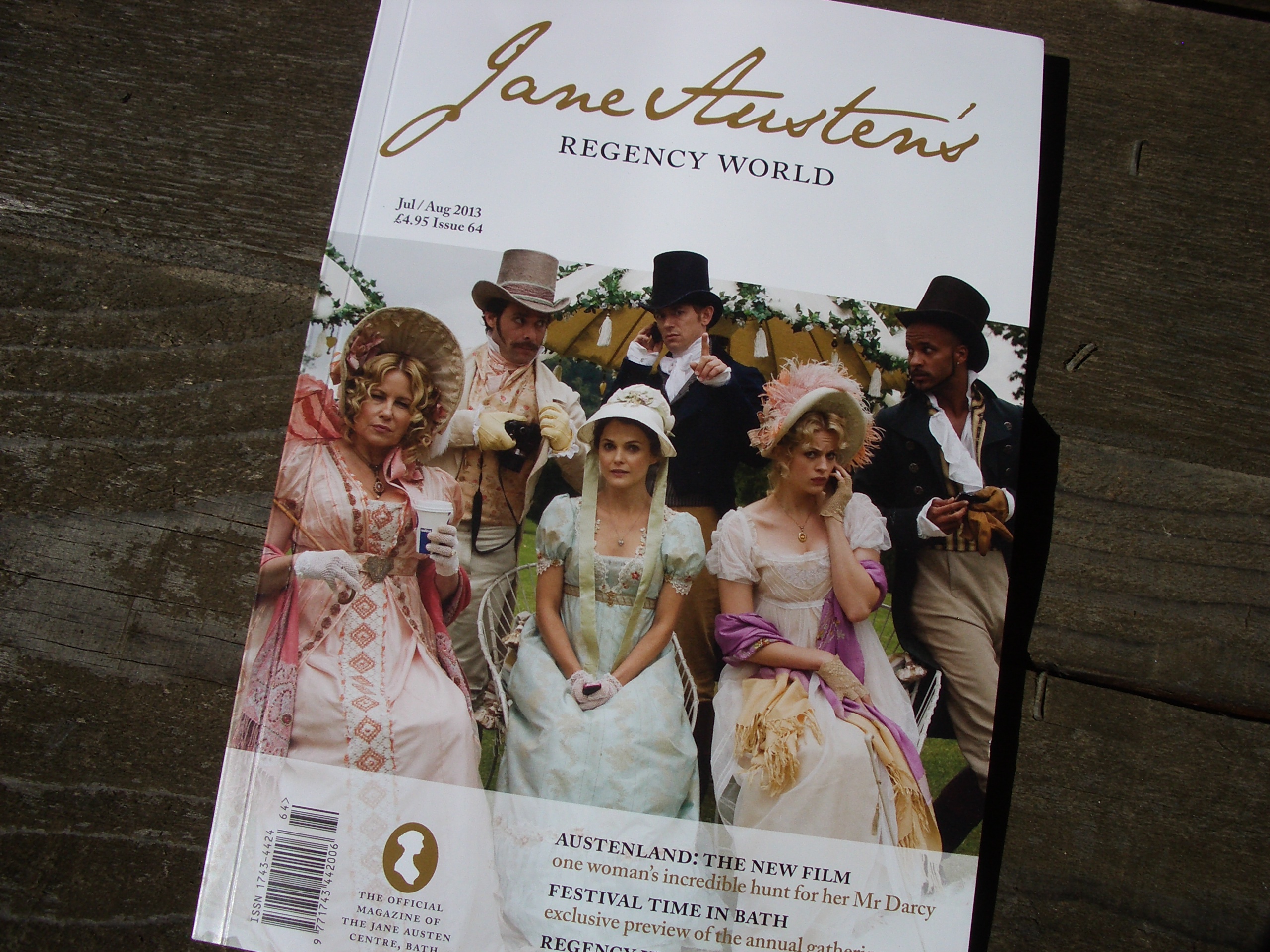
Magazine Review: A gratifying endorsement in the current issue of Jane Austen’s Regency World Magazine

IMGP2623Shannon Winslow continues to add to her “stash of unpublished Jane Austen novels” with this picturesque tale of a young woman who comes into an unexpected fortune. Set in familiar Jane Austen territory – Hampshire and Bath – For Myself Alone follows Josephine Walker,a rather charming heroine, on her journey to self-knowledge and true love. Winslow is attracting quite a following, and this book will please her growing army of fans.

Now for the JA quiz I promised you! The source of this fun exercise is Sporcle.com, and I invite you to go there and give the official version a try. If you would prefer an untimed, totally unofficial, multiple-choice version, however, I’ve set that up for you below. Personally, I LOVE multiple-choice, and I’ve always suspected I could pass that kind of test on a subject I knew almost nothing about. So you should breeze through this. Then be sure to pat yourself on the back for how smart you are!

Match the estate name with the proprietors. You can find the answers below the quote, but NO peeking!

  1. General Tilney                                         A.   Mansfield Park
  2. Fitwilliam Darcy                                      B.   Barton Park
  3. Emma Woodhouse                                  C.   Netherfield
  4. The Dashwood Family                            D.   Delaford
  5. Sir Walter Elliot                                       E.   Rosings Park
  6. The Bennet Family                                 F.   Pemberley
  7. Mr. George Knightley                            G.   Northanger Abbey    
  8. Colonel Brandon                                     H.   Longbourn
  9. Mr. Charles Bingley                                I.   Kellynch
  10. Sir Thomas Bertram                              J.   Hartfield
  11. Sir John Middleton                                K.   Donwell Abbey
  12. Lady Catherine de Bourgh                    L.   Norland

Their estate was large, and their residence was… in the centre of the property, where, for many generations, they had lived in so respectable a manner as to engage the general good opinion of their surrounding acquaintance. (Sense and Sensibility, chapter 1)

(Quiz answers: 1G, 2F, 3J, 4L, 5I, 6H, 7K, 8D, 9C, 10A, 11B, 12E)

Posted in Austen Authors, fun & games, Jane Austen, Jane Austen Quotes, Shannon Winslow, Uncategorized | Tagged , , , , , , , , | Leave a comment

A Pleasure Shared

fanfareFanfare please! I have an exciting announcement: The Darcys of Pemberley and Mr. Collins’s Last Supper are now available in AUDIO!  (Return to Longbourn will be coming next month.) If you have an account at Audible.com, or decide to open one, I hope you’ll do me the honor of making one of my books your first/next purchase. At the very least, listen to the samples (follow links above). My wonderful narrators – Marian Hussey (TDOP) and Chandler Craig (Mr.C) – do a mean Mrs. Bennet and Mr. Collins!~~~~~~~~~~~~~~~~~~~~~~~~~~~~~~~~~~~~~~~~~~~~~~~~~~~~~~~~~~~~
 
The process began a couple of months ago (see previous post Books Read Aloud), and now our work has born fruit: my first audio books! I say “our work” because it truly was a collaborative effort. Obviously, I was responsible for writing the books in the first place. Marian and Chandler used their expertise to translate the books into audio form. Then I had the thrill of being the first to listen to the recordings, offering corrections and suggesting improvements, which the narrators efficiently attended to before uploading the completed books. Oh, and the cover art had to be modified – accomplished by my favorite graphic artist Micah Hansen!
 
So, as you see, there were several people and lots of time/effort involved. I’m delighted with the finished products, and I hope the books will be enjoyed by audio readers for years to come! The creative process is never complete until the work is shared.
 
Fanny Price - Frances OShe became a subscriber… amazed at her own doings in every way, to be a renter, a chuser of books! And to be having any one’s improvement in view in her choice! But so it was. Susan had read nothing, and Fanny longed to give her a share in her own first pleasures, and inspire a taste for the biography and poetry which she delighted in herself.  (Mansfield Park, chapter 40)
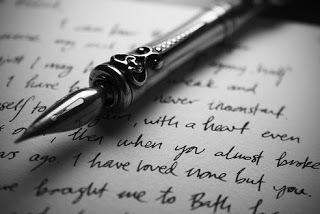
 
That’s really what it’s all about for authors like me – finding ways to share the stories we love with other people. (See related post: Making Connections) And hearing back from satisfied readers absolutely makes my day! It keeps me going. Case in point, I recently got this letter from a woman who had received two of my books as a gift from a friend:
 
I must admit, I have not taken the time for quite a while to sit down to a good read. When I received the gift, I was intrigued to the point of beginning “The Darcys of Pemberley” immediately. “Pride and Prejudice” has long been a tremendous favorite of mine, and I was anxious to see what a contemporary author could do with a sequel to the novel. I WAS NOT  disappointed!
 
You did an exceptional job of captivating my attention so well I just could not put that book down! Each time I sat to read I’d tell myself I could only afford one chapter before getting to items I needed to complete about my house. Unfortunately for me, I usually read two or three chapters before I forced myself to abandon the book for more pressing business.
 
Thank you for a job well done indeed. I loved every moment I spent reading and have completed the first book. Now on to the second! I can’t wait to begin “Return to Longbourn” to see what else Lydia can find to embarrass herself, or what Kitty can find to bring attention to her inexperience and selfishness. This was a wonderful treat for me and I wanted to share with you my pleasure in enjoying the books. Thank you so very much! 
 
Wentworth's letter_SodabugI share this letter with you not to toot my own horn. I really mean to brag on this delightful lady and what a grand thing she did for me by taking a few minutes out of her day to send me this thoughtful note. I’m going to pin it to my wall to inspire me to similar acts of kindness. Regardless what line of work we’re in, once in a while we all need the encouragement of hearing, “Thank you for a job well done!” Don’t you agree?
 
Have you been on the giving or the receiving end of a special word of encouragement recently? Please share your story/comment. 


Posted in Jane Austen, Jane Austen Quotes, my books, Shannon Winslow's writing, Uncategorized, writing | Tagged , , , , , , , | 4 Comments

Breach of Promise: Setting the Story Straight

“My resolution of thanking you for your kindness to Lydia had certainly great effect. Too much, I am afraid; for what becomes of the moral, if our comfort springs from a breach of promise? for I ought not to have mentioned the subject. This will never do.” (Pride and Prejudice, chapter 60)


Today’s subject: some surprising facts about breach-of-promise suits. Did you know that, early on, they were just as often brought by men suing women as women suing men? Did you know that neither the plaintiff nor the defendant was allowed to testify? These are some of the weird things I discovered when I researched the subject for my second Austen-inspired novel, For Myself Alone.

The breach-of-promise suit is a curious legal action largely confined to the 18th and 19th centuries. I’ve always been intrigued by the phenomenon, and I’m a little surprised that Jane Austen never ventured onto the topic, since it has a clear connection to one of her major themes – the financial survivability of the well-bred lady. Perhaps she would have gotten around to it if she’d had time to write a few more books.

Most of us think of breach of promise suits as being brought by a jilted woman against her former fiancé. And so they typically were later on, in the Victorian era. With a shorter “shelf life” and a more fragile reputation, a long engagement that came to nothing was far more likely to damage the intended bride’s future prospects than the groom’s. But it turns out that’s not the whole story.

My ideas, like most people’s, had been heavily influenced by popular culture – what author Ginger S. Frost in her book Courtship, Class, and Gender in Victorian England calls “the myth of breach of promise.” She cites works such as Charles Dicken’s Pickwick Papers and Gilbert and Sullivan’s Trial by Jury as being responsible for some or our misconceptions, writing:

Suits for breach of promise of marriage were well known to the public in Victorian England. From at least the 1830s a variety of writers recognized the inherent humor and drama of the action and began to fictionalize the cases as they were then brought. The depictions of trials during the century gave a strangely uniform representation of the people who brought such litigation and the outcome of their conflicts. This interpretation built up an idealized myth of breach of promise, one which influenced the perception of the suit far more than actual cases did.

What is NOT generally know is that, early on in their history (1650 – 1800 approx.), these suits were just as often filed by a jilted gentleman as by a jilted lady, seeking damages either for financial loss or simply for “non-performance of a marriage contract.” A young man would often borrow money against his “expectations” (what he stood to gain by inheritance or marriage), so he could be in a real bind if his wealthy fiancé backed out of the agreement. Remember that by law, her fortune became his the moment they married.

Going to court was perilous, though, often adding insult to injury. Tainted reputations could be further tarnished by a public trial and the unwanted attention of the press in high-profile cases. And one could never be certain one’s side of the story would even get a hearing, since neither the plaintiff nor the defendant was allowed to testify! That’s right. Until late in the 19th century, the only two people with a certain knowledge of the facts were expressly forbidden to take the witness stand. It was thought to be potentially too prejudicial.

Also, juries were notoriously unpredictable. They were supposed to base the amount they awarded to successful plaintiffs on factors such as length of the engagement, actual costs incurred, loss of reputation (and possibly loss of virtue), the defendant’s ability to pay, and perhaps some punitive damages for “wounded feelings.” But they were known on occasion to ignore the evidence and the judge’s instructions in order to side with the barrister who put on the best show in court, awarding either nothing at all or an outrageous sum, according to their collective whim.

Defendants sometimes went to extreme lengths to avoid paying the judgements too – risking imprisonment, hiding their money (or divesting themselves completely), even choosing to emigrate instead.

Over the years, the life and character of the breach-of-promise suit gradually evolved. Public opinion shifted and so did the demographics. A man who took his former fiancé to court soon risked being branded “unmanly” (if he claimed emotional devastation) or called an unchivalrous cad (if he pleaded his losses were primarily financial). Thus, by Victorian times, nearly all the breach-of-promise cases were being brought by women.

Ultimately the phenomenon died out in the early 20th century (although the law abolishing the practice in England wasn’t passed until 1971), its demise reflecting the changing role of women in society, who began to need this legal recourse less and less. As women gained the right to vote, to own property, and to participate in commerce, their future security no longer depended solely on making a good marriage. And with the sexual revolution, women were no longer considered by most to be “unmarriageable” if they had lost their virginity during a former relationship.

So as you now know, breach-of-promise suits could be a painfully messy business. But that didn’t deter me. In For Myself Alone, I threw my unsuspecting heroine, Jo Walker, right into the middle of one. Fortunately, she had an excellent attorney to advise her about the pitfalls and her legal options. Here is part of their conversation:


“Excuse me, Mr. Gerber. May I be frank?”

“By all means.”

“You speak of claims, damages, and settlements as if it is simply a matter of course. Perhaps for you it is, but not for me. In fact, it strikes me that the whole scheme is little better than a form of legalized extortion! Do not misunderstand me; the money is of minimal importance to me. It is the principle involved that is impossible to surrender. Mr. Pierce’s bad conduct is responsible for placing me in this dreadful position. And now, on top of what I have already suffered, he threatens to drag me into court. Does such barbarous behavior deserve to be rewarded?”

“I understand your repugnance for the notion, Miss Walker… My own personal sympathies tend in much the same direction, I assure you. However, years of experience have taught me that survival often demands compromise. In the judicial system, taking an unyielding stand for one’s principles can prove exceedingly hazardous… and enormously expensive. That is the plain truth. As your solicitor, it is my sworn duty to steer you away from such peril. …Nevertheless, should you be firmly of that mind, there is another course of action you may wish to consider – a very effective but extreme measure. I hesitate even to mention it.”

“Tell me. …You promised to be straightforward with us, sir. Now tell me your idea!”

“As you wish Miss Walker…”


What would you recommend to a woman in Miss Walker’s plight – being unfairly sued for damages in breach of promise? Would you pay a modest settlement to make the problem go away? Would you put your trust in the court system for vindication? Or would you stand on principle, whatever the cost? I hope you will read For Myself Alone to see what Miss Walker decides and how it changes the course of not only her life, but others as well.

Posted in Austen Authors, English Regency culture, History, Jane Austen, Jane Austen Quotes, my books, Shannon Winslow | Tagged , , , , , | 1 Comment

You Never Forget How

IMGP0931“Let’s go for a bike ride instead.”

The weather was perfect on Saturday – dry, and neither too warm nor too cool – and I had decided on some outdoor exercise before dinner. Like every proper Jane Austen heroine, I’m very fond of a long walk. I even have a three-mile course through our woodsy neighborhood (partly on trails and partly on country roads) that I use regularly. So I had in mind an invigorating walk, not a bike ride, when my husband made the above statement.

I’ll admit I did not at first respond enthusiastically to his suggestion.

bike crash 2You should know that 1) it’s been easily 5 years since I’ve been on a bike, 2) our neighborhood is full of hills, and 3) I’m not as young as I used to be or as fit as I should be. Although I feel perfectly secure with my feet solidly on the ground, the idea of perching on a painfully narrow seat balanced atop a pair of perilously skinny tires filled my mind with dread. I was envisioning the embarrassment and disaster that would likely follow. 

Naturally, when considering the question before me, I asked myself what would Jane Austen advise. It seemed her heroines were admired for having at least a measure of boldness and athleticism, within the constraints of the day (see related post Care to Take a Turn? ). Even the timid Fanny Price (quoted below) received praise and reward for plucking up the courage to try something out of her comfort zone.

masterpiece_mansfield_t614“Ah, cousin, when I remember how much I used to dread riding, what terrors it gave me to hear it talked of as likely to do me good… and then think of the kind of pains you took to reason and persuade me out of my fears, and convince me that I should like it after a little while, and feel how right you proved to be, I am inclined to hope you may always prophesy as well.” (Mansfield Park, chapter 3)

(And you thought I wouldn’t be able to find an appropriate Jane Austen quote for a post about riding a bike. Ha! Okay, so Fanny was talking about riding a horse. Close enough.)

riding sidesaddleThen I was reminded how many times I refer to riding (horses again) in my own books, especially Return to Longbourn. In it Lizzy says, “There is nothing – or almost nothing – like a thrill of a good ride.” And then there’s this passage where Mary (much like in my situation) is unexpectedly invited/challenged by Mr. Harrison Farnsworth (master of Netherfield, and her employer) to take a ride with him:

” You must admit it is a fine day for riding.”

He was correct, maddeningly so; the weather could not have been more obliging, and it would be an ideal opportunity to consult about the children. She could not even beg off because of her dress, for the gown she wore was as serviceable as any summer riding habit. Besides, Mary told herself, it was a chance to brush up on her skills, so that she might be in better form for another day and for that other, more pleasant riding partner.

“Very well, then,” she said presently. “I will go if you wish it, although I must warn you that I am woefully out of practice.” …Mary could feel her own excitement building for this next adventure. She only hoped she would not be sorry for agreeing to it.mary bennet - lost

What could I do? I refuse to be shown up by Mary Bennet AND Fanny Price, so I likewise said ‘yes’ to the call of adventure. What’s more, I lived to tell the tale.

We rode about 8 miles. And I’m proud to say that I did pretty well, with only one minor mishap.

bugNote to self: In future, ride with mouth closed so as not to swallow any more bugs. 😦

Posted in Jane Austen, Jane Austen Quotes, life, my books, Shannon Winslow, Uncategorized | Tagged , , , , , , | 4 Comments

Double Dessert – or – What to Do With a Dozen Eggs

summer-banquet-hop-copyAs my regular readers know, I don’t blog only about Jane Austen and the Regency period. So my contribution to the Summer Banquet Hop is not “period correct.” It’s more current and personal.

Does anybody remember progressive dinners? I’m not sure if people still do them. But it used to be that a group of friends (from church or whatever other group) would get together and, instead of eating a whole dinner at one home, they would all progress course by course from one home to another – appetizers at the first place, maybe soup at the second, then salad, the main course, and finally dessert.

dozen eggsThat’s what this Summer Banquet blog hop is all about, except you can visit in any way you wish, and there’s no guarantee you’ll get your banquet in a logical order. One thing’s for sure, though; I’ve got the dessert course covered, and it all starts with a dozen eggs.

“Mrs. Bates, let me propose your venturing on one of these eggs. An egg boiled very soft is not unwholesome. Serle understands boiling an egg better than any body. I would not recommend an egg boiled by any body else; but you need not be afraid, they are very small, you see – one of our small eggs will not hurt you.” (Mr. Woodhouse, Emma)

One of my all-time favorite desserts is creme brulee, and a few years ago my family established serving it for Easter as our new tradition. It’s not that difficult to make. Here’s my recipe:

Heat 1 pint whipping cream over low heat until bubbles form around the edge of pan. Beat 4 egg yolks and 1/2 cup sugar until thick (about 3 minutes). Beating constantly, pour heated cream in steady stream into egg yolks. Add 1 teaspoon vanilla and pour into 6 custard cups. Place cups in a baking pan. Add about 1″ boiling water around them. Bake at 350 for 45 minutes. Remove from water bath and refrigerate until chilled (at least 2 hours). Sprinkle each custard with granulated sugar. Place under broiler until sugar topping is melted and browned. Refrigerate briefly to set. Serve.IMGP2538

Here are the ones I made this Easter. And, yes, they were delicious! If you triple the recipe like I do, so you have enough to share with your family or friends, you will use a total of 12 egg yolks.

But what on earth are you supposed to do with all those leftover egg whites? The elegant – and yummy – solution presented itself when I discovered that making an angel food cake requires exactly that: one dozen egg whites! Together the two desserts make a perfect pair.

angel food cakeHeat oven to 375. Stir together 1 cup cake flour and 1 1/2 cups confectioners’ sugar. Set aside. In large mixer bowl, beat 12 egg whites (1 1/2 cups), 1 1/2 tsp. cream of tartar, and 1/4 tsp. salt until foamy. Add 1 cup granulated sugar, a little at a time, beating on high speed until meringue hold stiff peaks. Gently fold in 1 1/2 tsp. vanilla and 1/2 tsp. almond extract. Sprinkle flour/sugar mixture, 1/4 cup at a time over meringue, folding in gently. Fill batter into ungreased tube pan. Bake 30-35 minutes. Invert pan onto funnel and let hang until cake is completely cool.

Now turn your masterpiece into strawberry shortcake or anything you like.

So there you have it – my favorite trick to turn a dozen eggs into two delightful desserts. I hope you’ll give it at try!

Now, be sure to visit these other blog hop spots to meet some interesting people and discover more tasty treats:

Hop Participants

  1. Random Bits of Fascination (Maria Grace)
  2. Pillings Writing Corner (David Pilling)
  3. Anna Belfrage
  4. Debra Brown
  5. Lauren Gilbert
  6. Gillian Bagwell
  7. Julie K. Rose
  8. Donna Russo Morin
  9. Regina Jeffers
  10. Shauna Roberts
  11. Tinney S. Heath
  12. Grace Elliot
  13. Diane Scott Lewis
  14. Ginger Myrick
  15. Helen Hollick
  16. Heather Domin
  17. Margaret Skea
  18. Yves Fey
  19. JL Oakley
  20. Shannon Winslow
  21. Evangeline Holland
  22. Cora Lee
  23. Laura Purcell
  24. P. O. Dixon
  25. E.M. Powell
  26. Sharon Lathan
  27. Sally Smith O’Rourke
  28. Allison Bruning
  29. Violet Bedford
  30. Sue Millard
  31. Kim Rendfeld
Posted in blog hop, food | Tagged , , , , , , , | 27 Comments