
 This month marks the 5-year anniversary of the publications of The Darcys of Pemberley! My baby (my very first novel) is five years old now, and I’m so proud of how well it has done out there in the big, wide world. It thrills and slightly astounds me to think how many thousands of people, most of them total strangers, have now read it. TDoP is still my flagship, with the other novels following in its wake, and that shows no sign of changing.
So, I wanted to commemorate the occasion. And according to my custom, I went looking for an appropriate Jane Austen quote to include in this post. I found this one in a letter she wrote to her sister Cassandra in 1799:
I wish you joy of your birthday twenty times over. I shall be able to send this to the post to-day, which exalts me to the utmost pinnacle of human felicity, and makes me bask in the sunshine of prosperity, or gives me any other sensation of pleasure in studied language which you may prefer.
 Absolutely perfect! Not only does this quote speak of celebrating over a birthday, as I’m doing with The Darcys of Pemberley, it also seemed like a classic example of what inspired me to start writing Austenesque in the first place: a first-rate demonstration of Jane’s sharp mind, her humor, and her stellar use of language.
(I actually discovered this quote four years ago and used it in a first anniversary post for The Darcys of Pemberley. Loved it then; love it now!)
Reading through the rest of the letter, I found these other gems – some funny, some sarcastic, all a reflection of Jane’s character and personality.
I am tolerably glad to hear that Edward’s income is so good a one – as glad as I can be at anybody’s being rich except you and me…
You express so little anxiety about my being murdered under Ash Park Copse by Mrs. Hulbert’s servant, that I have a great mind not to tell you whether I was or not…
Mrs. Knight giving up the Godmersham estate to Edward was no such prodigious act of generosity after all, it seems, for she has reserved herself an income out of it still; this ought to be know, that her conduct may not be overrated. I rather think Edward shows the most magnanimity of the two, in accepting her resignation with such incumbrances.
I do not like the Miss Blackstones; indeed, I was always determined not to like them, so there is the less merit in it.
There were more dancers than the room could conveniently hold, which is enough to constitute a good ball at any time. I do not think I was very much in request. People were rather apt not to ask me till they could not help it… There was one gentleman… who I was told wanted very much to be introduced to me, but as he did not want it quite enough to take much trouble in effecting it, we never could bring it about… One of my gayest actions was sitting down two dances in preference to having Lord Bolton’s eldest son for my partner, who danced too ill to be endured.
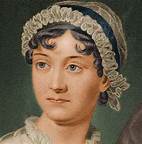 Is it any wonder we love her prose as much as we love her stories? And these examples are from just one letter! I occasionally write something rather witty or funny (at least to me), but I can’t ever hope to measure up. Here’s a line, though, from The Persuasion of Miss Jane Austen that I think sounds particularly like her. Speaking of her illness Jane says…
From the way Mary looked at me… I immediately perceived that she considered my chances very grim indeed. This did not trouble me overly. I intended to live or die quite independent of her opinion in the case.
Ironically, Jane starts her letter by telling Cassandra that she should read her own letters over five times before sending them so as not to miss how entertaining they were. “I laughed at several parts of the one which I am now answering,” Jane wrote. I wonder if any of Cassandra’s letters have been preserved. Jane considered her the funny one.
Anyway, instead of bragging about “my baby” or boasting in my small accomplishments, I’m giving credit where credit is due. It’s God who gave me the ability to write. It’s Jane Austen’s work and wit that inspire me. And it’s my readers who keep me going. I am so grateful to everyone who has read, reviewed, and recommend one of my books to a friend, to everyone who has given me a word of encouragement along the way. I feel truly blessed!
As they celebrated the second anniversary of their marriage at Pemberley that November, Darcy and Elizabeth could easily have been forgiven for thinking themselves blessed above all other creatures in England. (The Darcys of Pemberley, final line)
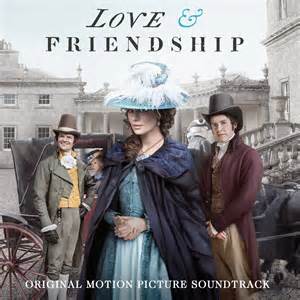 I promised you something about the newest Jane Austen adaptation: Love and Friendship, based on one of her lesser works known as Lady Susan.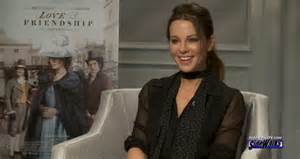
 In the end, Lady Susan must make some compromises, too. But she finds a way to survive. And, according to the film at least, she manages to have her cake and eat it too. We don’t have to like her, but we may begrudgingly admire her just a little.
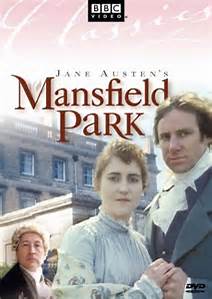 No, this is not another movie review (although I will be writing something about Love and Friendship next time). Think more Mansfield Park.
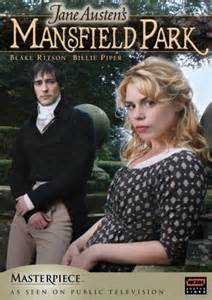 Sounds like harmless fun, right? I think it’s difficult, especially for today’s readers, to understand why Edmund Bertram and Fanny Price were so strongly opposed to the idea. And Jane Austen disapproved too, from how she writes. That may be the most surprising part, since the Austen family is known to have done the same – entertained themselves by creating and acting out amateur theatricals at home.
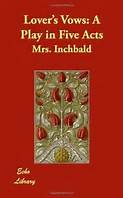 In the book and film adaptations, we get little snippets of dialogue as the rehearsals progress, and we see the trouble it creates. But I was still wondering what was so astonishing and improper (according to Fanny in the excerpt above) about the play itself. I found it online and read it. It is a real play, btw, which undoubtedly Jane Austen had read herself. (Read it
 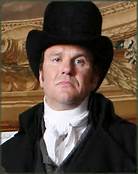 So, Edmund and Fanny were right all along; the acting scheme was a bad idea, at least within the given context. Tom and Maria, who were in denial before, knew it by their guilty consciences as soon as their father returned home unexpectedly. But in the end it wasn’t the words of the play that caused the real trouble; it was the permission the activity granted for bad behavior – all that close contact and sneaking off to “rehearse” in private. There’s little doubt it contributed to what ultimately happened: Maria being ruined by deciding to leave her husband to run off with Henry Crawford.
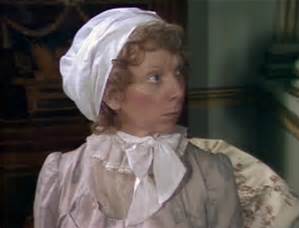 Throughout the entire book she has been poking her nose into the Bertram family business, telling everybody what to do and not do, claiming to be upholding propriety and guarding against wasteful spending. Now, when we really need her to intervene, she fails us. Well, not us, but she does fail the Bertrams, especially Maria who is her favorite.
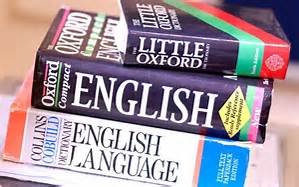 English is not a static language. It’s constantly changing, whether we like it or not.
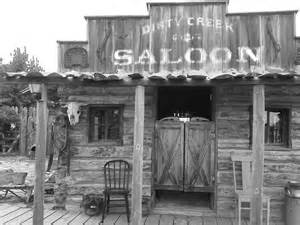 Actually, her language is one of the aspects of her books I enjoy the most. But emulating it as faithfully as possible has gotten me into some trouble. For instance, one reviewer on Amazon severely berated me for more than once using the word “saloon” in The Darcys of Pemberley, assuming it was a typo and that I surely meant “salon” instead. According to the definitions given in my 2004 Webster’s Encarta Dictionary (and every American western movie ever made), she would be right.
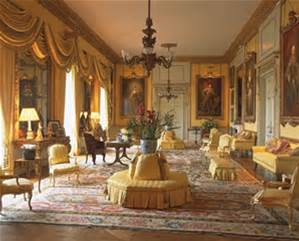 However, my higher authority was Pride and Prejudice (which possibly the outspoken reviewer had never actually read???). In this excerpt from chapter 45, Elizabeth and Mrs. Gardiner have just arrived at Pemberley at the invitation of Miss Darcy:
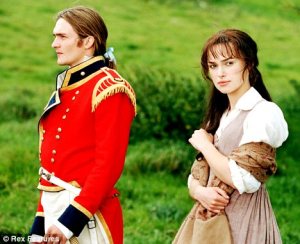 At least in this example my use of a troublesome word, whose meaning had changed over time, was only regarded as a typographical error. I got into more serious trouble with “intimate.” Austen used it 100+ times in her writings, and as far as I can tell, not once did she mean anything sexual by it. Yet, when in TDOP I have Darcy telling Elizabeth that it’s unfortunate she once had a rather “intimate” association with Wickham, noisy protests arose from more than one quarter. “Elizabeth would never!” “Darcy wouldn’t believed her capable of such a thing!” Obviously, some readers thought the word inferred a sexual relationship not intended by the author or by Mr. Darcy either. Yikes!
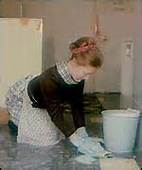 A case in point. The lady in charge of a manor house in those days was the estate’s “housekeeper.” That’s what she was called; there’s no other word I can use for her. As the highest ranking position to which any female employee could aspire, the title carried with it a great deal of respect among the staff and also from the family they served. But unless the reader understands that, they will likely think of someone down on her knees scrubbing floors instead of what she really was: an important member of the household’s management team. I guess there’s nothing I can do about that.
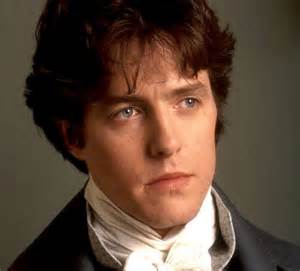 Every Jane Austen novel reminds us of the severe limitations society placed on females of genteel birth in her era. About their only honorable option was to become some gentleman’s wife. Although the men had a far better lot in general, their choices were also very restricted.
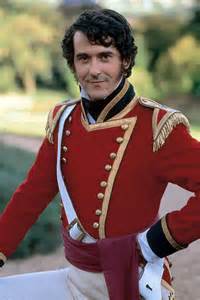 Better give that boy something to do! Joining the clergy was acceptable, but not stylish. A military life held more prestige, but also more danger (Napoleon and all). So, perhaps the law? Fine, but then he must be a swanky London barrister, and not (heaven forbid!) a humble country attorney like Lizzy’s uncle Phillips in Pride and Prejudice, who was considered one of her “low connections.”
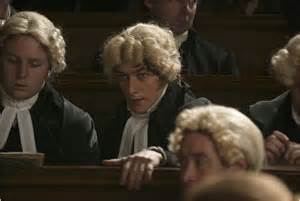 Although I’m no expert, from what I’ve read, the haphazard education of lawyers seems only a symptom of a much larger malaise afflicting the legal system that existed at the time. Jo Walker (heroine of my book For Myself Alone) has this to say about it:
 What’s in a name? No, wait, that’s Shakespeare. Wrong author! I’m supposed to be channeling Jane Austen! Let me try again.
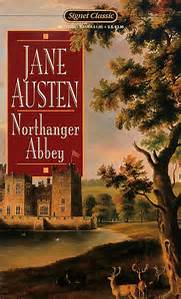 I guess I’m not the only one who has struggled with indecisiveness in this area. Jane Austen changed the titles to at least three of her books before publication. First Impressions became Pride and Prejudice. Elinor and Maryanne became Sense and Sensibility. Northanger Abbey underwent the most transformations. Austen originally called it Susan, after the heroine. Then she changed not only the title of the novel but the heroine’s name to Catherine to avoid confusion with another book that had come out. It was ultimately published as Northanger Abbey after her death.
 I don’t really intend my blog to turn into a movie review site, but there has been more than the usual amount of activity in the period movie arena lately, begging some kind of response. (See
 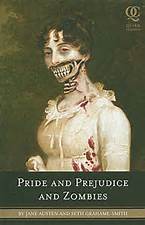 I shouldn’t admit my other thought at the time, which was, “Darn! Why didn’t I come up with the idea first?” I wouldn’t really have been interested in spending that much time thinking and writing about zombies, but I wouldn’t mind the paychecks associated with the franchise.
 “Do you think any consideration would tempt me to accept the man who has been the means of ruining, perhaps forever, the happiness of a most beloved sister?” As she pronounced these words, Mr. Darcy changed colour; but the emotion was short, for Elizabeth presently attacked with a series of kicks, forcing him to counter with the drunken washwoman defense. She spoke as they battled: “I have every reason in the world to think ill of you…” (Pride and Prejudice and Zombies, Jane Austen and Seth Grahame-Smith)
 I watched two new movies this past week – first the Hallmark Channel’s Unleashing Mr. Darcy and then, a couple of days later, I rented the recently released version of Far From the Madding Crowd.
 Let’s begin with
 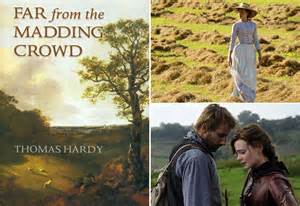 Far From the Madding Crowd
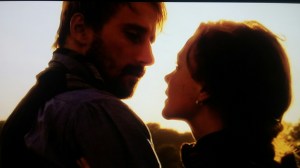 Anyway, I watched Far From the Madding Crowd twice before being forced to return it. Now it’s at the top of my wish list for what my husband or sister can get me for my birthday in a few weeks. I can hardly wait to file it in the F section of my collection between The Family Man and Father Goose!
 I hope you have all enjoyed your Christmas celebrations, in whatever form they take for you. What a busy time of year! But now that things have eased a bit, I thought I’d relate a special highlight for me from earlier this month. As of a couple of weeks ago, I can now add “playwright” to my resume!
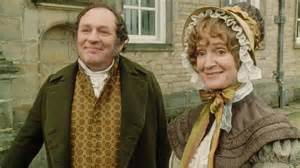 One reader suggested – jokingly at first and later seriously – that the sketch would make a “delightful reading” at a meeting of her Vancouver, Canada, JASNA group. I gave my permission, and it was performed in full costume at their December 12th get together as part of the celebration of Jane Austen’s birthday (Dec. 16th). So I think that officially makes me as a playwright, don’t you?
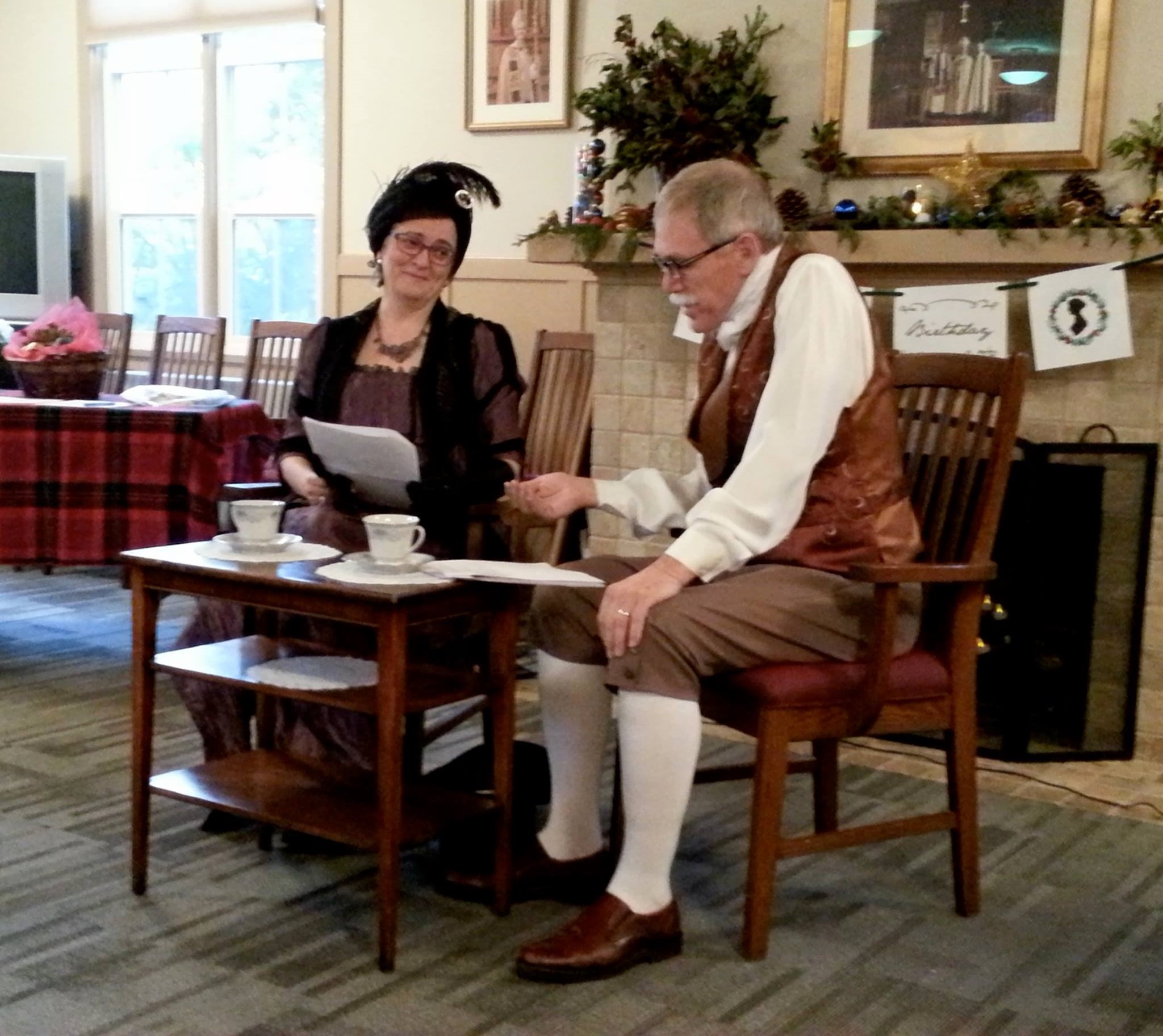 Here Mrs. Gardiner impatiently interrupted, giving her husband’s arm a vigorous shake for emphasis. “Not the fish! It is your opinion of the man I am far more interested in. What say you about your host Mr. Darcy?”
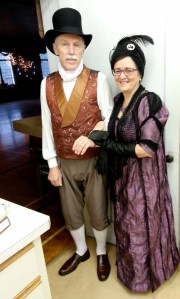 Take a bow, Phyllis and Lindsay! (See news blurb about their performance
 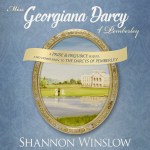 Yea! I’m thrilled to say that my latest novel – Miss Georgiana Darcy of Pemberley – is now available in audio format!
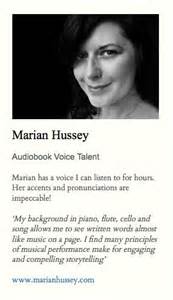 She studies the material ahead of time with some general direction from me as to how I see the characters and what I want. In this case, since Marian had already narrated my previous two P&P sequels (The Darcys of Pemberley and Return to Longbourn), I just requested that she voice the characters the same way to make the transition from book to book as seamless as possible for the reader/listener. After she had recorded the book, I “proof listened” to it, noting the changes I wanted as I went along. Once I was satisfied, the entire audio book had to go through a final quality control review before being released.
 entertainment. She refers to it in this passage from chapter 14 of Pride and Prejudice, for example. Unfortunately, this is not a very resounding endorsement of the entertainment, thanks to Mr. Collins’s limitations:
 I’m not quite sure of the context, except that I’m assuming this letter is to one of Jane’s many nieces and that the Henry mentioned is Jane’s brother. In any case, Jane apparently found Henry’s sermons much more worth listening to than Fordyce’s!
 Join me as I weave together my passion for writing and my love of all things Jane Austen. Please also look for me on Facebook.




 Shannon Winslow's "Jane Austen Says..."