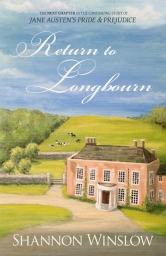
As most of you know, writing “missing scenes” is a particular passion of mine. Although, the scene I’m going to share with you today – what takes place when Mr. Darcy first comes to Hunsford – is not so much “missing” from P&P as “expanded” and written from a different perspective: Charlotte’s. It actually appears in The Ladies of Rosings Park. Hope you enjoy it!
[Mr. Darcy’s] arrival was soon known at the Parsonage, for Mr. Collins was walking the whole morning within view of the lodges opening into Hunsford Lane, in order to have the earliest assurance of it; and after making his bow as the carriage turned into the Park, hurried home with the great intelligence. On the following morning, he hastened to Rosings to pay his respects. There were two nephews of Lady Catherine to require them, for Mr. Darcy had brought with him a Colonel Fitzwilliam… and to the great surprise of all the party, when Mr. Collins returned the gentlemen accompanied him. (Pride and Prejudice, chapter 30)
Receiving Visitors at the Parsonage
I took some small satisfaction in preventing my husband from running off to Rosings the moment he saw the expected visitors arrive. But I could not make him listen to reason the following morning when I diplomatically suggested it was far too early in the day for a call to be considered polite.
“Nonsense,” he said. “When the compliment of a call is required, it cannot be paid too soon. Indeed, were I to delay another moment, it would be an insult to my esteemed patroness and to her honored guests. I am very far from fearing I will be turned away. I flatter myself that I am on such a footing at Rosings that I shall be very welcome. Her ladyship is always ‘at home’ to me.”
A wife owes it to her husband to do what she can to elevate him, so that his prospects are better for having her at his side. I believe in the sagacity of this universal truth. Consequently, since my coming to Hunsford, it had been my chief aim to direct, by subtle means, sounder judgment and more sensible behavior in the man I had married. I was not always successful, however.
What occurred when Mr. Collins arrived at the great house, I do not know in full. He never seemed conscious of having blundered in any way. And he could not have offended very greatly, I suppose, since when Mr. Collins returned to the parsonage he was accompanied by Mr. Darcy and his cousin Colonel Fitzwilliam. Mr. Collins took this triumph as a compliment to himself, I believe, but I gave the credit for it entirely to Elizabeth. No doubt she was the one the gentlemen were eager to see.
When I espied all three of them from the window, crossing the road in our direction, I informed her and Maria what an honor was in store for us.
“I may thank you, Eliza, for this act of civility,” I concluded. “Mr. Darcy would never have come so soon to wait upon me.”
“You are mistaken, Charlotte,” she said. But that was all she had time for before the gentlemen entered to pay their compliments.
 Since a suspicion of Mr. Darcy’s being partial to my pretty friend had already been awakened within me, I was on alert for any confirming signs. He barely spoke, however, to Lizzy or to anybody else. He sat composedly but silently, allowing Colonel Fitzwilliam to bear the weight of the conversation. The only sign that I might not have been entirely wrong was that I noticed Mr. Darcy’s gaze, if little discourse, was very often directed at Elizabeth.
Meanwhile, Elizabeth largely ignored him for the more amiable company of the colonel, whose manners one could not help but admire.
At length, however, Mr. Darcy’s courtesy was so far awakened as to enquire of Elizabeth after the health of her family. She answered him in the usual way, and after a moment’s pause, added, “My eldest sister has been in town these three months. Have you never happened to see her there?”
Understanding Elizabeth and her ways so well as I did, I knew there was more to her question than what the words themselves revealed. She was testing Mr. Darcy to see what he would say. She was tormenting him with the trouble of constructing an answer. She meant to tease him. She meant to place an irritating pebble in his shoe. My guess was that she wanted to remind him of Jane and his presumed interference there, for Lizzy had always believed Mr. Darcy responsible for removing Mr. Bingley from her sister’s side.
I believe Lizzy’s question hit home; Mr. Darcy looked taken aback and his answer was not very articulate.
“I.. I cannot recall. That is, I cannot recall that I did see Miss Bennet. Well, in fact, no… No, I was not so fortunate as to have the pleasure of meeting with your sister in London. But then, that is hardly surprising, is it? There are so very many people, and one tends to only come across those who move in one’s own circle.”
“Quite so, Mr. Darcy,” Lizzy answered with a satisfied smile, as if she had made her point. “That is exactly what I thought you would say.”
Their eyes held for another moment or two, and I had the impression that Mr. Darcy was deciding whether or not to say anything more. In the end, he only walked off to the window in silence.
The gentlemen soon went away, but we would see them several times more while they remained at Rosings. I was interested to observe what, if anything, would develop. There was very little intrigue in my own life, but I had high hopes for finding more in Elizabeth’s.
 What do Marianne Dashwood, Louisa Musgrove, and my handsome husband all have in common? We’ll get to that in a moment. But first, time for a brief update on my activities and progress.
 The not-so-good news is that the story about the car (see
  In much the same way, when a group of friends decided to take one last walk on the Cobb at Lyme, they had no suspicion that one of them would barely make it back alive. And when a lovely young woman set out one day for a rather wet ramble over the grounds of the Cleveland estate, she had no idea it would result in a violent fever that would pursue her to the brink of death.
 Marianne Dashwood (just like Louisa Musgrove in Persuasion) was profoundly changed by her close call. As it says in the final chapter, She was born to discover the falsehood of her own opinions, and to counteract, by her conduct, her most favourite maxims. She lived to make a far wiser choice for herself, too, in Colonel Brandon.
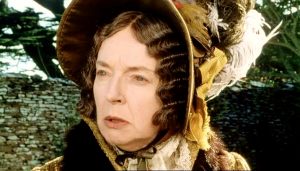 I wrote this fun mash-up a couple of years ago for our March Madness theme on Austen Variations, but I haven’t shared it here before. This is what happened when I collected a bunch of Jane Austen’s villains in one place at the same time. What could possibly go wrong?
 Finally Mr. Collins, who had vociferously volunteered his services to facilitate the meeting, rushed in and loudly cleared his throat to get their attention.
 Perhaps it was the slight bow he added to his introduction or the extra flourish of his arm gesture. In any case, this time the great lady did appear as bidden. Light applause broke out but was quickly silenced by Lady Catherine’s cutting glare.
 Looking up from studying her assignment, she said, “I don’t mind stirring up trouble. In fact, I’m sure I shall enjoy it immensely. But I cannot be expected to go so far as actually marrying one of these silly Ferrars brothers. What if I don’t like the looks of them, or the wrong one ends up with the money? It would be throwing myself away completely!”
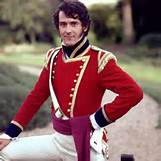 “What about seduction?” asked Wickham, standing and raising his voice to be heard above the growing disturbance. “Is that allowed or is it considered ‘bodily harm’?”
 “And another thing,” he said to the group at large. “I don’t much care for these veiled threats of banishment if any of us should fail. As far as I can see, Lady Catherine has not succeeded in stamping out the threat of true love either, except perhaps in her poor, unfortunate daughter. Now there is a young lady I should like to see benefited by a little male companionship, if you know what I mean!”
 PS – In case you haven’t heard, I’ve started posting chapters of The Persuasion of Miss Jane Austen every Friday at Austen Variations. So you can now read it for free! To get started, follow this
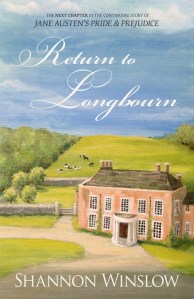 Confession. I just finished reading one of my own books: Return to Longbourn… again.
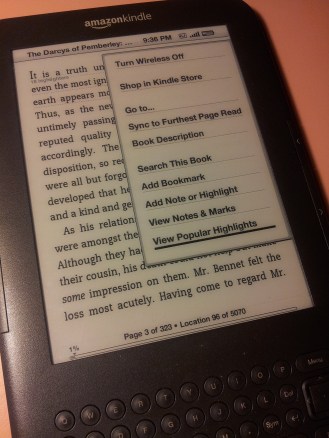 Since I was reading on my Kindle, I periodically came across an underlined “popular highlight.” Are you familiar with this feature? It shows which lines in a book have been highlighted most by readers. It’s designed to be of interest to readers, but it’s tremendous fun for authors too. It’s so interesting (and gratifying) to see which things I’ve written have been marked, indicating that people especially loved or valued them.
 Since everybody seemed to appreciate
 Christmas is coming! Notice that I didn’t say Christmas is here, because technically this is Advent – a time of waiting and preparation in anticipation of the day of Jesus’ birth.
 I will leave you with an adapted version of a Christmas sentiment Miss Bingley wrote in a letter to Jane Bennet. My best wishes that you would have a wonderful Christmas (or whatever tradition you celebrate this time of year) are truly sincere, unlike Miss Bingley’s. Please fill in the blanks as you choose. (Since you may be planning to spend Christmas somewhere other than Hertfordshire, and you may be wishing for something other than numerous beaux! Or maybe not?)
 This passage from Pride and Prejudice (chapter 26) talks about how Elizabeth’s relationship with Charlotte changed after Charlotte married Mr. Collins. It was the inspiration for a “missing scene” I wrote a few years ago for another blog. When I ran across it again today, it made me chuckle, so I decided to share it with you here. Hope you enjoy it!




 I even had in mind that perhaps Austen herself might have crossed the same bridge on one of her visits to London. Alas, this could not be true, I learned, since the bridge wasn’t constructed until several years after her death. Still it was well worth seeing.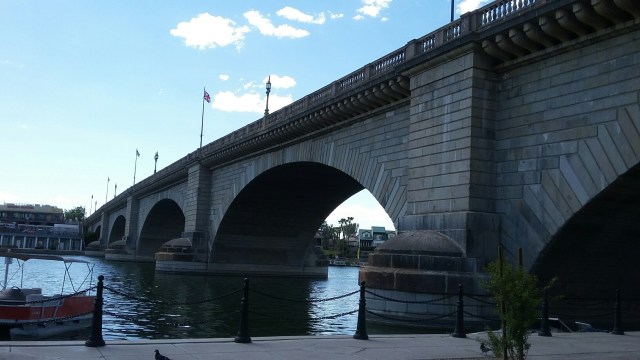
 In any case, I’m glad we made the trip to Las Vegas and beyond, but I’m also glad to be home again.
 I have always been curious about Jane Austen’s spiritual side. We know she was raised in a Christian home, the daughter of a (by all accounts) dedicated Anglican minister, as well as having a brother (and later a second) belonging to the profession. She no doubt attended church nearly every Sunday of her life. Still, that didn’t prove sincere faith then anymore than it does now.
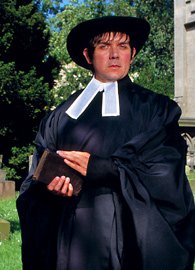 However, I think it would be a mistake to conclude from this that Jane Austen didn’t take her faith seriously. Being a Christian doesn’t mean having no sense of humor, and not every pastor is a shining example, especially in Jane Austen’s day, when many went into the profession for the wrong reasons – as a convenient means of making a genteel living rather than in answer to a true calling from God.
 Here and there in Austen’s novels, however, we do catch a glimpse of something that might be construed as a reflection of Austen’s personal faith. We notice the “God bless you” at the close of Darcy’s letter to Elizabeth, for example, and the many occasions where God’s name is invoked in crisis or in thanksgiving. But perhaps the clearest example appears in Mansfield Park. There, Austen uses Mary Crawford’s attitude toward elements of faith as one means of revealing that lady’s faulty character. Mary openly ridicules the practice of family prayers, chapel attendance, and the clerical profession as a whole. By contrast, Austen’s heroine Fanny Price is reverent, honorable, and chaste – a much better candidate for an Austen-style heroine and a better choice of partner for future clergyman Edmund.
 My husband is originally from Kallispel, and his family used to own a cabin on Ashley Lake. Through a serendipitous turn of events, that very same cabin is now back in his extended family, and we’ve generously been invited to use it for our vacation destination the last two summers. The lake itself is beautiful, with some of the clearest turquoise water you’ll ever see outside of the Caribbean. Knowing the history of the cabin makes the spot that much more special for us.
 When we were there last summer, someone told us about a sunken car on the far side of the lake. So we paddled our canoe over to take a look. Sure enough, there in about fifteen feet of water was the rusting hulk of a VW bug, the roof and various other parts missing.
 I couldn’t help wondering what the story was. Who had owned the car and how had it ended up at the bottom of the lake? It was too far from shore to have been pushed or driven into the water, accidentally or on purpose. VWs used to be reputed pretty air-tight and therefore able to float for several minutes. Had somebody, on a dare or as a prank, rowed it out as far as they could before it sank? The other possibility seemed to be that it had been driven out on the ice in the winter. Was the ice too thin and it had broken through? Or had the car been abandonded there intentionally to sink with the spring thaw? And why?
 Now don’t panic! I wouldn’t leave poor Leonard there at the bottom of the lake, fish swimming in and out. Trust me. You know I believe in happy endings!
 Join me as I weave together my passion for writing and my love of all things Jane Austen. Please also look for me on Facebook.