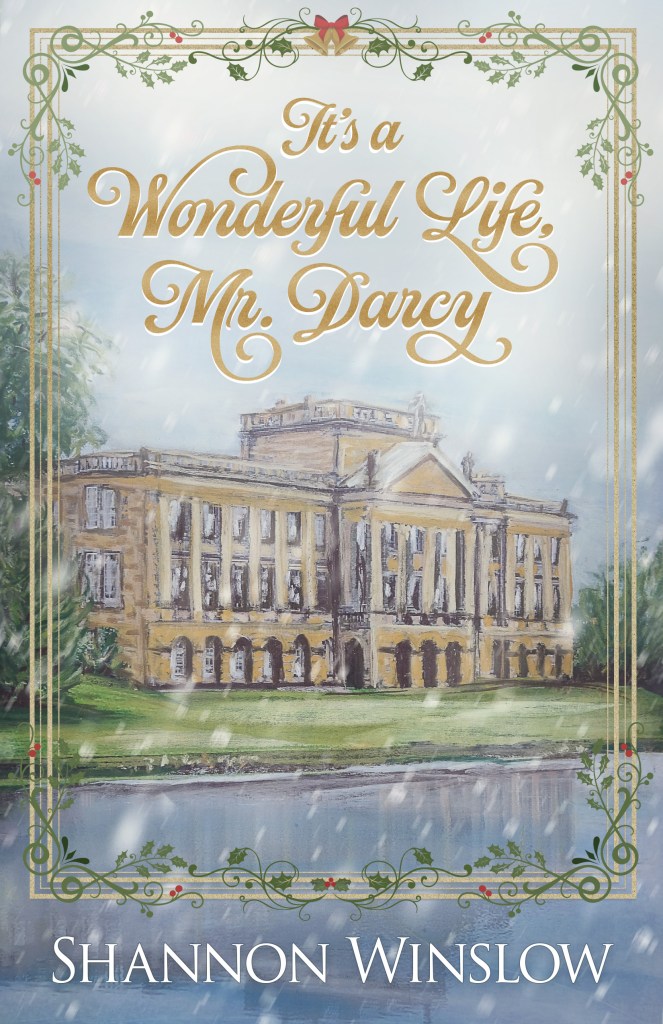
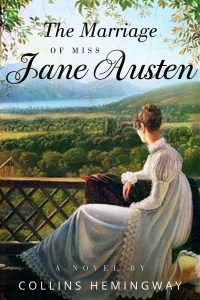
Today my humble little blog and I have the honor of hosting another author on blog tour. It’s Collins Hemingway with his new book, the second volume of an ambitious trilogy: The Marriage of Miss Jane Austen. With a title like that, you have to know I would be interested, right? In fact, it struck me that the title (if I had come up with it first) could have fit my own novel The Persuasion of Miss Jane Austen pretty well. So I was delighted to have the chance (through the magic of the internet) to sit down with Collins and talk about his writer’s journey and this trilogy. Here’s a short blurb about the books, followed by our Q&A.
Jane Austen lived a solitary life of a writer … Or did she?
The Marriage of Miss Jane Austen tells a spirited, affecting love story during an exciting, turbulent time. Set in the “lost years” of her twenties – a period of which historians know virtually nothing – the trilogy reveals the story of a talented, passionate woman fully engaging with a man who is very much her equal. (Read more here)
 SW: Welcome, Collins, and thanks for joining me today. I was wondering, how did you get your start writing non-fiction and why did you make the transition into fiction? Did you find making the switch difficult?
CH: My career began as a reporter and editor, so I began with short nonfiction. When I moved to the software industry, I wrote computer manuals and later business whitepapers and business plans. My software and writing background gave me the opportunity to write “Business @ the Speed of Thought,” a book about the use of technology in modern business, with Bill Gates at Microsoft. The success of that book led to opportunities to delve into difficult and interesting topics such as business ethics, the retail trade, and the workings of the brain.
 I actually wrote my first novel in 1984, long before I did my first book-length nonfiction, and through the years wrote two more novels. All of my early novels were set in contemporary times. None of these first three deserved to see the light of day, but they taught me the fiction craft. The nonfiction books have paid the rent while I pursued my love of fiction. I wrote Volume I of The Marriage of Miss Jane Austen around one nonfiction book on mobile technology and another on how the brain functions under stress.
I wrote Volume II of the Austen trilogy without any digressions, and I plan to do the same to finish Volume III, which I plan to publish in late 2017.
Writing any difficult topic at book length, fiction or nonfiction, is good discipline. It’s like running a marathon over different courses. It’s never easy, but you gain strength and confidence with each one. Nonfiction is easier in that you have a topic with multiple points. You have to do the research, explore the implications, develop a conclusion–a point of view on what you learned. Fiction is much more open-ended. Characters have to act according to cause and effect—what they do to each other and how they treat each other–rather than what the author may prescribe. In an historical novel, you have to work in events in a believable way. You can’t just have history marching by as the characters watch. They have to have a reason to participate. You also have to fully develop the setting and background and flesh out the characters to make them real, not just stick figures moving the plot along.
SW: Not many men are drawn to Jane Austen. How did you discover her and why do you love her novels?
CH: I was hooked on Austen by an outstanding college professor who loved Austen, particularly “Emma.” My view at the age of 21 was that she was a brilliant but superficial writer. Her books, I believed, ended where they should have begun: with marriage, when the fun and flirtation must adapt to the realities of living day to day with a partner you don’t really know. I didn’t understand that social conventions prevented women authors of the time from directly tackling the substance of life. Even the Bronte sisters, writing a generation later, were able to tackle more “passionate” stories only by publishing under the names of men.
My professor told me that, as I grew older, I would see how Austen subtly wove real life and important issues into the fabric of her stories. He was right, of course. The more I saw what she was able to do with a very limited form, the more I was impressed.
I’m also an advocate of the underdog, and women have always been society’s underdogs. Especially in the early 1800s, when everything from the law to social norms to biology were against them. My attitude, I’m sure, comes from being the child of a single mother, who raised three boys by herself, when the social norms of the mid-20th Century limited her career choices to being a secretary.
As a writer, I admire how Austen rewrote ceaselessly to hone her scenes, characters, and dialogue. We don’t officially know how much revision she did, but no writer can read her work without understanding how many times it would take to evolve a decent phrase into a brilliant one. You don’t reach that level of perfection without painstaking thought and repeated recasting over many years. That’s my view, anyway.

Collins and his wife at the Jane Austen Festival in Bath
SW: What are your favorite Austen works and why?
CH: “Pride and Prejudice,” because Liz is the only female lead to unflinchingly go toe to toe with every antagonist–not just Darcy but Mr. Collins and Lady Catherine. “Emma” because of the plot ingenuity, the beauty of the writing, and the way Emma recognizes her true feelings for Mr. Knightley in a series of epiphanies. “Mansfield Park” because its cast of characters is more on the order of Trollope than anything Austen had done before. I also don’t consider Fanny to be the mousey goodie-two-shoes that many people do. “Persuasion” because passion finally bursts out of her characters despite all they can do to hold it back. Virginia Woolf said the novel proved that Austen had loved deeply and no longer cared who knew.
I believe “Sanditon” was going to be something radically different, too, though we have just the bare beginning. My one wish would have been for Austen to return to “Lady Susan” as a mature writer and flesh her out as the Whit Stillman’s movie does.
SW: You and I have both been inspired to write an alternate story line for Jane Austen – for me, in “The Persuasion of Miss Jane Austen,” an for you, in this trilogy. Where did the idea for your trilogy originate?
CH: Through the years, as I developed a love of this period–its history, literature, social issues, and technological developments–I kept my original thought in mind: What if Austen had written about life after courtship? What if she had been able to tell the story of “ordinary life” after marriage? As it really was, with all of its joys and challenges. That’s what motivated me, for as long as I can recall. When, years ago, I learned of the “missing” seven years of her life, of which very little is known, I knew I had an entrée not just to use an Austen-like protagonist of intelligence and character, but Austen herself. This period, 1802-1809, was when she was in her late 20s and early 30s, the “danger years” for a woman facing spinsterhood. This means I could tell the story of an adult woman, not a teenage girl. At the same time, a book called “The Age of Wonder” by Richard Holmes, gave me the insight into how to tell a story totally different from the village romance.
You, Shannon, wanted to give Austen the same happy ending that her major characters had, and took an intriguing approach. I was not so kind. I wanted to use her as an archetype for the life of the everywoman of 1800. I wanted to see how she would respond if she had had the opportunity to grapple with the most important personal and public issues of the day. I wanted to test her to see what she was made of. I also wanted the intellectual challenge of mapping the story to what is known of Austen in this period and to the major events of the day.
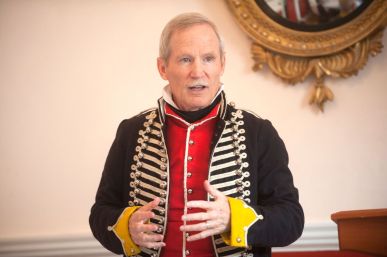
Collins speaking at book launch in Bath
SW: You’ve made some bold choices in debuting and promoting your books. Why did you decide to do your official book launch in Bath, England?
CH: I wanted to honor both Austen and her many readers who have understood her hidden depths as well as her subtlety and charm. The first section of Volume I is set in Bath. The book opens with a ball to introduce the characters, but this is something of a misdirection play. The book really opens with Chapter 3 and the demonstration of a fairly new technological innovation, a hot air balloon, that occurred historically in September 1802. This incident enabled me to set the protagonist on an entirely new path.
Finally, this actual writing project began ten years ago in my first visit to Bath, when I decided I wanted to tell a serious story of the life of Jane Austen as it might have been. Her life–if one or two critical decisions had gone another way. The launch brings me full circle.
SW: Thank you, Collins, for sharing your story with us! I always find it fascinating to talk to another author, especially one in my own genre, about his/her personal journey.
Collins is a graduate of the University of Arkansas, Phi Beta Kappa, with a major in English Literature and a minor in science. He has a master’s degree in English literature from the University of Oregon. He has several published works, both fiction and non-fiction.
I hope you enjoyed this interview. Do you have questions or comments for Collins? Please leave them below.

 Today, in coordination with Austen Variations, I have a scavenger hunt for you, complete with buried treasure! If you’ve already been to my post at Austen Variations, you have arrived here with a pocket full of words to solve the puzzle below. If you haven’t got the magic words yet, go find them and hurry back to play!
 Before, you were looking at quotes from Jane Austen. Now here’s one of mine from For Myself Alone, but it’s missing some critical words. You just need to fill in the blanks with the words you brought with you from Austen Variations. Email your answers (the correct words in correct order) to me at shannon(at)shannonwinslow(dot)com to be entered in the drawing for today’s prizes as well as the final grand prize at the end of the month! Be sure to write “Scavenger Hunt” in the subject line. Extra credit (your name entered twice for today’s drawing) if you can tell me in what chapter of FMA this quote appears. Good luck!
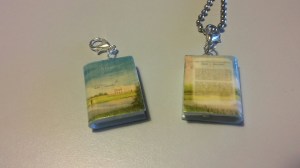 Winners will be chosen by random drawing from those submitting a correct entry via email as directed above. Along with your answers, include your preference of the three prizes, which book you would like and in what format. Winners will be posted (here and on my post at Austen Variations) on 1/11/17 and also notified by email. Good luck!
 “Write what you know!” You’ve probably heard the saying, intended as sound advice for anyone with literary aspirations.
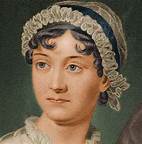 I want to acknowledge Jane Austen’s creativity and innovation. She pushed the envelope of her limited world about as far as she could have – as a woman in a man’s profession, as one of the early pioneers of the novel as a literary form, and also for writing what she loved – stories centered around courtship and romance, even though she supposedly had little of these things in her own life (here again, unless you subscribe to my plausible alternate version).
 Have you ever wondered how your life would have been altered if at point A you had turned left instead of right? Would you have been happier or not? If you had a chance for a world-class “do over,” would you choose to go back to improve on your own life or pick a different life altogether, perhaps in a totally different time and place? I have always been fascinated by such questions, which led me to start a new series that’s all about second chances (the first two books to be released together in January).
 assist these down-on-their-luck people to sort out what to do next. With their help, Ben decides to turn back the clock a few years to take another shot at his dream (read blurb
 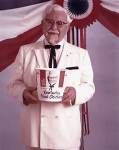 But what about the enigmatic Cora and Poindexter? I said I was going to tell you about them, but that’s not easy because nobody seems to know exactly where they came from, what their relationship is, or even what they really look like. Just as with Jane Austen, no photographs exist and descriptions vary. Poindexter, who always wears white, puts Hope in mind of Colonel Sanders. Ben, who doesn’t get along as well with him,
  says Poindexter reminds him of a former pet albino rat named Roscoe. No consensus there! Cora is either a middle-aged brunette or a young, gorgeous blonde, depending on whom you ask. But one thing is for sure, she has a very quirky (even outrageous) fashion sense.
 Yesterday, when I went out for my morning constitutional, I had multicolored maple leaves crunching underfoot and the occasional spider web hitting me in the face. I also took a plastic bag along with me, into which I hoped to collect enough blackberries to make a small cobbler – probably the last of the season. (It was delicious, by the way.)
 Then I began wondering what Jane Austen had written about the season – autumn, that is, not fall. She wouldn’t have substituted the word “fall,” since that is an Americanism, which I learned too late to save me from making that mistake in my first book, The Darcys of Pemberley.
 Jane doesn’t give us pages of extravagant description. Instead she paints a perfectly recognizable picture for us in just a few lines. My favorite passage, though, is from Persuasion, chapter 10. This scene takes place on the group walk to Winthrop:
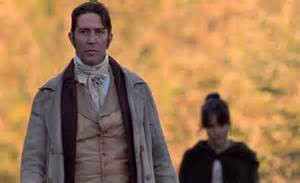 Ann has had to watch Captain Wentworth show his preference for the younger, blooming Louisa. She has heard him praise Louisa for her character of decision and firmness. Anne endures all this whilst knowing that the captain, whom she still loves, condemns her for being too easily persuaded, and that the beauty of her own spring has long since passed. It seems there is nothing but decline and decay ahead.
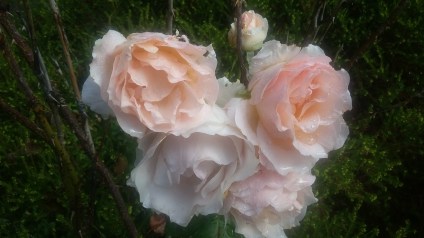 I can appreciate the beauties of the season, and, as you can see, I’m always trying to capture some of the brilliant colors in pictures. But Autumn isn’t my favorite season, primarily because of what it means. Summer is over and so is my lighter schedule. Winter is coming, and although we don’t suffer the extremes in the Seattle area (no below zero temps or being buried in snow for weeks at a time), we must now expect six months of relative unpleasantness: cool, damp, and relentless gray.
 How does fall effect you? Is the change in seasons a simple matter of fact to you, or does it take on some special significance? Austen refers to the way autumn is portrayed in poetry. Do you have a favorite verse on the subject?
 This month marks the 5-year anniversary of the publications of The Darcys of Pemberley! My baby (my very first novel) is five years old now, and I’m so proud of how well it has done out there in the big, wide world. It thrills and slightly astounds me to think how many thousands of people, most of them total strangers, have now read it. TDoP is still my flagship, with the other novels following in its wake, and that shows no sign of changing.
 Absolutely perfect! Not only does this quote speak of celebrating over a birthday, as I’m doing with The Darcys of Pemberley, it also seemed like a classic example of what inspired me to start writing Austenesque in the first place: a first-rate demonstration of Jane’s sharp mind, her humor, and her stellar use of language.
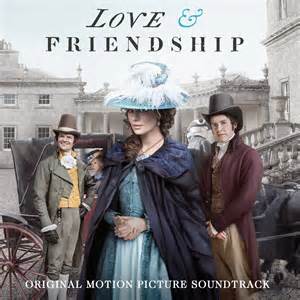 I promised you something about the newest Jane Austen adaptation: Love and Friendship, based on one of her lesser works known as Lady Susan.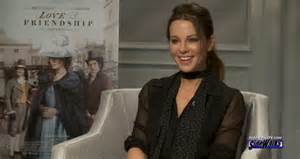
 In the end, Lady Susan must make some compromises, too. But she finds a way to survive. And, according to the film at least, she manages to have her cake and eat it too. We don’t have to like her, but we may begrudgingly admire her just a little.
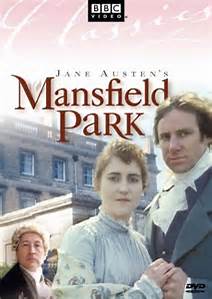 No, this is not another movie review (although I will be writing something about Love and Friendship next time). Think more Mansfield Park.
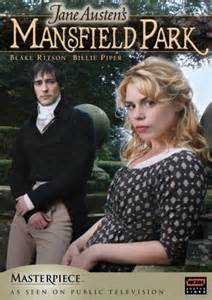 Sounds like harmless fun, right? I think it’s difficult, especially for today’s readers, to understand why Edmund Bertram and Fanny Price were so strongly opposed to the idea. And Jane Austen disapproved too, from how she writes. That may be the most surprising part, since the Austen family is known to have done the same – entertained themselves by creating and acting out amateur theatricals at home.
 In the book and film adaptations, we get little snippets of dialogue as the rehearsals progress, and we see the trouble it creates. But I was still wondering what was so astonishing and improper (according to Fanny in the excerpt above) about the play itself. I found it online and read it. It is a real play, btw, which undoubtedly Jane Austen had read herself. (Read it
 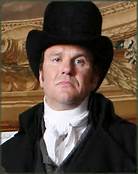 So, Edmund and Fanny were right all along; the acting scheme was a bad idea, at least within the given context. Tom and Maria, who were in denial before, knew it by their guilty consciences as soon as their father returned home unexpectedly. But in the end it wasn’t the words of the play that caused the real trouble; it was the permission the activity granted for bad behavior – all that close contact and sneaking off to “rehearse” in private. There’s little doubt it contributed to what ultimately happened: Maria being ruined by deciding to leave her husband to run off with Henry Crawford.
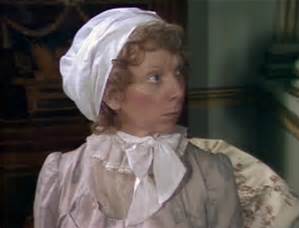 Throughout the entire book she has been poking her nose into the Bertram family business, telling everybody what to do and not do, claiming to be upholding propriety and guarding against wasteful spending. Now, when we really need her to intervene, she fails us. Well, not us, but she does fail the Bertrams, especially Maria who is her favorite.
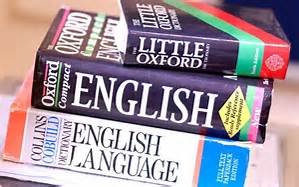 English is not a static language. It’s constantly changing, whether we like it or not.
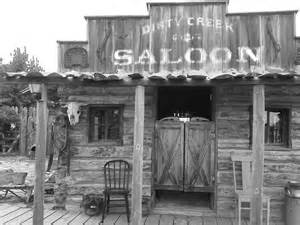 Actually, her language is one of the aspects of her books I enjoy the most. But emulating it as faithfully as possible has gotten me into some trouble. For instance, one reviewer on Amazon severely berated me for more than once using the word “saloon” in The Darcys of Pemberley, assuming it was a typo and that I surely meant “salon” instead. According to the definitions given in my 2004 Webster’s Encarta Dictionary (and every American western movie ever made), she would be right.
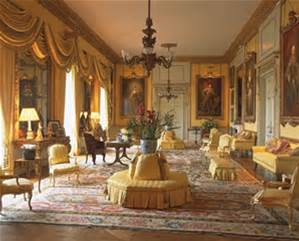 However, my higher authority was Pride and Prejudice (which possibly the outspoken reviewer had never actually read???). In this excerpt from chapter 45, Elizabeth and Mrs. Gardiner have just arrived at Pemberley at the invitation of Miss Darcy:
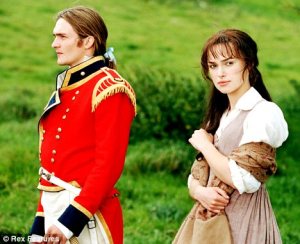 At least in this example my use of a troublesome word, whose meaning had changed over time, was only regarded as a typographical error. I got into more serious trouble with “intimate.” Austen used it 100+ times in her writings, and as far as I can tell, not once did she mean anything sexual by it. Yet, when in TDOP I have Darcy telling Elizabeth that it’s unfortunate she once had a rather “intimate” association with Wickham, noisy protests arose from more than one quarter. “Elizabeth would never!” “Darcy wouldn’t believed her capable of such a thing!” Obviously, some readers thought the word inferred a sexual relationship not intended by the author or by Mr. Darcy either. Yikes!
 A case in point. The lady in charge of a manor house in those days was the estate’s “housekeeper.” That’s what she was called; there’s no other word I can use for her. As the highest ranking position to which any female employee could aspire, the title carried with it a great deal of respect among the staff and also from the family they served. But unless the reader understands that, they will likely think of someone down on her knees scrubbing floors instead of what she really was: an important member of the household’s management team. I guess there’s nothing I can do about that.
 Every Jane Austen novel reminds us of the severe limitations society placed on females of genteel birth in her era. About their only honorable option was to become some gentleman’s wife. Although the men had a far better lot in general, their choices were also very restricted.
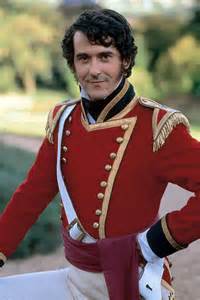 Better give that boy something to do! Joining the clergy was acceptable, but not stylish. A military life held more prestige, but also more danger (Napoleon and all). So, perhaps the law? Fine, but then he must be a swanky London barrister, and not (heaven forbid!) a humble country attorney like Lizzy’s uncle Phillips in Pride and Prejudice, who was considered one of her “low connections.”
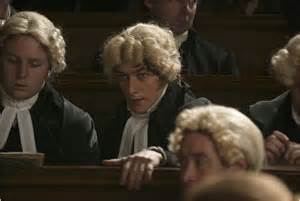 Although I’m no expert, from what I’ve read, the haphazard education of lawyers seems only a symptom of a much larger malaise afflicting the legal system that existed at the time. Jo Walker (heroine of my book For Myself Alone) has this to say about it:
 Join me as I weave together my passion for writing and my love of all things Jane Austen. Please also look for me on Facebook.