A Stitch in Time


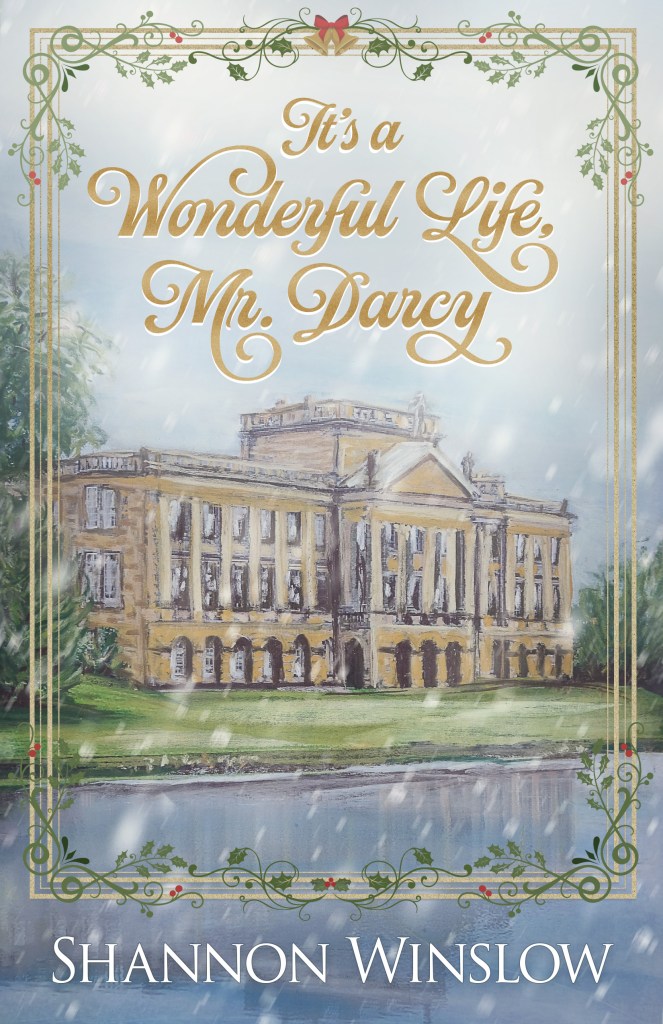
Today, I was pleased to provide a guest blog post for a friend I met on Twitter. Rebecca Jane is a big Jane Austen fan (yay!) as well as a fan of my novel The Darcys of Pemberley (double yay!). Her blog, called “Sewing in the Past,” combines an eclectic mix of subjects, but for my guest spot, I went with the theme in the title. 

 
So, what does Jane Austen have to say about sewing? 

As a reliable source of timeless wisdom, I naturally started my research by asking her opinion on the subject, expecting to find dozens of references in answer. After all, learning needlework was part of every girl’s upbringing in Austen’s day (1775 – 1817), and I was sure I remembered it being mentioned in her writings. But when I did a search for “sew,” I came up completely empty! The term wasn’t used even once in any of her novels or preserved letters. How was that possible? A little more digging and I had my answer… (read the rest here)
Posted in English Regency culture, History, Jane Austen, my books, peotry, Shannon Winslow's writing | Tagged , , , , , , , | 5 Comments

Word Search

Here’s a word-search puzzle I designed a few years back for my original website. Not surprisingly, it’s made up of all Jane Austen related words, the clues (with the first letter) for which are below. And if you’re still stumped, you’ll find the answers in the comment section. (Print the page if you’d rather work on paper.)

Although I’d solved a lot of word searches before, I’d never created one myself. But I discovered it was fun to do, and not really that hard. I just began with the longest word on a grid, and then started packing all the others in around it in as tight a space as possible, finishing with a few shorties just to fill up space. Pick a subject and try it yourself.

Unable, of course, to repress your curiosity in so favourable a moment for indulging it, you will instantly arise, and throwing your dressing-gown around you, proceed to examine this mystery. (Northanger Abbey, chapter 20)

N      O      I      S      A      U      S      R      E      P      F      T      H      D

P      R       I      D      E      N      E      T      S      U      A      Z      A      L

R      E      G      Y      A      N     N      E      R      O      N      I       L      E

E      D      M     E      M      E      S      I       R      Y      C      U      L       I

J      W      F      B      M      C      I      E       Z      C      E      I       L       F

U      A      K      B      E       I      B       P      A      R      Z      K       I      R

D      R      N      A      V      R      I       K      N      A      R      F      H      E

I       D      M      E      A      P      L      N      B      D       J      A      C      H

C      M      A      N      S      F       I      E       L      D      P      N      R      T

E       J       D      N      A      L      T      G      Y      V      A      N      U      E

P      O       C      A      T      H      Y       I      M      A      R      Y      H      N

N      O      R      T      H      A      N      G       E      R      K      U      C      H

CLUES:

  1. Author Jane A_____
  2. Her six novels: E____,  P_________,  S____& S__________,  P____ & P________,  M________ P___,  N_________ A____
  3. The two eldest Miss Bennets,  J___ and  E________
  4. Home of Mr. Bingley, N__________
  5. Master of Delaford, Colonel B______
  6. The finest estate in Derbyshire,  P________
  7. Heroine of MansfieldPark,  F____  P____
  8. The eldest Miss Dashwood,  E______
  9. S__ Walter Elliot
  10. Miss C____  Morland (inform.)
  11. Mr. Weston’s son,  F____  C________
  12. Elizabeth Elliot’s two sisters,  A___  and  M___
  13. Captain Wentworth’s branch of military service, the Royal N___
  14. Mr.  E______  Ferrars
  15. The mischievous Miss L___  Steele
  16. The Dashwood Estate in Sussex, NorL____
  17. A modest equipage, a g__
  18. The Elliot estate, Kellynch  H___
  19. Scene of Louisa Musgrove’s accident, the seaside town of L____
  20. The handsome proprietor of Pemberley, Mr. Fitzwilliam D____
Posted in fun & games, Jane Austen, Jane Austen Quotes, Uncategorized | Tagged , , , , | 5 Comments

Weathering the Storm

One thing I like about living in western Washington state is our relatively mild climate. It doesn’t get super hot in summer or extremely cold in winter; no droughts; no blizzards.  Of course, we do have our moments of weather drama, as we did this past week.

It started with a little snow, and then a lot more snow. No big deal. But next came freezing rain, coating everything (roads, cars, sidewalks, trees and shrubs) with half an inch of ice. Under all that extra weight, huge limbs and whole trees came crashing down, blocking roads and severing power lines, leaving hundreds of thousands in the dark. Then, when temperatures warmed about 20 degrees, flooding was feared as all that snow and ice rapidly melted. Finally, high winds came through, toppling a few more trees and undoing some of the work of the crews restoring power. (I wrote this prophetic statement yesterday, and our power went out again last night.)

The weather was most favourable for her. The ground covered with snow, and the atmosphere in that unsettled state between frost and thaw, which is of all others the most unfriendly for exercise, every morning beginning in rain or snow, and every evening setting in to freeze, she was for many days a most honourable prisoner.  (Emma, chapter 16)

Mortified by her matchmaking debacle with Harriet and Mr. Elton, Emma was delighted to have an honorable excuse for hiding herself away from the world for a few days. I didn’t have her issues, but when I found myself snowed/iced in this week (with no power, phone, tv, or internet), suddenly things returned to basics and a lot of my usual busy-ness went away.

No meetings to go to. No phone calls to make. No online business to do. My new job description.? Keep a fire going in the fireplace. Run the generator enough to maintain the bare essentials. Fix simple camp-style meals. And write! Without the usual distractions (and with enough electricity to keep my laptop charged up), I got a lot more writing done than I would have otherwise. So, there was a silver lining to being cut off from the 21st century world for a few days. The downside? Besides the obvious (inconvenience, expense, disrupted plans), we lost a lot of trees. Here, a pine – one I planted myself as a sapling – went down. And below, my neighbor’s Japanese maples, ruined. This is only the tip of the iceberg; the devastation is everywhere, and the clean up will take weeks.
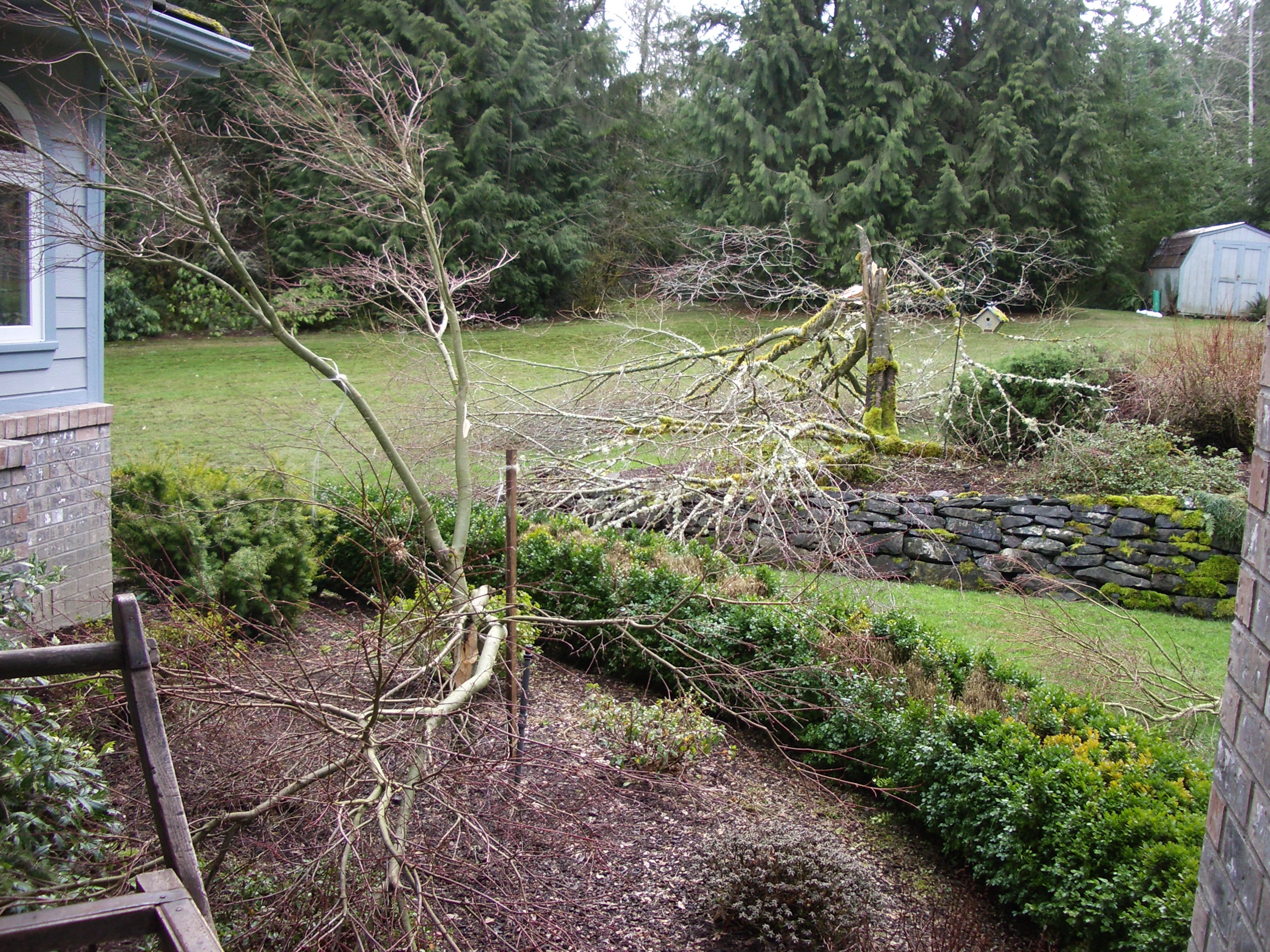
We have had a dreadful storm of wind in the fore part of this day, which has done a great deal of mischief among our trees… What I regret more than all the rest is that all the three elms which grew in Hall’s meadow, and gave such ornament to it, are gone… I am happy to add, however, that no greater evil than the loss of trees has been the consequence of the storm… We grieve, therefore, in some comfort.  (A Letter to her sister Cassandra, November 1800)

Still and all, I’m thankful – for a husband who knows how to operate a chainsaw, for a generator and a fireplace to keep us warm and functional, for no damage done to our house or family, and for the reminder to not take those every-day, modern conveniences (instant communication, lights at the flick of a switch, etc.) so much for granted.

Posted in Jane Austen, Jane Austen Quotes, life, Uncategorized | Tagged , , , , , , , | 2 Comments

The Governess Trade -or- The Tale of Three Janes

Governesses are intriguing figures who often play prominent roles in works of romantic fiction set in the Regency and Victorian eras, but it’s more of a Jane Eyre than a Jane Austen theme. Correct me if I’m wrong, but I can’t recall a single active governess in any JA novel – surprising when you think that Austen’s heroines are of the class that normally employed them. Perhaps because she didn’t have a governess herself, she felt unqualified to write one convincingly (but I won’t let that stand in my way).

We are told that the Bennet girls never had a governess, to which revelation Lady Catherine de Bourgh reacts in shock and horror. “Five daughters brought up at home without a governess! I never heard of such a thing.” Anne Elliot did have one in times past. The Bertram girls apparently also had a governess, but we never meet her. We have a former governess (Miss Taylor, become Mrs. Weston) and a potential governess (Jane Fairfax), both in Emma. And the most significant passage in all Austendom about the life of a governess comes in the 35th chapter of the same book. Jane Fairfax, despairing of her secret engagement to Frank Churchill ever coming to fruition, sees her unhappy fate before her. 

“I am not at all afraid of being long unemployed. There are places in town, offices, where inquiry would soon produce something – offices for the sale, not quite of human flesh, but of human intellect.”  After a shocked Mrs. Elton accuses her of meaning “a fling at the slave trade,” Jane goes on to explain. “Governess trade, I assure you, was all that I had in view; widely different certainly as to the guilt of those who carry it on; but as to the greater misery of the victims, I do not know where it lies.”

Jane Fairfax faced a common dilemma. How was a young lady of little or no fortune to support herself if she didn’t marry? Only two paying, genteel occupations existed: lady’s companion or governess. Jane Austen found herself in the same predicament, but she had another option: the kindness of a rich brother, supplementing the modest sum she made from her writing (which she did anonymously because it wasn’t thought a suitable occupation for a lady).

But Mary Bennet apparently doesn’t have a secret talent by which she can earn her daily bread, and she is too proud to live off the charity of her rich relations. So, in Return to Longbourn, my current writing project, she chooses to become a governess and takes a position with the new family at Netherfield Hall. Her charges? Two adolescent girls and an incorrigible boy of eight. Mary bravely soldiers on, but I can tell you that it’s not going especially well for her. And did I mention the tyrannical father?

Fun and games. How we authors love to torture our poor heroes and heroines!

Posted in English Regency culture, Jane Austen, Jane Austen Quotes, my books, Shannon Winslow's writing | Tagged , , , , , , , , | 2 Comments

The Short Story of Mr. Collins

I have a very high regard for the clergy in general and for the several members of the profession I know personally. So it may seem strange that I made the premeditated death of a country parson my first literary act. But I hope I will be forgiven for it because Mr. Collins was 1) a very poor example of a clergyman, and 2)not a real person.

Actually, I take part of that back. Mr. Collins’s death wasn’t premeditated.  When, seven years ago now, I sat down to begin my sequel to Pride and Prejudice, that’s the first idea that popped into my mind.  And, I admit, I had a lot of fun putting the story down on paper, although I ended up cutting out a lot of what I wrote then (see related post Darling Exiles). Those trimmings became the basis for this short story.

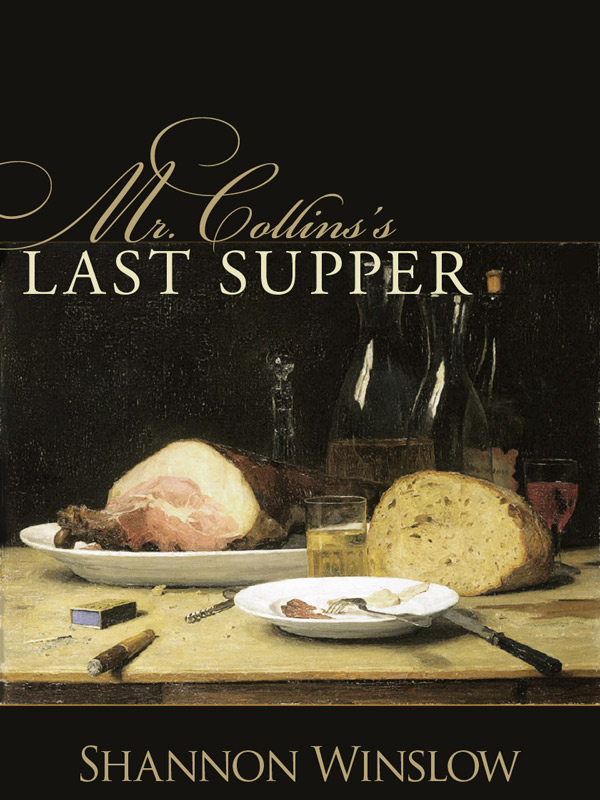
Mr. Collins’s Last Supper is the tongue-in-cheek tale of how a pompous clergyman discovers too late why gluttony is considered one of the seven deadly sins.  It was a finalist in a short story contest, and now I’m pleased to make it available to the public at an extremely reasonable price ($.99) in Kindle and Nook formats.

The story serves as a prequel of sorts to The Darcys of Pemberley, since news of Mr. Collins’s untimely demise opens that book. So if you’re a linear, chronological sort of person, read it after Pride and Prejudice and before The Darcys of Pemberley. Or read it anytime if you just want more of the gruesome details of Mr. Collins’s death. And just so you know, I’m kidding about the gruesome part.

Mr. Collins was not a sensible man, and the deficiency of nature had been but little assisted by education or society… The subjection in which his father had brought him up had given him originally great humility of manner; but it was now a good deal counteracted by the self-conceit of a weak head, living in retirement, and the consequential feelings of early and unexpected prosperity. (Pride and Prejudice, chapter 15)

Posted in contests, Jane Austen, Jane Austen Quotes, my books, Shannon Winslow's writing, writing | Tagged , , , , , , , , | 7 Comments

Backwards Words

I came across this “backwards letter” (pictured) when I was looking for a Jane Austen quote about New Years. Since I’ve featured a couple other scrambled language systems before (Playing Mind Games and More Mind Games), which turned out to be some of my most popular posts, I just had to share it with you. Can you figure out what it says? (transcription below)

Ym raed Yssac, I hsiw uoy a yppah wen raey. Ruoy xis snisuoc emac ereh yadretsey dna dah hcae a eceip fo ekac. Siht si elttil Yssac’s yadhtrib, dna ehs si eerht sraey dlo. Knarf sah nugeb gninrael Nital. Ew deef eht Nibor yreve gninrom. Yllas Mahneb sah tog a wen neerg nwog. Teirrah Thgink semoc yreve yad ot daer ot Tnua Ardnassac. Doog eyb ym raed Yssac. Tnua Ardnassac sdnes reh tseb evol, dna os ew od lla.   Ruoy Etanoitceffa Tnua, Enaj Netsua 

The letter is dated January 6th from Chawton (year unknown) and was sent to one of Jane Austen’s nieces. If you’ve managed to decipher it, you know the young lady’s name is Cassy (Cassandra) – a very popular moniker amongst the Austen females (Jane’s mother, sister, this niece and her three-year-old cousin also mentioned above). 

It’s not easy to read, is it?  Nor for me to type it.   Consider how much more difficult it would have been for Jane to write it out in cursive longhand. I respect the brain power it took to do it, but I guess I’m more impressed that she took the time and trouble, simply to provide a little entertainment for her niece. I think Cassy was very lucky to have such an aunt.

PS – Not surprisingly, my spell-check program didn’t much like this JA quote. What I didn’t expect was that it actually approved some of the words: os, ew, od, ym, fo, si, sah. Come on! These aren’t real words, except maybe to hard core Scrabble players.

Posted in fun & games, Jane Austen, Jane Austen Quotes, Shannon Winslow's writing, Uncategorized | Tagged , , , , , , , | 3 Comments

Prize First Lines

The opening line of a book is arguably the most important sentence of all. It’s the author’s initial (and possibly only) opportunity to capture the reader’s interest, to create enough curiosity in people’s minds that they keep reading. I think of A Tale of Two Cities, by Dickens: It was the best of times; it was the worst of times. We don’t know exactly what this seemingly contradictory statement means … but we want to, which is the point. 

Let’s see how I’m doing with my opening lines.

The Darcys of Pemberley: It is a truth universally acknowledged that even the most ignoble person on the face of the earth appears more praiseworthy after death. What does this line accomplish? First, it rings a bell for Jane Austen fans, reminding them of the famous opening to Pride and Prejudice. Hopefully, it also conveys the idea that this novel will provide more of the same kind of lovely reading experience. And it should pose a question too. Who has died and, consequently, now appears more praiseworthy?

For Myself Alone: Through the first two decades of her existence, Josephine Walker led a singularly uneventful and ordinary life that gave little hint of what was to come.  Again, a question is immediately raised. What was to come so surprisingly into Miss Walker’s otherwise ordinary life? You must read on to find out.

First of Second Chances: What would the average guy give to turn back the clock and set his life straight?  Here the first line is an actual question, giving the reader hints to both the tone and theme of the story that follows.

I wonder if Jane Austen was aware of the singular importance of an opening line. Did she agonize over them, as her modern counterparts do, or just write down the first thing that popped into her brilliant mind? Some of her first lines are more dazzling than others, with the blue ribbon going to Pride and Prejudice in my humble opinion. But you can judge for yourself, if you can sort them out in the montage below:

It is a truth universally acknowledged that the family Dashwood had long been settled in Sussex, where, about thirty years ago, Miss Maria Ward knew and envied Emma Woodhouse, who seemed to unite some of the best blessings of existence. Contrariwise, no one (not even Sir Walter Elliot, of Kellynch-hall, in Somersetshire) who had ever seen Catherine Morland in her infancy, would have supposed her born to be an heroine.

How did you do? Which JA book gets your vote for the best first line? Do you have any other favorite opening lines?

Posted in Jane Austen, Jane Austen Quotes, my books, Shannon Winslow's writing, Uncategorized, writing | Tagged , , , , , , , , , | 3 Comments

The Pitfalls of Regifting


I spent the morning finishing up my Christmas shopping at Target. Then I braved a stop at the post office to get a last-minute gift on its way. The crowds, I’m happy to say, were not nearly as bad (in size or attitude) as I expected. In fact, almost everybody seemed patient, polite, and in a good mood, ready with a “Merry Christmas” (or the more politically correct “Happy Holidays”).  Maybe people got the craziness out of their systems on black Friday.

Gift giving – for Christmas or otherwise – can be a tricky business.  What should I get? How much should I spend? What color/size/style will suit the person best? Should I leave the tags on and tuck in a gift receipt in case they decide to return the item I spent so much time picking out especially for them? There are no easy answers. But one definite “don’t” is regifting. Do you remember where that faux pas occurred in Jane Austen? And who was guilty of committing it? It was Mary Crawford in Mansfield Park (chapter 26).

Fanny, in great astonishment and confusion would have returned the present instantly. To take what had been the gift of another person, of a brother too, impossible! it must not be! and with an eagerness and embarrassment quite diverting to her companion, she laid down the necklace again… 

Mary Crawford was quite willing to part with what had been a gift from her brother Henry as… “He is always giving me something or other. I have such innumerable presents from him that it is quite impossible for me to value or for him to remember half. And as for this necklace, I do not suppose I have worn it six times.”

Fanny was thus pressed into accepting the gift after all, but the circumstances ruined all her pleasure in it. Reflecting and doubting, and feeling that the possession of what she had so much wished for did not bring much satisfaction, she now walked home again, with a change rather than a diminution of cares since her treading that path before.

So remember: no regifting! Though it may seem like a tempting a solution, it’s too risky. The recipient is bound to find out, and then where will you be? Come to think of it, this same scene highlights another gift-giving dilemma: what to give the man/woman/child who has everything. 

So, are you done with your shopping yet? What or who is your biggest gift-giving challenge?  Do you remember a gift-giving occasion in The Darcys of Pemberley, which also involved an item of jewelry?


Posted in Jane Austen, Jane Austen Quotes, life, Shannon Winslow's writing | Tagged , , , , , , , , | Leave a comment

Morning Glory

This sunrise this morning, framing Mt Rainier (with its shadow cast on the underside of the clouds), made me wish for the eloquence of a poet to describe its glories. Jane Austen had surprisingly little to say about mountains, I discovered, and almost nothing on sunrises. This is the best I could find:

“How much longer do you stay in this heavenly place — till sunrise?” from The Watsons, an unfinished fragment. (see post on finishing fragments)

“Oh, my dear, dear aunt,” [Elizabeth] rapturously cried, “what delight! what felicity! You give me fresh life and vigour. Adieu to disappointment and spleen. What are young men to rocks and mountains? Oh! what hours of transport we shall spend!”  Pride and Prejudice, chapter 27.

I’m no poet, but a song came to me as I stood on the deck, braving the sub-freezing temperatures to watch the day begin. It’s a Christmas song called What Sweeter Music composed by John Rutter. The community choir that I sing in had just performed it as part of our Christmas concert on Sunday, so it was fresh in my mind. It sets to music a poem by Robert Herrick (1591 – 1674):

What sweeter music can we bring than a carol, for to sing the birth of this our heavenly King? Awake the voice! Awake the string!

Dark and dull night, fly hence away. And give the honour to this day that sees December turned to May. That sees December turned to May.

Why does the chilling winter’s morn smile like a field beset with corn? Or smell like a meadow newly shorn, thus on the sudden? Come and see the cause, why things thus fragrant be:

‘Tis he is born, whose quick’ning birth gives life and lustre, public mirth, to heaven and the under-earth.

We see him come and know him ours, who, with his sunshine and his showers, turns the patient ground to flowers. Turns all the patient ground to flowers.

The darling of the world is come. And fit it is we find a room to welcome him. The nobler part of all the house here is the heart, which we will give him; and bequeath this holly and this ivy wreath. To do him honour, who’s our King, and Lord of all this revelling.

What sweeter music can we bring than a carol, for to sing the birth of this, our heavenly King? The birth of this our heavenly King.

The melody is just as beautiful as the words are. (For a listen, follow this link to YouTube. It’s well worth a couple minutes of your time.) Hope your day started with a bit of beauty too, in word, thought or music.

Posted in Jane Austen, Jane Austen Quotes, Mt. Rainier, peotry | Tagged , , , , , , , , , | 6 Comments

Christmas Cards

I’ve been creating my own Christmas cards since 2000, each December choosing a different piece of my artwork for the cover image. Two years ago it was a painting of a Venice balcony (painted from the photo you see a portion of above), last year an abstract derived from a glass sculpture, and this year a view of Mt. Rainier (left). Then I print a newsy message on the inside. That’s what I’ve been working on for the past couple of days.
Composing the letter is more than a writing exercise. It’s an invitation to take stock of things, to review the events of the year just concluding, and look forward to what is to come. Any applicable major life events – marriages, deaths, births, graduations, changes of job or residence – figure prominently. But I try to add a few personal details for flavor, and a photo or two. Then I usually close with a reminder of what Christmas means to us (the reason for the season).
There have been moments when I almost regret beginning the tradition, only because it often feels like a lot of extra work at an already-busy time. Still, I’m convinced it’s effort well-spent. I hope our friends enjoy our missives as much as we do the ones we receive. In the long run, though, our own Christmas letters are probably most valuable to us, serving as a permanent record more reliable than my faulty memory. I only wish I had started chronicling our family history sooner.
“Was his letter a long one? Does he give you much account of what he is doing? Is it Christmas gaieties that he is staying for?”  (Mansfield Park, chapter 29)
Update: See related post Oh What a Difference a Decade Makes – another reason I’m glad I took the time to write those Christmas letters!
Posted in art, Jane Austen Quotes, life, Shannon Winslow's writing, writing | Tagged , , , , , , , | 5 Comments