
I s it possible to have too many Williams? I like the name – very much, in fact. Even so, there ought to be a limit as to number.
One thing I’ve learned as a novelist is that you shouldn’t confuse your readers with character names that are too similar. If you’ve already got a Terry in the story, don’t name somebody else Jerry. If you have a Ron, don’t add a Don or a Rod. It’s even worse if the names are foreign-sounding, unpronounceable, and all begin with the same letter of the alphabet. Have you read books like that? It’s a nightmare trying to keep the characters straight.
And yet, to a lesser extent, that’s what Jane Austen did in Pride and Prejudice. Her leading man she named Fitzwilliam Darcy, and then she added a Colonel Fitzwilliam to the mix, the odious William Collins, and a Sir William Lucas for good measure.
 The two Fitzwilliams I understand; Darcy was christened with his mother’s maiden name, which, naturally, is also his cousin’s last name. Probably a common practice at the time (and something I actually carried forward to the next generation by naming D&E’s son “Bennet” in The Darcys of Pemberley). In truth, there really wasn’t any confusion in the original story. Fitzwilliam Darcy is “Mr. Darcy” to one and all, and Colonel Fitzwilliam is either “Fitzwilliam” or “Colonel.” Mr. Collins is always just “Mr. Collins,” and Sir William Lucas, a minor character, is referred to as “Sir” William. That was clear enough.
I ran into trouble right away, however, when I began writing my first sequel (The Darcys of Pemberley). Although Elizabeth might continue calling her husband “Mr. Darcy” in formal situations (just as Mrs. Bennet did with Mr. Bennet in P&P), she probably wouldn’t in the comfort of their own home and family. She would probably have called him Fitzwilliam. But then what happens when Colonel Fitzwilliam shows up? Since he was a major player in the story as well, I had to come up with a solution, or there would be a lot of awkward conversations. Elizabeth says, “Fitzwilliam, do you agree with Fitzwilliam’s position on the subject?” Then one of the gentlemen called Fitzwilliam answers, but we’re not sure which one it is!
I decided that, to avoid confusion, Elizabeth would call her husband “Darcy,” whether that was entirely correct or not. Crisis temporarily averted.
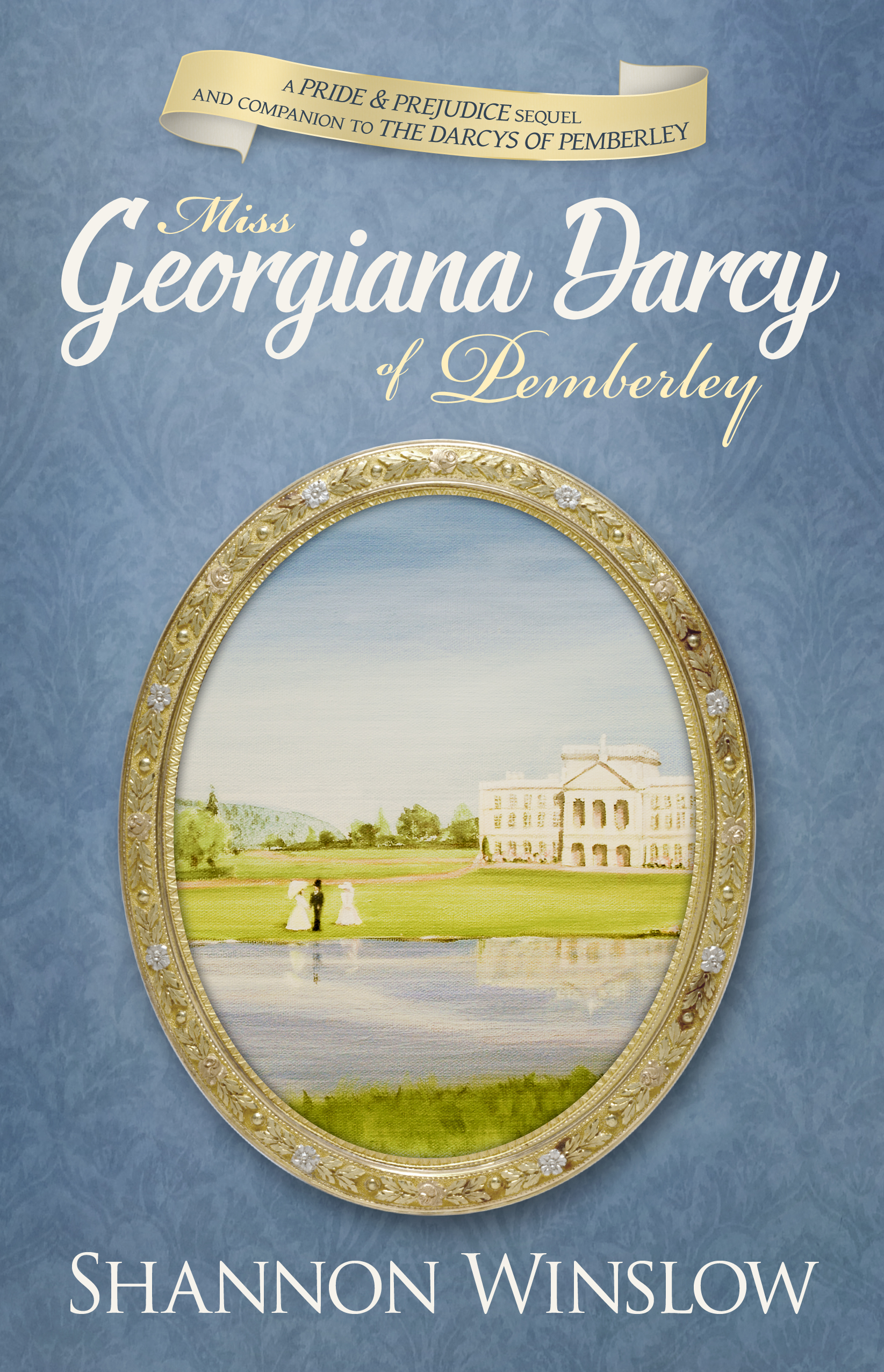 But when I started Miss Georgiana Darcy of Pemberley, the difficulty only got worse. It’s written in first person from Georgiana’s point of view, and she would be constantly referring to her brother in thought and dialogue. So what was she going to call him? I might get away with “Darcy” for Elizabeth, but not for Georgiana! Once again, she couldn’t refer to him as “Fitzwilliam” because the other Fitzwilliam would feature even more prominently in this book than in my first. And although I had sidestepped the issue in TDOP by having Georgiana use “Brother” on the few necessary occasions, I couldn’t go on like that through the length on an entire novel! No.
Consequently, Georgiana informs us early on that she typically calls her brother “William,” and all is well… for a time.
 Late in the story, however, Sir William Lucas enters the action and shows up at the same place and time as the other two men. Now I have a new variation of the original dilemma. Instead of two Fitzwilliams, I have two Williams! It took some fancy footwork to maneuver through that scene without confusion and without endless repeats of the names William, Sir William, and Fitzwilliam. Here’s an excerpt, in Georgiana’s words:
Then I noticed a large party of horsemen approaching from the north, trailed at some distance by a carriage. It was quite an unusual sight, and all eyes turned from their work to watch the spectacle. I was wondering at the meaning of it, even growing a little fearful, when I began to suspect something familiar in the figure leading the group rapidly onward. As they drew nearer, I was certain.
“It is my brother,” I said to Charlotte, who was at my side. “Sir William, it is my brother,” I called out to him and to the others.
Then I took another look. “And Colonel Fitzwilliam,” I added. Although I suppose I should not have been so surprised that William would come in search of me, I was entirely mystified as to why a party the size of a small army would accompany him. And what on earth was Fitzwilliam doing among them?
These questions were set aside for the moment, for William was upon us. He drew his horse to an abrupt halt, quickly slipped from the saddle, coming to my side and taking me into his fervent embrace. “Are you well, Georgiana?” he asked a moment later, holding me at arm’s length and studying my person for any ill effects. “There has been trouble here. Have you come to any harm?”
“I am well,” I quickly assured him, “as are the others. Only a few bumps and bruises. It was a minor accident caused by a broken axle, and Sir William has been taking very good care of us.”
“Thank God,” he exclaimed as he took a moment to shake Sir William’s hand. “Elizabeth was so certain it had been something much more serious.”
“Elizabeth!” I repeated, reminded of my former alarm. “How is she? If she has been worrying about me, I believe I have spent the same hours fearing something ill had befallen her. In fact, I had the most compelling premonition.”
William laughed, more from relief than amusement, I expect. “What is it with the female mind?” he asked. “Always imagining the worst and perceiving mountains of trouble where there are only molehills…”
As I said above, it was a tricky business getting through that scene without confusion or continual name repeats. In the end, I was saved by the fact that only one of the three men in question had a speaking part in the above exchange. I made sure of that!
 Another variation of the same challenge confronted me with my latest novel, The Ladies of Rosings Park (due out early next year), which is written primarily from Lady Catherine’s and Anne de Bourgh’s points of view. In P&P, Lady Catherine calls her nephews “Darcy” and “Fitzwilliam,” but I couldn’t imagine their younger cousin doing the same. And Anne has no lines of dialogue in the book for Jane Austen to set me a precedent. I decided that Anne would follow Georgiana’s example. She calls Mr. Darcy “William,” and Colonel Fitzwilliam she calls “John” – his given name in my books. (Here is another possible source of confusion, since many other JAFF writers have settled on “Richard” instead! Jane Austen doesn’t tell us.)
 I have no choice with a sequel; I need to do the best I can with the cast of character names I have inherited from the original. And you would think I’d have learned my lesson in the process. But I actually set myself a bigger challenge in The Persuasion of Miss Jane Austen, where I wrote two stories running parallel – what was happening in Jane’s own life set alongside what she described in Persuasion as a reflection of it. I had two of everything: two heroines (Anne and Jane), two captains (Wentworth and Devereaux), and two admirals (Croft and Crowe). The admirals were the hardest to keep straight because of the similarity of names. Argggh! And no one to blame this time but myself.
I swear I’ve finally learned, though. No more similar names and no additional Williams allowed!
 CH: Admiration for her intelligence and character, as reflected in her books and letters. I was wowed by what her brother Henry called “the extraordinary endowments of her mind.” I didn’t want to steal from her—at least not very much—but I did want to make use of her qualities in a meaningful way. In parallel, I had begun work on a general story of a woman set in the early 1800s, and I realized that the voice kept morphing into Austen’s. When I dived deeper into the details of her life, I realized I could combine her personal story with the major events of the Regency era in a way that stayed true to both.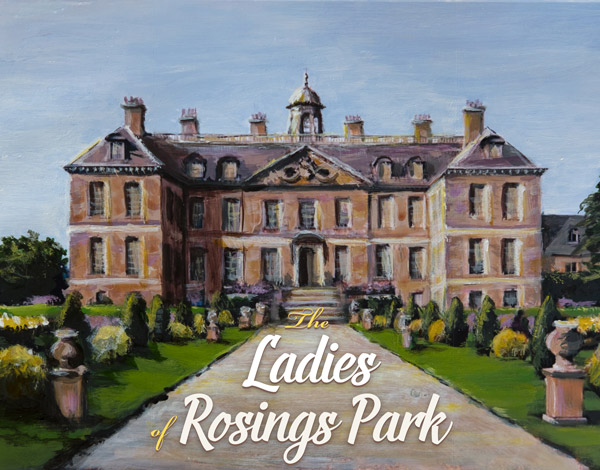
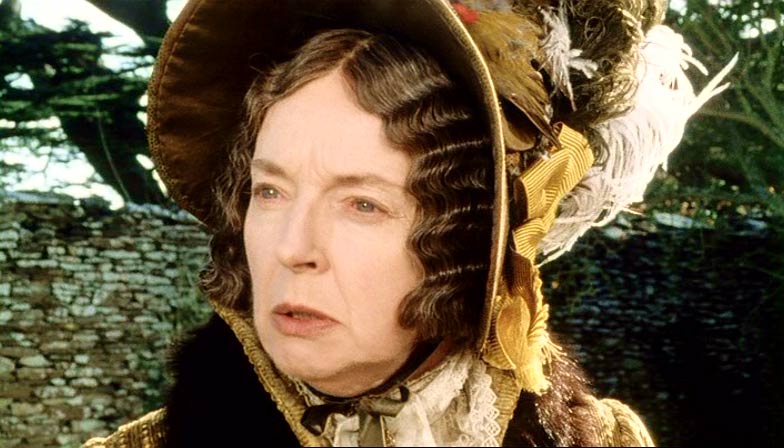
 When I mentioned on Facebook that I was writing the scene where Anne de Bourgh crashes Georgiana Darcy’s 18th birthday ball (for my work-in-progress, The Ladies of Rosings Park), I started to receive comments from enthusiastic friends about what they thought that scene should contain – creative suggestions I wished I could use for the book but couldn’t, since the book has to match the tone of Pride and Prejudice. Then I had this messaging conversation:
 Recalling herself from her musings, Anne smoothed her gown, struck an elegant pose, and looked about herself. What she saw was a party in full swing. The dancing had not begun, and yet the well-turned-out throng of people had already commenced carrying on. Their spirits were very high indeed, and it seemed that the largest bowl of punch she had ever seen was at the center of it all. What was in that punch, she wondered?
 The birthday girl replied, “Oh, Lizzy, I could not bear all those people looking at me any longer – the women wanting to find a flaw and the men hoping to win my fortune. Greetings, Cousin Anne,” she continued, going to shake her hand. “So nice of you to come. It has been ever so long, and my, how extremely well you look!”
 Thus fortified, the three women did just that. Miss Darcy soon discovered she was not as nervous as before, and Miss de Bourgh found the amorous gentlemen much more easily managed since Elizabeth had scolded them. They both danced and danced.
 During the supper break, another scuffle was heard in the hall, followed by indignant words. “Unhand me, Henderson! You forget yourself. I am here to collect my daughter, and I will not be prevented!”
 Don’t you love the title? Once it came to me, I had to go with it.

 It was lovely, and we had some wonderful times along the way. Part of the fun has been sharing our experiences with others. Whereas Jane Austen sent letters, I’ve been sharing things on social media. (I hope you have enjoyed the pictures on FB!)

 But what of that sagging middle I was worried about? Is it going to be a tough slog for readers when they get there? No, I don’t think so. I was forgetting that this whole section will be entirely unexplored territory for most, with lots of new action and revelations. What happens to Anne de Bourgh when Darcy marries Elizabeth instead? Is she devastated or relieved? As an heiress, even a sickly one, she must have other suitors. Who are they, and do any of them steal her heart? Does Lady Catherine accept the defeat of her original plan gracefully or keep conniving? What about Anne’s health? Does it ever improve? If so, how? And (what I think is a particularly intriguing question) what really happened to her father, Sir Lewis de Bourgh? He’s absent and presumably dead, but is that all there is to the story?
 Some of you may have seen this last month at Austen Variations, but I wanted to reproduce my post here, so I would have it as a permanent part of my own blog. Yes, it’s that important to me!
 There was probably a lot more to Jane Austen’s story than is generally known, I decided.
 I introduced her to the dashing Captain Devereaux, and they really hit it off. More romance for Jane: check! That’s great, but I still wasn’t content; I desperately wanted it ALL for her. Including the happy ending? How fabulous would that be?
 That’s why I no longer have to mourn over an early death for Jane Austen. Instead, I think of her plausible alternative.
  “Port Alberni? Where’s that?”
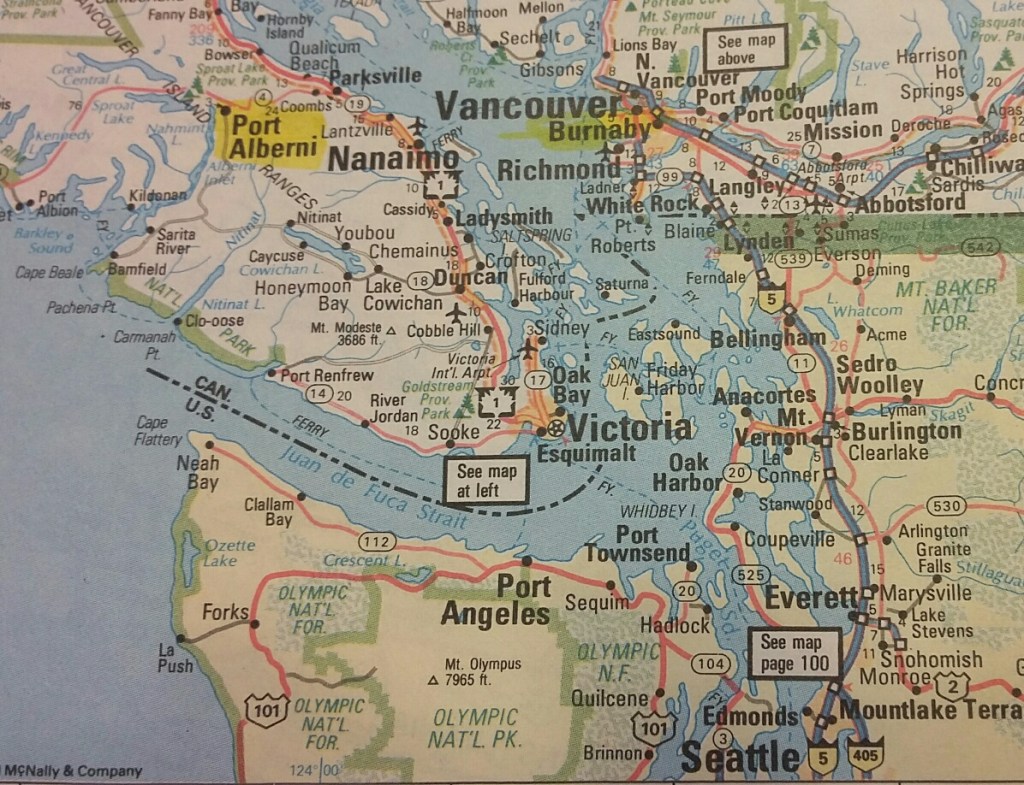 Since I was so warmly invited, since Port Alberni isn’t all that far from Seattle (or so it appears on the map), and since I had the weekend free on my calendar, I decided to go. We could make a mini-vacation of it, I thought. The scenery was sure to be spectacular. I’d have the chance to dress up, talk to people about my books, and soak up the general Jane Austen atmosphere. And with a little luck, my husband might even catch the spirit. Surely he would want to support the record attempt by dressing Regency long enough to be counted. At least I dared to hope so.
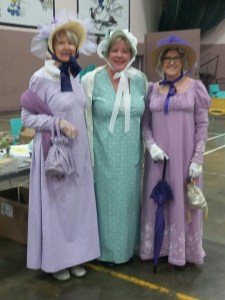
 Then it was off to the pier for a promenade, which turned out to be a very windy affair. “Hang on to your bonnets!” Next came a Jane Austen inspired lunch (with my first taste of the celebrated “white soup” – quite tasty!), followed by author readings (I did a well-received excerpt from The Persuasion of Miss Jane Austen), and very entertaining mini-play versions of Persuasion and Emma.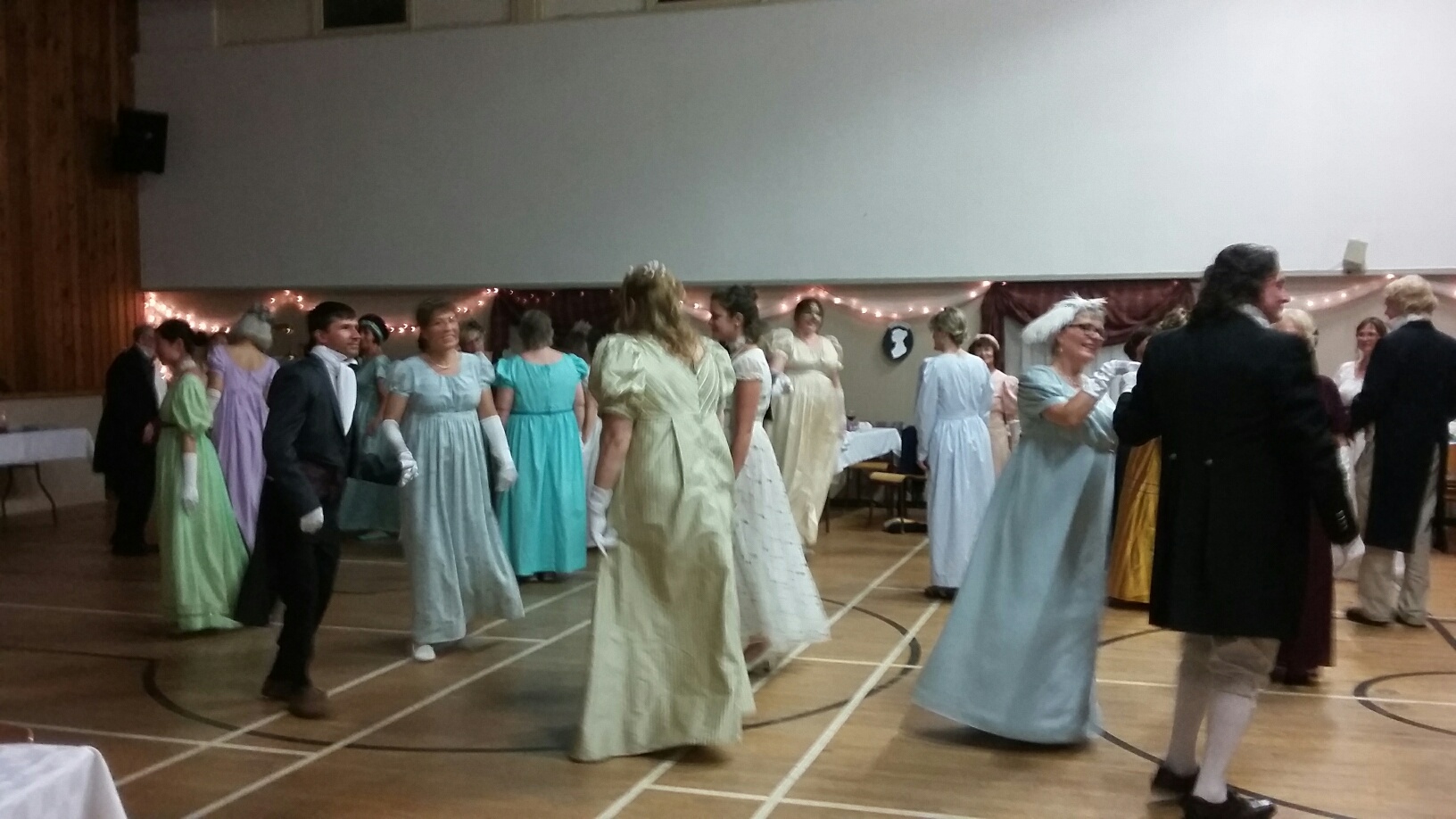
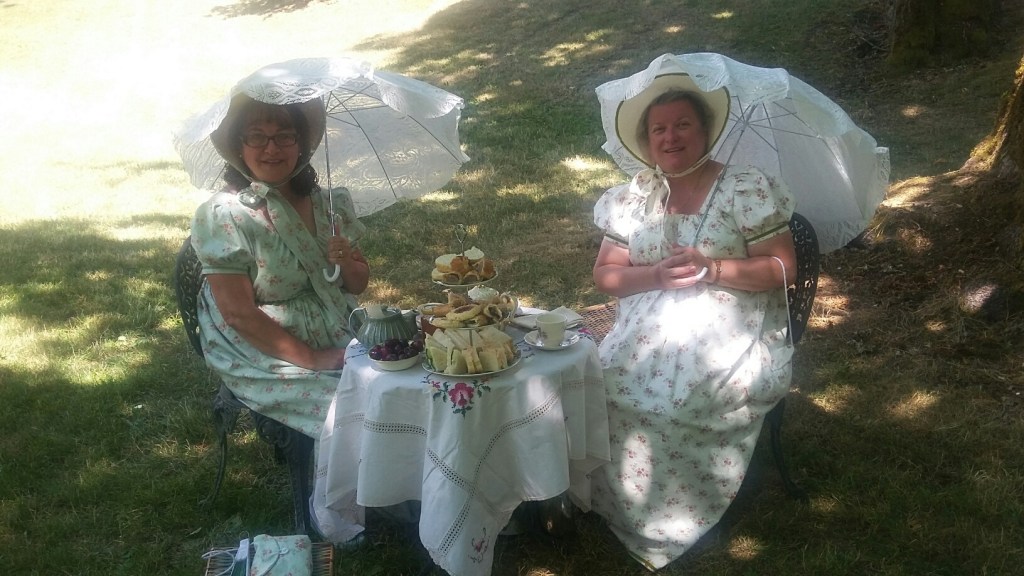 Saturday was a very full day, and I slept well that night. A picnic at a local park was the only thing on the schedule for Sunday. Some people went all out for that too, as you can see. Then it was time to do a little sightseeing before saying farewell to Port Alberni and all the friends we made there.
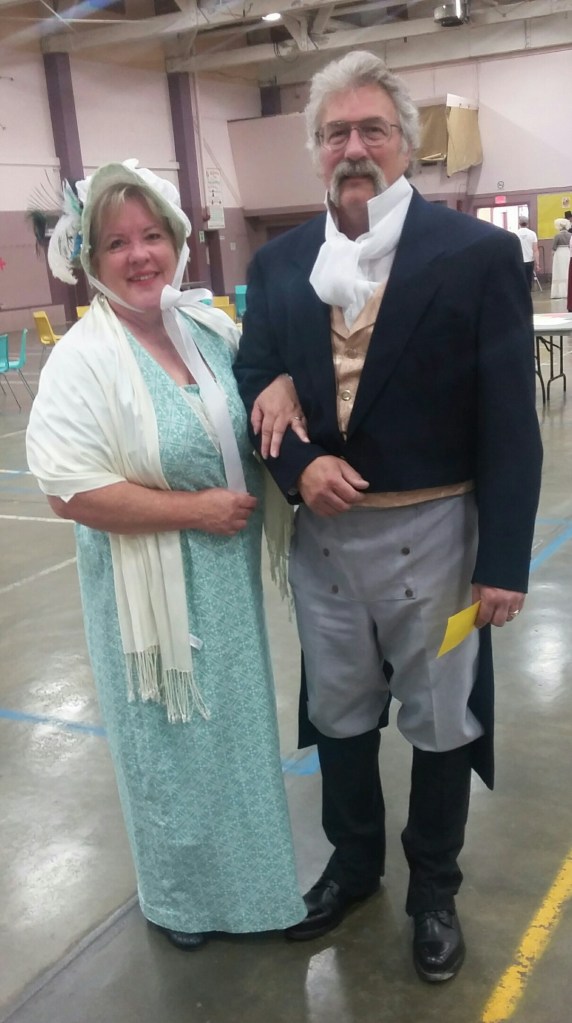 Yes, we had all the above: a great deal of enjoyment, novelty, beauty, and a fresh place that made an agreeable impression on me.
 “Miss Bennet,” replied her ladyship, in an angry tone, “you ought to know that I am not to be trifled with. But however insincere
  Dear Aunt,
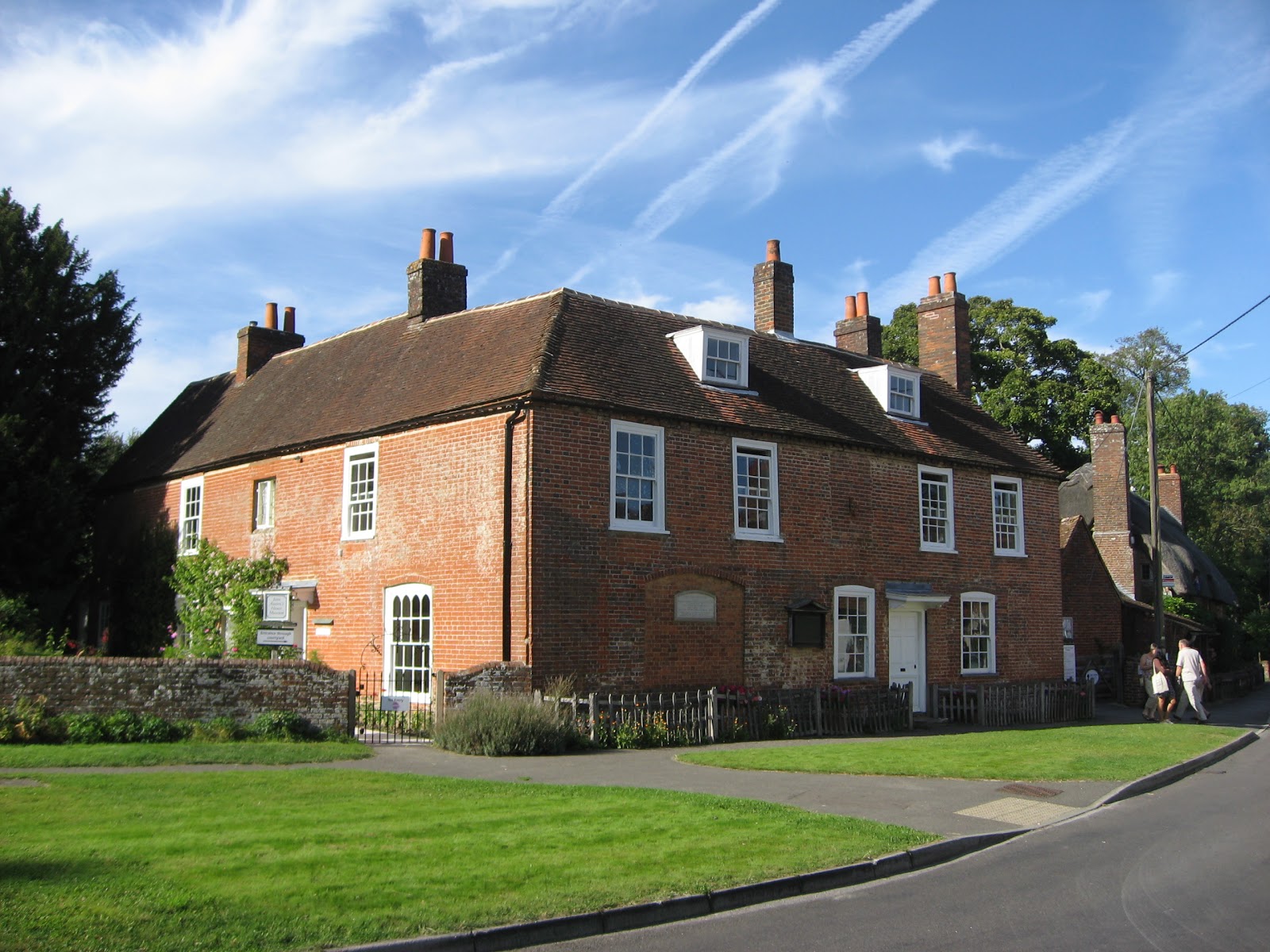 As some of you know, this year is the 200th anniversary of Jane Austen’s much-too-early death, and many of the faithful are noting events leading up to the end as they pass on the calendar. Yesterday (May 24th), for example, marked the day when Jane left her home in Chawton for what would turn out to be the last time, seeking medical help in Winchester, where she later died.
 Reading the recent posts about Jane’s move to Winchester (such as
  So, I said goodbye to my mother, knowing it would be, in all likelihood, the last time I would see her on this side of heaven, and I allowed myself to be carried off to Winchester. Cassandra travelled with me in my brother James’s carriage, with Henry and my nephew William riding escort alongside.
 We drove on to College Street, where we had arranged to rent rooms, but attaining those rooms was no easy task. In my dependent state, I had to nearly be carried up the narrow flight of stairs. I was especially glad for young William’s presence then, for it was an awkward business and I doubt as to Henry’s being able to have managed it on his own. Once more I apologised for my helplessness, and once more I was assured that my friends considered it a privilege to be of service to me.
 The best feature of our apartment was the neat little drawing room, which boasted a bow window with a view to the street, the old city wall, and Dr. Gabell’s garden. It was a pleasant room, but as I looked about myself I could not help wondering if I would ever leave that place again. Were those four walls, with the faded paisley paper peeling at the seams, the last sight my eyes would behold before closing forever? If so, the glories of heaven were sure to be the more impressive for the dramatic contrast.
 First, let me thank everyone who has already read one or both of my two new releases, Leap of Faith and Leap of Hope, especially those who have gone the extra mile and posted a review. I appreciate your confidence and support more than I can say!
 Two things Anne de Bourgh understood from a very early age: first, that she was loved by her father, and second, that she would one day marry Fitzwilliam Darcy.
 “My sister and I arranged it all between ourselves,” Lady Catherine frequently told her only child, sometimes varying her exact words but never her conclusion. “And the men mean to make no difficulty about it. When the time comes, you shall marry your cousin. It is not only the cherished wish of your mother and aunt, it is a solemn promise and therefore to be considered a settled engagement. The two great estates will thus be united in one family. There could be no connection more highly desirable on either side, no alliance more perfectly natural.”
 Join me as I weave together my passion for writing and my love of all things Jane Austen. Please also look for me on Facebook.





 Shannon Winslow's "Jane Austen Says..."