World Travels

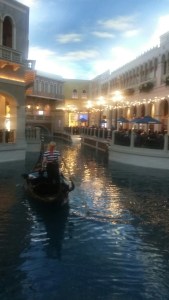
I wish I could tell you I have made great progress on all four of my current writing projects (see three previous posts) in the last month. I did get the play written, but that’s about all I’ve had time to accomplish. I’ve been a little busy with family obligations and with travel. Here are just a few of my vacation photos:


20180923_134121_resized

20180924_145850_resized 20180923_114447-1_resized20180921_115240-1_resized


No doubt you recognize these exotic destinations – Venice, obviously, and Paris, one of the great pyramids of Egypt, and the New York City skyline. And that’s only a small sample!

Are you jealous of my world tour? Or are you getting a bit suspicious?

Okay, I confess; the idea of an extended world tour, lovely as it sounds, is pure fiction. In truth, I never left the US, and all these pictures were taken in one place: Las Vegas.

I hadn’t been to Vegas before, and I probably won’t go back again – not really my kind of town. But we sure saw and did some cool stuff while we were there. We visited the neon lights museum, viewed the largest gold nugget in the world, experienced the amazing Fremont Street overhead canopy light show, ate at some interesting restaurants (some outstanding, some not so much), and attended an awesome concert (Queen), which was the reason we made the spontaneous decision to book this trip in the first place.

20180922_180941-1_resized_1

There’s plenty to do for a few days in Las Vegas, even if you don’t gamble.  But in case you’re wondering how I fared at the casinos, I’m happy to report that I managed to break even. Want to know my secret? If you never place a bet, you can’t lose any money!

Finding a Jane Austen connection for a post about an American gambling Mecca wasn’t easy, but I chose this exchange between Mary Crawford and Edmund Bertram from Mansfield Park:

“The metropolis, I imagine, is a pretty fair sample of the rest.”

“Not, I should hope, of the proportion of virtue to vice throughout the kingdom. We do not look in great cities for our best morality. It is not there that respectable people of any denomination can do most good; and it certainly is not there that the influence of the clergy can be most felt.”

Actually, we did see a lot of churches in the area – quickie wedding chapels, that is. But, no, I would not point to Las Vegas as the example of our county’s best morality!

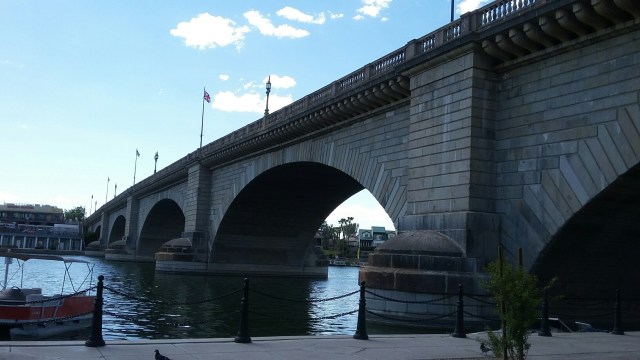
What brought Jane Austen most to mind on our trip, however, was the day we rented a car and drove down to Lake Havasu City, Arizona, to see the London bridge moved and reassembled there in 1971. It was about 108 degrees that afternoon, but I was determined to leave the comfort of air conditioning long enough to walk across the bridge that once spanned the Thames.

London_Bridge_circa_1870I even had in mind that perhaps Austen herself might have crossed the same bridge on one of her visits to London. Alas, this could not be true, I learned, since the bridge wasn’t constructed until several years after her death. Still it was well worth seeing.
20180922_132534_resized_1

20180922_131914_resized_1In any case, I’m glad we made the trip to Las Vegas and beyond, but I’m also glad to be home again.

Next, I’m going to take courage and submit my play for consideration. I’ll let you know how that goes – if and when it will be presented. Then it’s back to work to see if I can make some more progress on my other three writing projects. Where does the time go?

I hope you had some big adventures and happy travels this year too.


Posted in Jane Austen, Jane Austen Quotes, travel, Uncategorized, writing | Tagged , , , , , | 4 Comments

Jane Austen’s Devotion

I told you that I have three writing projects underway at the same time – something I’ve never attempted before – but I have a confession to make. There’s now a fourth. Yes, crazy but it’s true. When a friend, who has a long-time connection with a Seattle playhouse, suggested I should try my hand at writing a play, I got pretty excited by the possibility of seeing something I’ve written performed live on stage! So I got to work immediately, studying up on playwriting and trying to condense The Ladies of Rosings Park down to a play-length story. Not an easy task, as it turns out.

At the same time, I don’t want to neglect my other projects – #1 a Northanger Abbey sequel and #2 a non-JA story, which I profiled for you in my previous two posts, as well as #3: a Jane Austen devotional based on her prayers.

See the source imageI have always been curious about Jane Austen’s spiritual side. We know she was raised in a Christian home, the daughter of a (by all accounts) dedicated Anglican minister, as well as having a brother (and later a second) belonging to the profession. She no doubt attended church nearly every Sunday of her life. Still, that didn’t prove sincere faith then anymore than it does now.
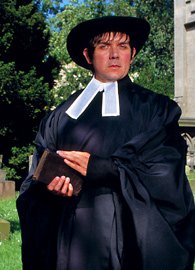
I suppose an argument could even be made to the contrary. For example, we see very few overtly Christian sentiments expressed in her novels. In fact, some of the portraits she draws of clergymen are quite unflattering (i.e. Mr. Collins). Also, some darker examples of her razor-sharp wit/humor (especially some preserved in her personal letters) might even be called caustic or irreverent.

See the source imageHowever, I think it would be a mistake to conclude from this that Jane Austen didn’t take her faith seriously. Being a Christian doesn’t mean having no sense of humor, and not every pastor is a shining example, especially in Jane Austen’s day, when many went into the profession for the wrong reasons – as a convenient means of making a genteel living rather than in answer to a true calling from God.
As for Jane Austen’s novels, although they are stories written from a Christian perspective, upholding Christian beliefs and values, they would not qualify for today’s “Christian Fiction” genre. Indeed, in Austen’s society there would have been no reason for what is now a separate and distinct category of fiction, no need to make a point of declaring the gospel message in every book where church attendance and allegiance to the Christian faith were the norm, not the exception. I believe this fact explains a great deal.

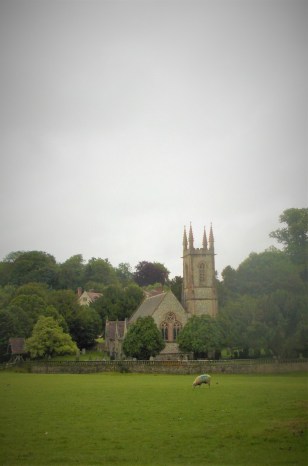
church modifiedHere and there in Austen’s novels, however, we do catch a glimpse of something that might be construed as a reflection of Austen’s personal faith. We notice the “God bless you” at the close of Darcy’s letter to Elizabeth, for example, and the many occasions where God’s name is invoked in crisis or in thanksgiving. But perhaps the clearest example appears in Mansfield Park. There, Austen uses Mary Crawford’s attitude toward elements of faith as one means of revealing that lady’s faulty character. Mary openly ridicules the practice of family prayers, chapel attendance, and the clerical profession as a whole. By contrast, Austen’s heroine Fanny Price is reverent, honorable, and chaste – a much better candidate for an Austen-style heroine and a better choice of partner for future clergyman Edmund.

For the most convincing evidence of Jane Austen’s sincere personal faith, however, we must look beyond her novels, which are, after all, not autobiography but fiction. We must look to how she faced death (when she made a point of receiving the sacrament of Holy Communion) and we must look to her prayers.

Give us grace, Almighty Father, so to pray, as to deserve to be heard, to address thee with our Hearts, as with our lips. Thou art every where present, from Thee no secret can be hid. May the knowledge of this, teach us to fix our Thoughts on Thee, with Reverence and Devotion that we pray not in vain. (opening of Jane Austen’s prayer “On Each Return of the Night”)

See the source imageNo one knows how many eloquent prayers the authoress may have composed in her lifetime. As with her letters, it seems likely that only a fraction of the original number have survived. We have only thee rather lengthy examples remaining to us, in fact. But each line of each one is a mini pray in itself, I realized, worthy of pausing for further contemplation.

So that’s what I’m doing in the devotional I’m working on. I have broken Jane Austen’s three surviving prayers down into individual petitions, allowing each to inspire a separate meditation with illustrations from her novels. Jane Austen drew her characters so convincingly – seeming like real people with real thoughts and problems – that their stories constitute a rich resource for teaching spiritual principles.

The devotional is about 1/3 done, which means it’s currently in the lead among my three main writing projects as to reaching the finish line!  But the dark horse in the race is that play I mentioned.  I’ll keep you posted on how that goes!

Posted in History, Jane Austen, Shannon Winslow's writing, Uncategorized | Tagged , , , , , | 6 Comments

An Inspiring Trip to the Lake

In my previous post, I told you about the new writing projects I’ve been working on, and I shared a sneak peek at one of them: the beginning of my Northanger Abbey sequel. Today, I thought I’d give you a little clue about one of the other projects, since I’ve just returned from a week in the place that inspired the story idea: Ashley Lake, near Kallispel, Montanta.

20180723_202613_resizedMy husband is originally from Kallispel, and his family used to own a cabin on Ashley Lake. Through a serendipitous turn of events, that very same cabin is now back in his extended family, and we’ve generously been invited to use it for our vacation destination the last two summers. The lake itself is beautiful, with some of the clearest turquoise water you’ll ever see outside of the Caribbean. Knowing the history of the cabin makes the spot that much more special for us.

20180722_122451_resizedWhen we were there last summer, someone told us about a sunken car on the far side of the lake. So we paddled our canoe over to take a look. Sure enough, there in about fifteen feet of water was the rusting hulk of a VW bug, the roof and various other parts missing.

20180722_100026_resizedI couldn’t help wondering what the story was. Who had owned the car and how had it ended up at the bottom of the lake? It was too far from shore to have been pushed or driven into the water, accidentally or on purpose. VWs used to be reputed pretty air-tight and therefore able to float for several minutes. Had somebody, on a dare or as a prank, rowed it out as far as they could before it sank? The other possibility seemed to be that it had been driven out on the ice in the winter. Was the ice too thin and it had broken through? Or had the car been abandonded there intentionally to sink with the spring thaw? And why?

I’d love to know the answers, but I probably never will. No matter. The wheels were already turning as I began imagining a scenario of my own. Then I got the idea it might be interesting to tell the story from the car’s point of view.

The project sat on the back burner while I finished up The Ladies of Rosings Park, but I kept rolling it over in my mind from time to time. Visiting Ashley Lake and its mysterious sunken VW again this past week has encouraged me to keep working to see what I can make of it. Unfortunately, I haven’t thought of a Jane Austen connection for the story yet!

20180722_100722_resized

Here’s the opening. Let me know what you think and if this is the craziest idea I’ve ever come up with. Okay, I know it is, but maybe it’ll work anyway? 🙂


Not all cars have souls. At least that’s what I have concluded after all these years. In fact, I might be the only one. I have looked hundreds – probably thousands – of other vehicles in the face, sending them positive energy and hoping to detect some sign of intelligence in return. But I’m always disappointed. Blank stares; that’s all I ever get. Blank stares and silence.

True communication would be impossible, I realize, even if we all achieved consciousness. Unfortunately our creators haven’t seen fit to give automobiles the ability to speak. Which is very short sighted of them, in my opinion. Think how many accidents could be avoided if one car could simply yell to another, “Hey, watch out! My driver hasn’t seen you, and he’s not going to stop in time!” The real solution, of course, would be self-driving cars. Let’s cut out the middle man and leave the driving to the experts. That’s what I say. Well, maybe someday, but not as of 2007.

Still, I like to think that certain humans possess the ability to connect with beings beyond their own species. Maggie did. I suppose she still does, wherever she is. We had a real connection. I think she might even have loved me, at least enough to give me my own name: Leonard. Maybe that’s how I got my soul too; her love made me worthy of one.

Now look at me. I can hardly believe that a noble VW beetle, especially one who was found soul-worthy, should end in this kind of disgrace. But maybe that’s what happens to us all eventually. I don’t know. We’re used until we show our age and then left to corrode and die somewhere, alone, forgotten, perhaps even stripped of vital parts.

Still, a cold, watery grave seems particularly harsh. In my current predicament, there’s nothing I can do to prevent every passing fish from swimming in and out my open windows and other orifices, nipping at my faded, flaking, powder-blue paint and dropping their filth wherever they please. I try to ignore them… same as I try to ignore the feel of rust eating ever deeper into my steel frame, like some terrible, creeping skin disease. I don’t want to think about what must have happened to my engine by now. And I shudder to imagine what sort of nasty creature has recently made a home for itself in my tailpipe.

What can I say? It’s degrading, and my main consolation is remembering my glory days with Maggie. It was a long time ago now, but I still recall every detail of those few wonderful years. Taking good care of her, especially when danger struck, is what made my whole life worthwhile. Never mind what came afterward. Even knowing the end from the beginning, I would gladly do it all over again.


20180719_095727_resizedNow don’t panic! I wouldn’t leave poor Leonard there at the bottom of the lake, fish swimming in and out. Trust me. You know I believe in happy endings!

No scheme could have been more agreeable to Elizabeth…”Oh, my dear, dear aunt,” she rapturously cried, “what delight! what felicity! You give me fresh life and vigour. Adieu to disappointment and spleen. What are young men to rocks and mountains? Oh! what hours of transport we shall spend! And when we do return, it shall not be like other travellers… We will recollect what we have seen. Lakes, mountains, and rivers…” (Pride and Prejudice, chapter 27)

Posted in Shannon Winslow's writing, Uncategorized | Tagged , , , , , , , , , , | 7 Comments

Coming Attractions

Time for a brief update, and then I have something fun for you to read – the opening of a work in progress. First, though, for those of you who have been asking, I wanted to let you know that the audiobook of The Ladies of Rosings Park will be out very shortly. Yay! It’s in the final review stage, and I don’t anticipate any further delays.

Now for my work in progress. If you read my post Which Book Should I Write Next? a couple of months ago, you know I was in a bit of a quandary at the time. The situation is still not entirely resolved either, not even after all your excellent suggestions. Instead of starting work on one new project, I’ve actually begun three at once, two of which weren’t even on my list of proposed options before!

I’ve started a non-JA short story / novella about a car (if you can believe it), my first non-fiction piece (a JA devotional), and then #3 from my list of possibles – a campy Northanger Abbey sequel, Gothic murder mystery style. How’s that for an eclectic mix? Rather than settling down to one at a time, I may just work on whichever inspires me most on any given day and see which makes it to the finish line first.

See the source imageToday, though, I want to share the first part of what I’ve written for the NA sequel, proposed title: Midnight at Northanger Abbey. [Update: final title is Murder at Northanger Abbey] Be sure to let me know what you think!

To begin perfect happiness at the respective ages of twenty-six and eighteen is to do pretty well; and professing myself moreover convinced, that the General’s unjust interference, so far from being really injurious to their felicity, was perhaps rather conducive to it, by improving their knowledge of each other, and adding strength to their attachment, I leave it to be settled by whomsoever it may concern, whether the tendency of this work be altogether to recommend parental tyranny, or reward filial disobedience. (Closing paragraph of Northanger Abbey)


Chapter 1 : Perfect Happiness

No one who had ever seen Catherine Morland in her infancy would have supposed her born to be a heroine. Her situation in life, the character of her father and mother, her own person and disposition, were all equally against her in the beginning. But when a young lady is to be a heroine, no perverseness of circumstances can prevent her. Something must and will happen to throw a hero in her way, and Catherine Morland’s case was no exception.

Having thoroughly prepared herself for heroism in her adolescence by the industrious study of every novel – romantic to thoroughly horrid – she could, by fair means or even mildly foul, lay her hands upon, Catherine herself was hardly surprised when adventure and intrigue found her the moment she set foot outside her own sleepy community of Fullerton. It was inevitable that such a fate would overtake her, she believed, and oh, how she had longed for it! She had quite counted on it. Indeed, if nothing whatsoever had happened in Bath, if love and adventure had not been expectantly waiting for her there, she would have been exceedingly disappointed. She would have thought it unfair in the extreme.

See the source imageBut in fact, love and adventure did find her, as she had always foreseen. It was only now, some time afterward that she had difficulty believing it. Parts of the story began to feel like an implausible dream: those early heady days exploring Bath with the inconstant Isabella Thorpe, being introduced to Henry at the assembly rooms completely by chance, her uneven acquaintance with the rest of his family, the surprising invitation to Northanger Abbey, and finally her violent expulsion from that place with Henry following, resolved on marrying her.

It must all be true, however, Catherine reasoned when she blinked awake this particular morning, experiencing the same feelings of dawning pleasure as many other mornings before and since. This ceiling over her head was certainly not the ceiling of the crowded bedchamber she had shared with her sisters in Fullerton. This bed was more comfortable too, and its bedclothes newer and sweeter smelling than those which had embraced her throughout childhood (and which she had had the duty of laundering herself).

No, the dream was become reality, and this was Woodston parsonage. For the most conclusive evidence of that, she slowly turned her pretty face to the left, blushing becomingly in anticipation as she did so. As she suspected and hoped, it was not any mere sister’s visage that then greeted her eyes but a handsomely masculine face instead.

“Good morning, Mrs. Tilney,” he murmured low. “I hope you slept well.”

“Good morning, Mr. Tilney. Yes, I did, thank you.” she returned, smiling as if she possessed a delicious secret too good to tell. For it still seemed to her somewhat of a miracle that Henry Tilney was there in her bed, that he was truly her husband – a miracle that needed constant confirmation. The sight of him, albeit exceedingly agreeable, was not enough. Hearing his familiar voice, still rumbling with the effects of sleep, was yet insufficient for her. She must consult her other senses as well.

Henry had quickly learnt this about his young bride – her need for continual reassurance – and he was always happy to oblige her with every positive proof of his presence and his love that she required. Toward that end, he now pulled her close and proceeded to bestow kisses here and there upon her person – affectionate or passionate according to what was wanted – and to furnish whatever other personal attentions seemed advisable.

Catherine, sighing contentedly and abandoning herself to his capable ministrations, wondered if there could possibly be any felicity in the world to equal it.

Posted in Jane Austen, Jane Austen Quotes, Shannon Winslow's writing, Uncategorized | Tagged , , , , , , , , | 14 Comments

Summer Reading Picks

See the source imageThree years ago, I did a post on My Movie Picks. Now I thought I’d try recommending some of my favorites books. (By the way, this presupposes that you’ve already read all of MY books, possibly multiple times, and need something to do while you await whatever work of genius I produce for you next. Am I right?)

I’m also assuming you know that the novels of Jane Austen and Georgette Heyer top my list, along with classics like Little Women, Anne of Green Gables, To Kill a Mockingbird, and selections from Dickens, Elizabeth Gaskell, George Eliot, and E. M. Forster. You can also add all James Herriot‘s All Creatures Great and Small books, Jan Karon‘s first three Mitford series books, and anything written by Julie Klassen.

I deliberately choose to read very little JAFF myself, since I don’t want to be influenced by another author’s storyline ideas. Instead, I try to sample from a wide variety of other genres. Being in a book club helps keep me from getting stuck in a rut. The assigned book of the month might not be something I would have picked on my own, but it usually turns out that I enjoy it… or if not actually “enjoy” it, at least I’m glad to have broadened my reading horizons a little.

So today I hope to broaden your horizons a little, too, by recommending a few books you may not have read (or even heard of before, in some cases). Who knows? It may turn out that you acquire some new favorites from my favorites list! Here goes with a few real standouts. No particular order. All these books are worth 5 stars imho:

16158542The Boys in the Boat, by Daniel James Brown – This book tells the story of the University of Washington’s 1936 eight-oar crew and their epic quest for a gold medal at Hitler’s 1936 Berlin Olympics.
Very rarely do I come across a book that accomplishes the tricky twin feats of 1) making history completely fascinating and, 2)being equally engaging for both my husband and myself. This is one of those rare finds. Some of the credit goes to the true-life material the author had to work with. Who doesn’t like to root for the home-grown underdogs to succeed against all odds, and then cheer when the dream miraculously comes to fruition? But the story was masterfully told as well. The author obviously did his research, and then humanized the events by letting us get to know and care about “the boys” involved. Since much of the action takes place in Washington State, where I live, the historical references were even more personal to me.

3153910The Art of Racing in the Rain, by Garth Stein – Enzo knows he is different from other dogs: a philosopher with a nearly human soul (and an obsession with opposable thumbs), he has educated himself by watching television extensively, and by listening very closely to the words of his master, Denny Swift, an up-and-coming race car driver. A heart-wrenching but deeply funny and ultimately uplifting story of family, love, loyalty, and hope, The Art of Racing in the Rain is a beautifully crafted and captivating look at the wonders and absurdities of human life…as only a dog could tell it.

Just as enjoyable when I read it a second time. (PS – If you love dog stories, I would also recommend A Dog’s Purpose, by W. Bruce Cameron.)

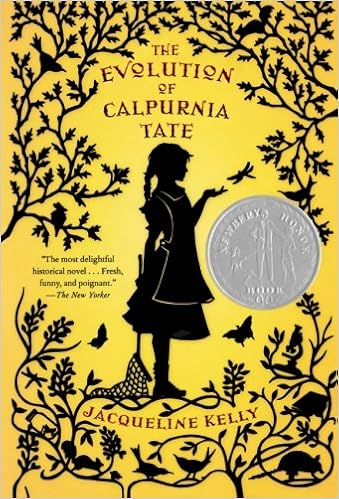
The Evolution of Calpurnia Tate, by Jacqueline Kelly – Calpurnia Virginia Tate is eleven years old in 1899 when she wonders why the yellow grasshoppers in her Texas backyard are so much bigger than the green ones. As Callie explores the natural world around her, she develops a close relationship with her grandfather, navigates the dangers of living with six brothers, and comes up against just what it means to be a girl at the turn of the century.

I found the home-spun feel of this story totally charming, reminding me of To Kill a Mockingbird. It’s “for young readers” but it’s perfect for adults too. There’s a sequel (The Curious world of Calpurnia Tate) which is just as good.

I've Got Your Number: A Novel by [Kinsella, Sophie]I’ve Got Your Number, by Sophie Kinsella – Poppy Wyatt is feeling lucky because she’s about to marry her ideal man. Then one afternoon, disaster strikes. She loses her irreplaceable engagement ring in a hotel fire drill, and then her phone (on which she’s totally dependent) is stolen too. As she paces shakily around the lobby, she spots an abandoned phone in a trash can. Finders keepers! Now she can leave a number for the hotel to contact her when they find her ring. Perfect, except that the phone’s owner, businessman Sam Roxton, doesn’t agree. He wants his phone back and doesn’t appreciate Poppy reading his messages and wading into his personal life. What ensues is a hilarious and unpredictable turn of events as Poppy and Sam increasingly upend each other’s lives through emails and text messages.

“A screwball romance for the digital age,” says one reviewer. It’s clever and fun. I enjoyed it tremendously and went on to read two more Kinsella novels. Warning: Unfortunately, there is a fair amount of bad language to put up with in this one.

Me Before You: A Novel by [Moyes, Jojo]Me Before You, by Jojo Moyes – Louisa Clark is an ordinary girl who has barely been farther afield than her own tiny English village. She takes a badly needed job working for ex–Master of the Universe Will Traynor, who is wheelchair bound after an accident. Will has always lived a huge life—big deals, extreme sports, worldwide travel—and now he’s pretty sure he cannot live the way he is. Will is acerbic, moody, bossy—but Lou refuses to treat him with kid gloves, and soon his happiness means more to her than she expected. When she learns that Will has shocking plans of his own, she sets out to show him that life is still worth living.

Don’t expect a JA style happily ever after. But it’s a compelling story well written. I liked it so much that I went on to read four more of Jojo Moyes’s novels afterward.

The Rosie Project: A Novel (Don Tillman Book 1) by [Simsion, Graeme]The Rosie Project, by Graeme Simsion – Meet Don Tillman, a brilliant yet socially inept professor of genetics, who’s decided it’s time he found a wife. In the orderly, evidence-based manner with which Don approaches all things, he designs the Wife Project to find his perfect partner: a sixteen-page, scientifically valid survey to filter out the drinkers, the smokers, the late arrivers. Since Rosie Jarman possesses all these bad qualities, Don easily disqualifies her as a candidate. But Don is intrigued by Rosie’s own quest to identify her biological father. When an unlikely relationship develops as they collaborate on The Father Project, Don is forced to confront the spontaneous whirlwind that is Rosie―and the realization that, despite your best scientific efforts, you don’t find love; it finds you.

Unique, quirky, fun, and full of heart. It is definitely one of my all-time favorites!


Honorable Mentions go to:

  • Wonder, by R. J. Palacio
  • One Summer, by David Baldacci
  • The Cat Who…, the series by Lilian Jackson Braun
  • Same Kind of Different as Me, by Ron Hall and Denver Moore
  • Three Sisters, by Susan Mallery
  • Where’d You Go, Bernadette, by Maria Semple
  • The No. 1 Ladies’ Detective Agency, series by Alexander McCall Smith
  • Habits of the House, by Fay Weldon
  • Maisie Dobbs, the mystery series by Jacqueline Winspear

I could go on… and on… and on, but you have to draw the line somewhere! Hope you find at least one you especially enjoy! Now, do you have a favorite to add to my list?

“The person, be it gentleman or lady, who has not pleasure in a good novel, must be intolerably stupid.” (Henry Tilney, Northanger Abbey, chapter 14)

Posted in Uncategorized | Tagged , , , , , , , , , | Leave a comment

Which Book Should I Write Next?

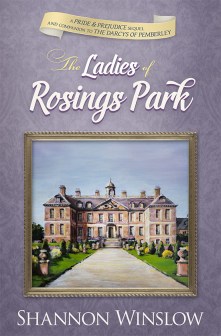
LRP_cover_WEB_01Phew! It was a lot of work, but The Ladies of Rosings Park is successfully launched and doing well. Thank you to those of you who have taken the time to post early reviews. When you really enjoy a book, that is the best thank-you you can give its author!

The audio book begins production soon, with the talented Marian Hussey narrating for me again. Then it will be time to move on to something new. But what shall I write next? That’s the question. It’s not that I don’t have ideas. I do! Too many of them, maybe. That’s why I’m asking for your feedback again.

I did a post like this a few years ago (read here), and it drew quite a few responses. It was interesting to revisit that post,  both to see the book ideas I had at the time and the comments people gave about them. Since then, I’ve granted some of your wishes. I have finished four more novels – two that were on the list then (#5 which became Miss Georgiana Darcy of Pemberley, #6 which became Leap of Hope) and two that were not (Leap of Faith, The Ladies of Rosings Park)!

See the source imageOne of my long-range goals is to write at least one novel related to each of Jane Austen’s six. Obviously, I’ve got Pride and Prejudice covered, and whatever else I do is bonus material. The Persuasion of Miss Jane Austen takes care of Persuasion. I count Leap of Hope as my Mansfield Park book, even though it has elements of the others too, especially P&P. But that still leaves three to go, plus a few additional ideas I have.

So here’s my current list of options. Which would you like me to undertake first and why?

  1. a Sense and Sensibility variation, possibly even with a different ending.
  2. an Emma variation, told from an unlikely perspective.
  3. a Northanger Abbey sequel, campy Gothic mystery style.
  4. a P&P prequel.
  5. another in the Leap series.
  6. a P&P short story anthology featuring Mr. Collins – I still want to do this, but the logistics have been challenging to work out so I keep delaying.
  7. other? I’m open to suggestions.

Cast your vote, and I promise to take all your recommendations into consideration!

You are but now coming to the heart and beauty of your story. Until the heroine grows up the fun must be imperfect, but I expect a great deal of entertainment from the next three or four books, and I hope you will not resent these remarks by sending me no more. (Jane Austen, in a letter to her niece Anna)


Posted in Shannon Winslow's writing, Uncategorized | Tagged , , , , , , , , , | 27 Comments

The Ladies of Rosings Park – Debut and Blog Tour

LRP_cover_WEB_01Ta-da!

Here it is, my eighth novel! The Ladies of Rosings Park is ready for her ‘coming out party,’ prepared to meet the reading public, excited to be launched onto literary seas and to make her debut upon the larger world!

Well, I don’t know if a book can really be excited (I guess that’s just a bit of anthropomorphism on my part), but I am! Even though this is hardly my first time, it’s always a thrill to see my story (the product of a year’s worth of work) finally in print, to know that other people will be reading and enjoying it too.

But how did we get to this point? Here’s a little history of the project:

My subconscious must have realized it before I did. I just knew I wanted to write Anne de Bourgh’s story. Or rather that I wanted to let Anne tell her story, since I intended to write the book in first person from the heroine’s point of view, the same as I had with Georgiana in Miss Georgiana Darcy of Pemberley.

The next thing that came to me was the title: The Ladies of Rosings Park. I liked the sound of it right away. It didn’t occur to me at the time that Anne was only one lady, not “ladies.” But I guess my subconscious knew what it was doing in proposing the plural, because as soon as I had Anne’s first chapter down, I began to rethink my strategy.

I liked hanging around in Anne’s head – figuring out what made her tick, what she must have been thinking, feeling, planning, hoping, dreaming. If I stayed there for the whole book, however, I’d never be able to see inside her mother’s mind. That would be missing half the fun!

Lady Catherine is a marvelous character, the kind of conniving villain we love to hate. And let’s face it; early on at least, Lady Catherine is the driving force of the story. She’s the one who stirs the pot. She’s the one whose overbearing personality and schemes impact Anne’s life most. It would be a shame to miss listening in on all that calculated deviousness at work, to be deprived of the chance to eavesdrop on the warped rationale behind her self-righteous posturing and bad behavior.

Besides, Lady Catherine simply would not allow it. She made it perfectly clear at the outset that her opinions were the only ones that really mattered, since they were always correct while everybody else was wrong. She absolutely insisted on being heard, and as you know, she is not a lady to be gainsaid!

I considered switching to third person as a way to admit Lady Catherine as an equal partner in telling the story, but I hated to lose the intimacy and impact of a first-person account. Instead, I decided that the ladies – mother and daughter – should take turns narrating the tale, peaceably and politely alternating chapters. That way we would get both their points of view about what was happening, for instance when Elizabeth Bennet arrived in Hunsford. As you can imagine, they see this and other events quite differently!

But that wasn’t the end of it. As long as I had admitted Lady Catherine, there didn’t seem any reason I had to stop there. After all, “Ladies” could mean any number above one, right? While the door was still ajar, I might just as well see who else wanted in, who else had something to say on the subject of Anne, her coming of age, and her marital prospects. In walked two more women belonging to Rosings Park: Charlotte Collins and Mrs. Jenkinson. They didn’t command an equal share, but it turned out they had unique perspectives and valuable contributions to make as well.

 So that’s how The Ladies of Rosings Park fulfilled the implied promise of the pre-selected title; that’s how it went from one young lady’s story to a tale told by four very diverse women. You may have heard that sometimes characters take over a story, foiling the author’s original plans. I can testify that it’s true. And surely if anybody is capable of pulling off such a coup, it’s Lady Catherine de Bourgh!

The Ladies of Rosings Park is currently available in paperback and Kindle at Amazon, with audio to come. Here’s the official book blurb:

At first glance, Anne de Bourgh doesn’t seem a promising heroine. But beneath that quiet exterior, there’s a lively mind at work, imagining how one day she will escape her poor health and her mother’s domination to find love and a life worth living.

Now Anne finally gets the chance to speak her mind. But Lady Catherine demands equal time. Even Charlotte Collins and Mrs. Jenkinson get into the act. Chapter by chapter, these ladies of Rosings Park take turns telling the tale from the moment Elizabeth Bennet sets foot in Hunsford, changing everything. Is Anne heartbroken or relieved to discover Mr. Darcy will never marry her? As an heiress, even a sickly one, she must have other suitors. Does Lady Catherine gracefully accept the defeat of her original plan or keep conniving? Will Anne’s health ever improve? And what really happened to her father?

Complete in itself, this work expands The Darcys of Pemberley series laterally, beginning during the timeline of Pride and Prejudice and carrying beyond to reveal the rest of Anne’s story. When a young lady is to be a heroine… something must and will happen to throw a hero in her way. (Jane Austen, Northanger Abbey)

For more inside information, fun original posts, and prize opportunities, please join me on my virtual book tour in the weeks ahead. I have been invited to stop by the blogs listed below to share about The Ladies of Rosings Park – something new and different at each one. (Check back for post titles and links as we go along or watch for my announcements on Facebook.) If you stay with me, not only will you have a pretty good chance of winning a prize, you should also be quite an expert on the book when we finish. Of course, I hope that somewhere along the way you’ll decide to read it as well!

March 19:  Austen Variations (preview chapters continue)

March 21:  Just Jane 1813 – Anne de Bourgh: Unlikely Heroine

March 23:  Austenesque Reviews – Excerpt: “It taught me to hope…”

March 27:  My Jane Austen Book Club – An Interview with Lady Catherine

March 29:  From Pemberley to Milton – Following the Prime Directive or Mashing Things Up?

April 3:  More Agreeably Engaged – Darcy’s Duty to Anne

April 5:  So Little Time – Excerpt: “An Heiress’s Fate”

April 16:  Darcyholic Diversions – Mr. Collins Interviews the Author

Here I go! Wish me bon voyage!

Posted in book launch, my books, Shannon Winslow, Shannon Winslow's writing, Uncategorized, writing | Tagged , , , , , , , | 8 Comments

A ‘Puzzling’ Cover Reveal

See the source imageIn just a few weeks, my eighth novel will be published! I can hardly believe it. When I sat down a dozen years ago to make a first attempt at writing a sequel to Pride and Prejudice, little did I imagine what would follow! I’ve learned and experienced so much in that time – things I never expected – and it’s been a fabulous ride so far. I’m not finished yet, either. I have ideas for at least five more books.

For now, though, the task at hand is getting The Ladies of Rosings Park launched. (Have you been reading the preview chapters at Austen Variations, btw?)

Once a story is finished, I get a little impatient with the post-production phase (editing, formatting, cover design, etc.), which seems to take so long. But we’re getting close enough now that it’s time to reveal the cover – always an exciting moment for me!

Instead of the standard “Ta-da! Here it is.” I thought I’d do something different this time, something including audience participation.

To her own heart it was a delightful affair, to her imagination it was even a ridiculous one, but to her reason, her judgment, it was completely a puzzle. (Sense and Sensibility, chapter 49)

Confession: I’ve recently become completely hooked on doing on-line jigsaw puzzles. Do you know the ones I mean? The advantage over regular jigsaw puzzles, which I’ve always loved, is that there are an endless supply of new puzzles to do, and all the pieces are turned right side up for you! Oh, and it doesn’t take over your dining room table for weeks at a time either.

So if you haven’t tried it yet, now’s your chance, because I’ve made my cover reveal photo into a jigsaw puzzle for you! Just follow this link. Change the number of pieces if you want, click ‘OK,’ close out the ads at the bottom, and start sliding the pieces into place to assemble the picture. I hope you enjoy the game! (Sorry, this probably won’t work on your tiny phone screens.)

When the picture is complete, you’ll probably notice that this new cover resembles the cover of Miss Georgiana Darcy of Pemberley quite a bit. That’s intentional, since this book is comparable to that one in many ways. Both take silent minor characters (neither Georgiana nor Anne de Bourgh has a single line of dialogue in Pride and Prejudice) and give them full stories, stories that agree with The Darcys of Pemberley and expand on it laterally. Besides, I’ve always thought Goergiana’s cover was particularly nice.

Now off you go! Have fun, and come back here when you’re done to tell me what you think.


Posted in fun & games, Uncategorized | Tagged , , , , | 35 Comments

Posting Preview Chapters – Good Idea or Bad?

See the source imageA few months back, I posed a question on Facebook about posting preview chapters of upcoming novels online. Did people like the practice or not? Did reading the opening chapters ahead of time make them more or less likely to purchase the book when it was finally published? That sort of thing.

Unfortunately, the results of my informal survey weren’t very conclusive. Some said the preview chapters got them hooked, and they would definitely want to get the rest as soon as it was available. Great! Others said that if they really got into the story, they became annoyed that they had to wait for the rest, frustrated that they couldn’t find out what happened right away. Not great.

LRP_banner_03So this is what I decided – a compromise that I hope will make everybody happy. I am going to post chapters of my upcoming novel, The Ladies of Rosings Park, weekly at Austen Variations beginning this Monday, January 22 (follow this link). Read them if you wish or ignore them completely until the whole book becomes available. Your choice. Either way, it won’t be a long wait, because the  novel should be out in early March.

In the meantime, I thought I’d give you a preview chapter of a different book here, one you may not have read yet. If this idea is a big hit, maybe I’ll continue on. But the point is, you don’t have to wait to read more since the book is already available!

chance-at-an-austen-kind-of-life_kindleSo here’s a specially selected chapter from Leap of Hope. Set up: Hope, a modern-day coed from the American south, has been granted her wish for an Austen kind of life (for now, never mind how this happened), and she has just been transported back in time to begin her second chance. She will be slipping into the shoes of a girl named Kathleen (Kate) Barrett, whose personality and situation are as much like another Lizzy Bennet as can be. Do you think Hope is prepared for all the differences and challenges of English Regency life? Would you be? She is depending on her Jane Austen knowledge to get her by until she can settle into her new life. She has to make this work because there’s no going back!


“Kate! Kate, can you hear me?”

I could hear the voice, but I couldn’t answer right away. Even though I remembered where I was supposed to be, I still didn’t quite believe it.

I must have viewed the scene a hundred times at the Center, forwards, backwards, and crossways: Lucy and Kathleen out for a sedate horseback ride on that fateful day. Then, Kathleen had suddenly taken it into her head to race away at top speed. I could see how exhilarated she was – laughing, with the wind blowing in her face – and I could relate.

It seemed a lot like something I might have done in her place. I always headed straight for the more extreme rides at any amusement park or county fair, and I admit to driving a little too fast with the windows rolled all the way down. So I could just as easily have been the one who met with disaster. Well… actually, I did meet with disaster; it just didn’t happen to be on account of my taking risks.

Anyway, Kathleen ignored the warnings her sister called after her and rode even faster. That’s when, as I saw it, she made her fatal mistake. Nearly at the last moment, she turned Horatio’s head to the left, steering him onto a trail that would take them through the woods. The gelding made the corner but Kathleen didn’t. It was horrible to watch. For a moment, she seemed to hang there in midair, half in and half out of the saddle. But gravity won out, like it always does. Over she went, tumbling toes over teakettle to the ground, landing on her behind and knocking her head.

That’s when the exchange was supposed to take place, with me slipping in just as Kathleen slipped away. I could swear we passed practically right through each other and that, just for a moment, she saw me. Maybe I only imagined it, but it seemed like she understood. I like to think so, anyhow.

“Kate! Kate, please wake up!”

This time I opened my eyes. There was the sky directly overhead where it should be – a puffy patchwork quilt of clouds in different shapes and shades – and to one side, a shadowy face hovering. The face gradually came into focus and connected to a body.

“Lucy?” I said. “Is that really you?” At least that’s what I tried to say. What actually came out of my mouth sounded like total gibberish, and then I guess I went unconscious again.

The next thing I knew, I was waking up in a very old-fashioned looking room, like something somebody’s great-grandmother might have thought was stylish back in the day. There was brown paisley print wallpaper, a picture rail all around, and no overhead light fixture where you’d expect to find one. It all seemed both familiar and unfamiliar at the same time.

I was flat on my back again like before, but this time at least, it was in a comfortable bed instead of on the hard ground. And now I had six worried faces staring at me instead of only one. The closest person was a youngish man, who I remember thinking was criminally handsome. He kept waving something nasty-smelling in front of my nose, though.

“She is coming round,” he said as he finally put that foul vial away. “How do you feel, Miss Barrett? Can you speak?”

I could not, not as Hope O’Neil or Kate Barrett either one. I had to get a firmer grip on reality before daring to open my mouth.

It seemed to be true, though. Everything had happened just as Cora and Poindexter had told me it would. I was alive as promised and presumably in 1809. This was Kathleen’s house, Kathleen’s room, and Kathleen’s family gathered around the bed, looking at me and seeing their beloved Kathleen. I recognized them all from my research. And the young man must be a doctor, I decided… or surgeon or apothecary or whatever the period-correct term might be.

I shouldn’t have been surprised. This is what I’d planned, after all, what I had asked for. But somehow I don’t think I had understood – not deep down, anyway – that it would actually come to pass.

“Kate, say something,” pleaded Lucy from the other side of the bed. “How are you?”

“I’m okay,” I managed before my hand flew up to cover my lips. Cora had warned me, but it had still been a shock to hear Kate’s voice coming out of my mouth!

“I’m okay?” repeated Mrs. Barrett as if the words were a foreign language to her. “How very odd. What can she mean by it? Mr. Cavanaugh, why is my daughter talking nonsense? Has she gone completely off her head?”

Darn! A mistake already! Ditch the contractions and no ‘okay’ either – too contemporary.

“It should not amaze me if your daughter were to say and do many odd things, Mrs. Barrett,” Mr. Cavanaugh replied, beginning to pack away his instruments in a small black case. “At least in the beginning. It is to be expected in cases of head injury. Not to worry.”

I exhaled a small sigh of relief, silently blessing the good doctor for his explanation. I didn’t necessarily like his tone – which immediately struck me as condescending, possibly bordering on contempt – but he had neatly excused my first error and conveniently established my alibi for all the others that would surely follow. Still, the sooner I got my head in the Regency game, the better. Time to break out that British accent I’d been secretly cultivating too. Choosing my words more carefully and preparing myself for the strange sound of my new voice, I tried again.

“I am well,” I said. “I have a little pain in my head; that is all.” Much better. I could do this. It would just take a little focus and a little practice.

I gazed around the circle at the Barretts, my eyes hungry to take them in for real this time. They were all there – Mr. and Mrs., Lucy, Carmen, and Matilda – in 3-D flesh, not just virtual on a screen anymore. This was my new family!… for better or worse, for richer or for poorer, forever and ever. And it was sort of like a marriage in that there was no going back. The strangest thing was my growing sensation that I had known them all a long time, much longer than the period of my research at Crossroads. Bits of brand new memory began popping into my head too. Looking at Matilda, I had a vivid impression of more than once watching her carefully choose a long, flat blade of grass from the garden to use as a bookmark. Where had that image come from? And Papa Barrett winking at me across the dinner table after a remark that amounted to a private joke between us.

These must be some of the ‘carryover’ memories Cora had talked about, things I inexplicably now knew just because Kathleen had known them before me. Perhaps she had handed them off to me as I slid past her on the exchange, like the baton in the relay races I used to run on the high school track team.

It was a little creepy on one level, considering that I was, more or less, inhabiting the skin of another person, the skin of a dead person at that. Probably better not to think about it too much, I decided. It was just one of those mysteries of life we weren’t meant to understand, like how the universe is infinite or why some women can wear hats and others just look ridiculous.

The more of Kathleen’s memories I recovered, the better; that was the practical point. There would be less groping around in the dark that way, and a lot less stumbling into gopher holes.

Even the stern but distinguished-looking doctor in front of me began to seem familiar, although I couldn’t imagine why. I was sure I’d never run across him in my research. Not even once. That particular flavor of sweetmeat I would have remembered. He was still staring at me, now with one eyebrow lifted, like he was challenging me to say something.

Then he turned to speak to the others. “I believe Miss Kathleen is out of danger,” he said. “Rest is the best thing for her, so if you would be so kind…” He stood, towering over the bed, and began ushering Barrett after Barrett towards the door with a definite air of authority.

I did say something then. “I desire that Lucy should stay with me for a while,” I declared, proud of how I had phrased it. It sounded very Regency-ish to me. At the same time, I reached for my new sister’s hand, thinking it’s what Kathleen would have done.

Lucy smiled tenderly down at me. “May I, Mr. Cavanaugh?” she asked.

“By all means. Someone should probably sit with the patient for the first four-and-twenty hours or so, just to watch for any sign of trouble. I myself had best be getting on, but I will return first thing tomorrow. Sooner if I am needed. Will that be acceptable to you?”

He directed this last bit at me, that is to say Kathleen, with a serious look. I hardly knew how to respond, so I just nodded. Apparently satisfied, the doctor went away, leaving Lucy and me alone.

“Oh, Kate,” Lucy began, still holding my hand, “what a fright you have given us! When I saw you slip from Horatio’s back, I thought for sure I had lost you forever.”

“Did I strike my head?”

“Oh, yes! There happened to be this great stone exactly where you fell. There was so much blood, and then you lay still for the longest time. I hardly knew what to do. I thought perhaps I should ride for help, but I could not bear to leave you. So I screamed at the top of my lungs, hoping against hope that someone would hear and come to my aid.”

“And did someone?”

“He did! A stranger, although I daresay he will be a stranger no longer. It was Mr. Sotheby, the new owner of Coleswold. Just think, Kate! It was only this morning we were discussing how we could contrive a way to meet our neighbor, and now he has been introduced to our family in such an unexpected fashion!” She then hastened to add, “Of course I should have much preferred it had been by ordinary means. Surely Papa would have eventually relented and done what was required, or we might easily have been introduced at a ball.”

“But wasn’t it clever of me to expedite matters by throwing myself from my horse?” I suggested, trying out my best British accent. “Now you must tell me all about this Mr. Sotheby, for I was quite unconscious, you will recall.”

Although I believe Lucy Barrett was as solicitous for my health as any sister could possibly be, she was equally enthusiastic for the subject I had suggested. Once I had assured her I was not too tired to hear it, she launched into an animated recital of Mr. Sotheby’s merits in impressive detail. He was rumored to be rich. Most importantly, though, he was definitely single. Lucy had cleverly induced him to give up this information. He must also be handsome, I suspected, judging from the way she was blushing as she talked about him. His gallantry could not be doubted, considering how he had managed to be around just when help was needed.

“And he is so strong!” Lucy continued, breathlessly.

“A definite virtue in a man.”

“He lifted you so easily, as if… as if…”

I could not resist filling in the blank from my own frame of reference. “As if I weighed no more than a dried leaf?”

“Yes, it was exactly so! How well you have captured the idea! And then he carried you all the way home without becoming the least bit tired. It is unfortunate that you were deprived of seeing it for yourself.”

“Unfortunate, yes, but if I had been awake, there may have been no need.”

Lucy laughed. “I suppose you are right.”

“I can imagine, though. I have witnessed such things before,” I added, thinking of that rain-drenched scene in my favorite film version of Sense and Sensibility.

“Have you? When?”

“Oh, never mind about that now. Tell me more of Mr. Sotheby. And what of this Mr. Cavanaugh? His manner implied some level of acquaintance, but I really cannot at this moment remember.” Here, I closed my eyes and reached one hand to the back of my bandage-wreathed head to reestablish the reason for my lack of recollection.

“You poor darling!” Lucy cooed. “I suppose it will come back to you in time, but let me help you along a little. You met Mr. Cavanaugh at the most recent assembly, where you refused to dance with him, I might add.”

No wonder, then, that he seemed none too friendly. “But why would I refuse such a reasonable request? Did I say? I love to dance, after all, and there is nothing objectionable in his looks.”

“Nothing whatever! He is such a fine figure of a man. No, you told me it was something else that did not suit you. Something you overheard him say, although I cannot now recall what it was.”

But suddenly I did recall – another carryover memory. Mr. Cavanaugh had been speaking to some gentleman or other when Kathleen happened to be passing unnoticed behind them.

“In truth, I find these country assemblies more punishment than pleasure,” he had declared, clear as anything. “One feels obligated to dance with every mother’s daughter sitting down in want of a partner, no matter how undesirable. Really, I sometimes think these affairs are more irksome than even the ‘marriage market’ balls of the London season. It is the same everywhere; if one has a tolerable fortune, one is considered fair game for every husband-hunting miss in the country.”

How rude! How very Mr. Darcy-ish of him (the Darcy before Lizzy taught him the error of his ways, that is). No one could blame Kathleen for refusing to dance with the man after that!

And then I remembered something else I (Kathleen) had heard at the same assembly. “You were quite right to cut the man, deary,” an older lady standing nearby told me. “I wonder that the man has the nerve to show his face among us after what he did to poor Mrs. Conner, may she rest in peace. Imagine, refusing to come when she sent for him, all because she had no money to pay.”

Kathleen had seen Mr. Cavanaugh for what he was that night. Now it was my clear duty to go on disliking him in Kathleen’s place, out of loyalty to her and on principle. He probably only bothered to attend me because my father had enough money to pay him well.

With this new information in mind, I announced to Lucy, “He’s a conceited snob, stuck up higher than a light pole.”

“A what?” she asked.

“Oh… I mean… I mean that he gives himself airs,” I corrected. “He thinks too well of himself, above his company. And who is he, after all? Only a doctor.” My outburst had been another mistake, but at least I had remembered that doctors had no special status here.

“Now, Kate,” Lucy chided, “Mr. Cavanaugh is a gentleman from a very good family, we are told. I hope you do not intend holding the fact that he also has a profession against him. Really, I think it quite commendable that he should want to do something useful with his time. There are far too many idle young men about as it is. So I said before and you agreed with me. Do you really not remember, dearest?”

“It’s coming back to me, little by little. So you have a high opinion of this Mr. Cavanaugh as well as the handsome Mr. Sotheby.” This reminding me of another Austen reference, I asked, “Do you never see a fault in anybody, Jane? All the world are good and agreeable in your eyes, I suppose.”

“Jane?” Lucy repeated, her brows drawn together with confusion. “You know my name as well as your own, Kate. You had better rest, as Mr. Cavanaugh recommended. That will no doubt set your brain to rights. I will sit with you a while, but you must close your eyes now.”

I humbly obeyed, relieved to have an excuse to shut my big, fat mouth too. I had begun feeling at home in my new role, to enjoy being in character, so much so that I let down my guard. And look what happened!

When Lucy described our handsome new neighbor coming to rescue ladies in distress, I had pictured Willoughby sweeping Marianne up into his arms. And when Lucy spoke so favorably of Mr. Cavanaugh and Mr. Sotheby both, I had heard Jane Bennet’s voice.

Although I was tickled beyond anything to finally be a living, breathing part of the culture that had inspired the Regency stories I loved so much, ideas like this were bound to keep popping into my head. How was I supposed to stop them popping out of my mouth? That was the question. It seemed like this was going to be harder than I’d expected since everywhere I turned I was sure to see something that would remind me of Austen – her books and the movies made from them. My mistakes might be blamed on my accident for a while, but not forever.

Keep your head in the game, Hope, I coached. Then I reminded myself of one more very important fact. There was no more Hope; I was Kathleen now.


I Hope you enjoyed your sample chapter from Leap of Hope! Leave a comment about it or how you feel about the practice of posting preview chapters, and have a great day!

His person and air were equal to what her fancy had ever drawn for the hero of a favourite story…  (Sense and Sensibility, chapter 9)

Posted in English Regency culture, Jane Austen, Jane Austen Quotes, my books, Shannon Winslow, Shannon Winslow's writing, Uncategorized | Tagged , , , , , , , | 4 Comments

William, Fitzwilliam, and Fitzwilliam

ISee the source images it possible to have too many Williams? I like the name – very much, in fact. Even so, there ought to be a limit as to number.

One thing I’ve learned as a novelist is that you shouldn’t confuse your readers with character names that are too similar. If you’ve already got a Terry in the story, don’t name somebody else Jerry. If you have a Ron, don’t add a Don or a Rod. It’s even worse if the names are foreign-sounding, unpronounceable, and all begin with the same letter of the alphabet. Have you read books like that? It’s a nightmare trying to keep the characters straight.

And yet, to a lesser extent, that’s what Jane Austen did in Pride and Prejudice. Her leading man she named Fitzwilliam Darcy, and then she added a Colonel Fitzwilliam to the mix, the odious William Collins, and a Sir William Lucas for good measure.

See the source imageThe two Fitzwilliams I understand; Darcy was christened with his mother’s maiden name, which, naturally, is also his cousin’s last name. Probably a common practice at the time (and something I actually carried forward to the next generation by naming D&E’s son “Bennet” in The Darcys of Pemberley). In truth, there really wasn’t any confusion in the original story. Fitzwilliam Darcy is “Mr. Darcy” to one and all, and Colonel Fitzwilliam is either “Fitzwilliam” or “Colonel.” Mr. Collins is always just “Mr. Collins,” and Sir William Lucas, a minor character, is referred to as “Sir” William. That was clear enough.

I ran into trouble right away, however, when I began writing my first sequel (The Darcys of Pemberley). Although Elizabeth might continue calling her husband “Mr. Darcy” in formal situations (just as Mrs. Bennet did with Mr. Bennet in P&P), she probably wouldn’t in the comfort of their own home and family. She would probably have called him Fitzwilliam. But then what happens when Colonel Fitzwilliam shows up? Since he was a major player in the story as well, I had to come up with a solution, or there would be a lot of awkward conversations. Elizabeth says, “Fitzwilliam, do you agree with Fitzwilliam’s position on the subject?” Then one of the gentlemen called Fitzwilliam answers, but we’re not sure which one it is!

I decided that, to avoid confusion, Elizabeth would call her husband “Darcy,” whether that was entirely correct or not. Crisis temporarily averted.

Miss Georgiana of Pemberley cover - KINDLEBut when I started Miss Georgiana Darcy of Pemberley, the difficulty only got worse. It’s written in first person from Georgiana’s point of view, and she would be constantly referring to her brother in thought and dialogue. So what was she going to call him? I might get away with “Darcy” for Elizabeth, but not for Georgiana! Once again, she couldn’t refer to him as “Fitzwilliam” because the other Fitzwilliam would feature even more prominently in this book than in my first. And although I had sidestepped the issue in TDOP by having Georgiana use “Brother” on the few necessary occasions, I couldn’t go on like that through the length on an entire novel! No.

Consequently, Georgiana informs us early on that she typically calls her brother “William,” and all is well… for a time.

See the source imageLate in the story, however, Sir William Lucas enters the action and shows up at the same place and time as the other two men. Now I have a new variation of the original dilemma. Instead of two Fitzwilliams, I have two Williams! It took some fancy footwork to maneuver through that scene without confusion and without endless repeats of the names William, Sir William, and Fitzwilliam. Here’s an excerpt, in Georgiana’s words:

Then I noticed a large party of horsemen approaching from the north, trailed at some distance by a carriage. It was quite an unusual sight, and all eyes turned from their work to watch the spectacle. I was wondering at the meaning of it, even growing a little fearful, when I began to suspect something familiar in the figure leading the group rapidly onward. As they drew nearer, I was certain.

“It is my brother,” I said to Charlotte, who was at my side. “Sir William, it is my brother,” I called out to him and to the others.

Then I took another look. “And Colonel Fitzwilliam,” I added. Although I suppose I should not have been so surprised that William would come in search of me, I was entirely mystified as to why a party the size of a small army would accompany him. And what on earth was Fitzwilliam doing among them?

These questions were set aside for the moment, for William was upon us. He drew his horse to an abrupt halt, quickly slipped from the saddle, coming to my side and taking me into his fervent embrace. “Are you well, Georgiana?” he asked a moment later, holding me at arm’s length and studying my person for any ill effects. “There has been trouble here. Have you come to any harm?”

“I am well,” I quickly assured him, “as are the others. Only a few bumps and bruises. It was a minor accident caused by a broken axle, and Sir William has been taking very good care of us.”

“Thank God,” he exclaimed as he took a moment to shake Sir William’s hand. “Elizabeth was so certain it had been something much more serious.”

“Elizabeth!” I repeated, reminded of my former alarm. “How is she? If she has been worrying about me, I believe I have spent the same hours fearing something ill had befallen her. In fact, I had the most compelling premonition.”

William laughed, more from relief than amusement, I expect. “What is it with the female mind?” he asked. “Always imagining the worst and perceiving mountains of trouble where there are only molehills…”

As I said above, it was a tricky business getting through that scene without confusion or continual name repeats. In the end, I was saved by the fact that only one of the three men in question had a speaking part in the above exchange. I made sure of that!

LRP_cover_comp_04Another variation of the same challenge confronted me with my latest novel, The Ladies of Rosings Park (due out early next year), which is written primarily from Lady Catherine’s and Anne de Bourgh’s points of view. In P&P, Lady Catherine calls her nephews “Darcy” and “Fitzwilliam,” but I couldn’t imagine their younger cousin doing the same. And Anne has no lines of dialogue in the book for Jane Austen to set me a precedent. I decided that Anne would follow Georgiana’s example. She calls Mr. Darcy “William,” and Colonel Fitzwilliam she calls “John” – his given name in my books. (Here is another possible source of confusion, since many other JAFF writers have settled on “Richard” instead! Jane Austen doesn’t tell us.)

I have no choice with a sequel; I need to do the best I can with the cast of character names I have inherited from the original. And you would think I’d have learned my lesson in the process. But I actually set myself a bigger challenge in The Persuasion of Miss Jane Austen, where I wrote two stories running parallel – what was happening in Jane’s own life set alongside what she described in Persuasion as a reflection of it. I had two of everything: two heroines (Anne and Jane), two captains (Wentworth and Devereaux), and two admirals (Croft and Crowe). The admirals were the hardest to keep straight because of the similarity of names. Argggh! And no one to blame this time but myself.

I swear I’ve finally learned, though. No more similar names and no additional Williams allowed!

Posted in Jane Austen, Uncategorized, writing | Tagged , , , , , , , , , | 10 Comments